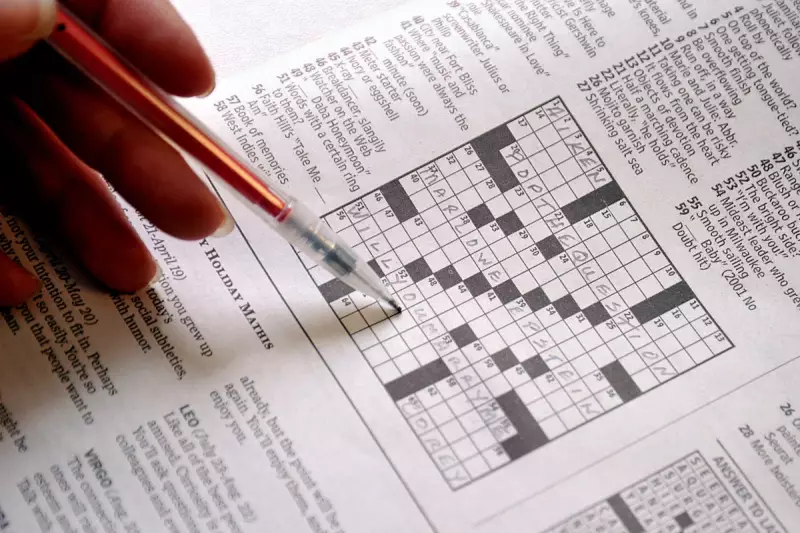
For millions, the daily crossword offers a quiet retreat from the world's noise, a mental challenge contained within a familiar grid of black and white squares. Yet, according to a veteran puzzle creator, this beloved pastime is far from politically neutral. In a new book, the intricate, and often contentious, process of crossword construction is laid bare, revealing how editorial decisions can subtly sway the solver's worldview.
The Editorial Hand in Your Puzzle
Natan Last, a researcher, policy advisor, and prolific crossword constructor, argues in his book Across the Universe: The Past, Present, and Future of the Crossword Puzzle that politics inevitably seeps into puzzles. Having published hundreds of crosswords for major outlets like The New York Times and The New Yorker, Last explains that every clue and answer undergoes rigorous scrutiny before publication. Editors frequently trim, cut, or replace entries, a process that can fundamentally alter their original meaning.
"There’s this funny feedback that editors give about which entries are going to rock the boat or not," Last told The Independent. This hands-on oversight has become "much more common in recent years," he notes, as crosswords have evolved into a major revenue stream for a struggling media industry. The shift is so pronounced that a joke within The New York Times posits the paper is now "basically a games company that also happens to publish news."

Navigating Sensitive Clues and Cultural Shifts
Last identifies two key principles driving the politicisation of crosswords. The first is a clear demand to eliminate offensive content, such as racist or sexist clues. He cites past examples where The New York Times used the answer "ILLEGAL" for "one caught by Border Patrol" and the ethnic slur "BEANER" for a baseball pitch.
However, the boundaries of sensitivity are sometimes stretched further. Last recalls an editor stating they would reject the basketball term "SHOOTING GUARD" for potentially evoking gun violence, a move he questions as being overly presumptuous about solvers' reactions.
The attempt to appear unbiased on hot-button issues can also backfire spectacularly. In 2022, constructor Lynn Lempel's clue "dubious source of green energy" for the answer "CLEAN COAL" was edited down to the vaguer "greener energy source." This triggered a "mini-scandal" and accusations that the paper was endorsing coal, forcing The New York Times to issue a rare crossword correction.
The second guiding principle is a push for greater diversity in crossword content. Constructors are now encouraged to include a wider slice of culture, incorporating modern slang, varied pop culture references, and more non-white, non-male figures. For instance, the answer "ONT", long clued as "a Canadian province" (Ontario), recently appeared with the clue "taking testosterone," reflecting contemporary language and experience.
From Cottage Industry to Corporate Concern
Last acknowledges that crosswords have always had a political dimension, pointing to a World War II-era clue "junkyard for Nazi subs" with the answer "ATLANTIC." However, he contends the process has become far more politicised recently for two main reasons.
Firstly, high-profile missteps by The New York Times provoked a large, organised response from the puzzle community, leading to real personnel and procedural changes and the arrival of younger, more politically-minded editors.
Secondly, the business of puzzles has exploded. Once a small operation run by editor Will Shortz from his home, The New York Times games division is now a major enterprise. In 2023 alone, its crossword and other games were played over eight billion times, involving dozens of software engineers, business analysts, and a full editorial team who meticulously curate content.
A spokesperson for The New York Times countered Last's claims, stating: "Politics do not influence our puzzles." They emphasised a standard review process focused on rigorous testing and fact-checking to craft the best possible puzzle.

Despite years in the field, Last admits he still wrestles with the crossword's role. "Some days I do think it's a mere game," he said. "And some days, I'm really taken with the people who see it as a like force of cultural arbitration." When asked about the potential reaction to his book, he predicted, "I’m sure all sides will be tickled and annoyed."