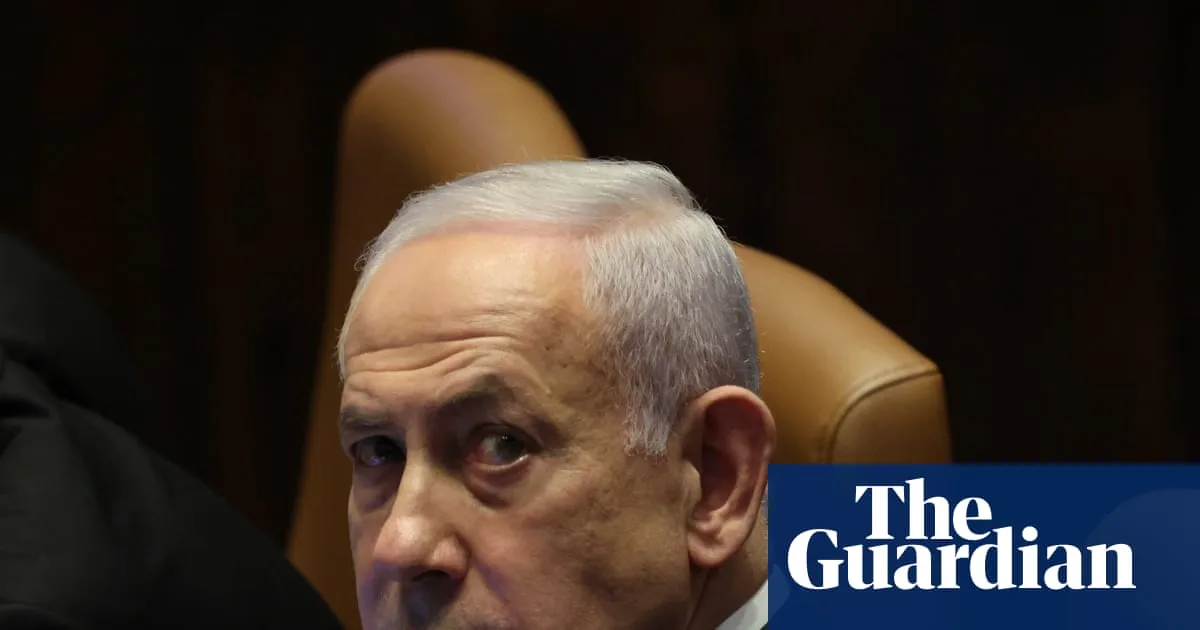
Greens Warn Australia's New Hate Speech Laws Could Criminalise Criticism of Israel
Greens: Hate Speech Laws May Target Israel Critics

Greens Raise Alarm Over Australia's New Hate Speech Legislation

The Australian Greens have issued a stark warning that the federal government's recently passed hate speech bill could have far-reaching consequences for free political expression. According to Greens justice spokesman David Shoebridge, the legislation might criminalise reasonable criticism of foreign governments, specifically targeting those who voice opposition to Israel and its Prime Minister, Benjamin Netanyahu.

Unprecedented Expansion of Government Powers

Shoebridge contends that rushed amendments agreed between Labor and the Coalition following the Bondi terror attacks represent what he calls "an unprecedented expansion of political power." The legislation grants authorities the ability to ban organisations and criminalise speech based on what he describes as "vague standards" that include tests like "ridicule" and "contempt."

"I think people don't realise that the Coalition cut a deal with Labor yesterday that didn't narrow the scope of this legislation to groups that are promoting violence or breaching the law," Shoebridge stated. "The deal the Coalition cut with Labor in the last 24 hours massively expanded it."

The Greens spokesman explained that the legislation incorporates seven different state laws, meaning conduct that breaches any of these could lead to organisations being banned, members facing criminalisation, and potential prison sentences ranging from five to fifteen years.

Government Defends Legislation as Necessary Protection

Prime Minister Anthony Albanese and Home Affairs Minister Tony Burke have firmly rejected these claims, insisting the laws are essential for protecting Australians, particularly members of the Jewish community. Both ministers have defended the legislation as containing appropriate safeguards and being necessary for national security.

Burke emphasised that any action under the new laws requires a recommendation from the Australian Security Intelligence Organisation (ASIO). "There's a first step from ASIO and if they don't open the door, there is nothing for a minister to do," he told ABC radio. "It is important that no minister, whether it is me or anyone into the future, is able to start using powers like this to try to make things difficult for political opponents."

Legal Experts Voice Free Speech Concerns

Constitutional expert Anne Twomey has raised concerns about ambiguity within the laws, warning they risk having a chilling effect on free speech. She noted that criticism of Israel and suggestions the country might be engaged in genocide could potentially trigger the legislation's provisions about inciting racial hatred.

"It seems that the implication is criticism of Israel, and the Israeli government, and suggesting it is engaged in genocide or something of that kind, would be enough to at least trigger the start of the process," Twomey observed. "At least this is in play. But we don't know if a minister, in making this kind of decision, would take that view."

Community Groups Express Opposition

The Progressive Jewish Council of Australia has accused Labor of what it calls a "Trumpian repression of our democratic rights." The council released a statement claiming the laws represent "an attempt to slander and intimidate hundreds of thousands of Australians who have been protesting against Israel's genocide and egregious human rights abuses."

Palestine Action Group spokesperson Josh Lees warned that the changes should be "deeply disturbing to everyone in this country," adding that "our politicians and our ministers cannot be trusted with such powers."

Attempted Amendments and Human Rights Considerations

A group of independent senators, including David Pocock, sought to amend the bill to clarify that the new aggravated sentencing provisions would not apply to instances involving criticism of foreign states or discussion of international law matters. However, this amendment was unsuccessful.

Australian Human Rights Commission president Hugh de Kretser has called for stronger safeguards in the new laws around banning hate organisations, particularly emphasising the importance of procedural fairness. While welcoming laws to prohibit hate groups as part of Australia's international treaty obligations, he stressed that proper safeguards are essential.

"Procedural fairness is a standard requirement when government officials are making decisions that affect the interests of people," de Kretser explained. "That means they have a chance to explain, if relevant, why they think the decision shouldn't be made. That is a real safeguard against inappropriate decisions being made."

Government Focus on Extremist Groups

Attorney General Michelle Rowland has clarified that groups such as the neo-Nazi organisation the National Socialist Network and the Islamist group Hizb ut-Tahrir would be the primary focus of the new laws. She told ABC TV that other criteria, including breaching relevant state laws dealing with racial vilification, would also need to be met for the legislation to apply.

Prime Minister Albanese has defended the amended laws as sensible reform, stating: "People will have tried to draw all sorts of analogies around this legislation, both on guns and on hate. None of them are based on reality. This is sensible reform." He added that the legislation's operation would become clear in practice, refusing to pre-empt specific processes.




