
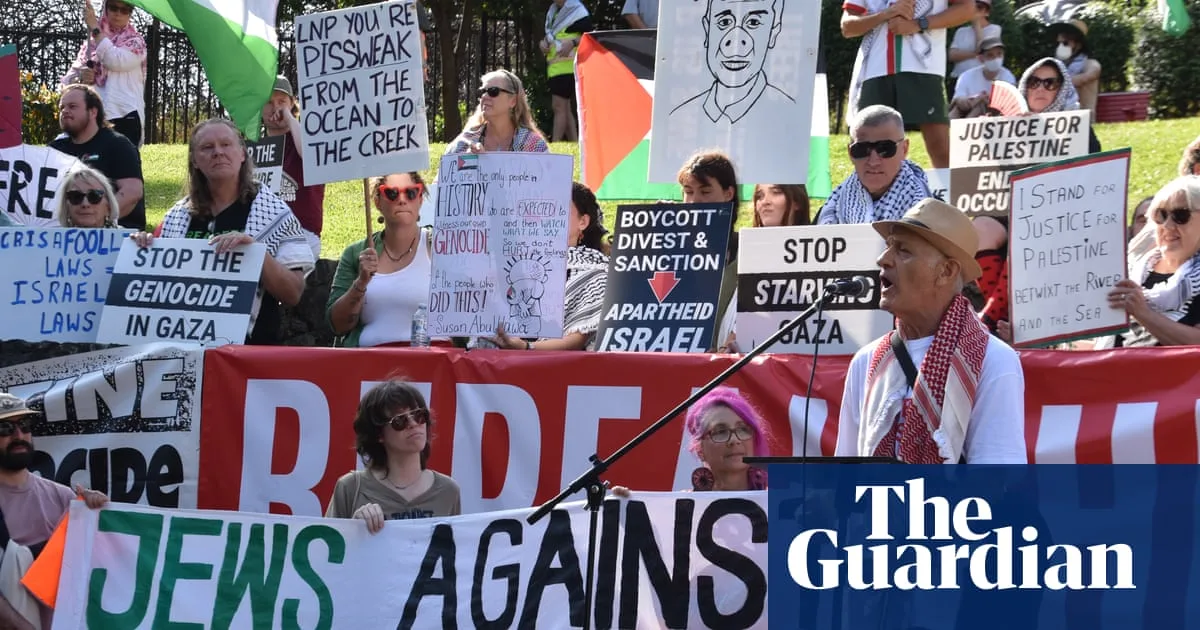
A group of pro-Palestine protesters has launched a High Court challenge to a Queensland law banning the slogans “from the river to the sea” and “globalise the intifada”, arguing that the ban is an unconstitutional restriction on free speech. The challenge, filed on behalf of seven individuals, comes after more than 30 people were arrested and charged under the legislation since it took effect in March.
The law, passed by Queensland’s Liberal National party government in response to December’s Bondi terrorist attack, makes reciting, distributing, publishing or displaying either expression an offence punishable by up to two years’ imprisonment, if doing so might reasonably be expected to cause a member of the public to feel menaced, harassed or offended. There is no requirement that such a person actually exist.
In documents lodged with the court last week, the applicants allege that the ban amounts to “a direct, content-based restriction” on speech that effectively targets the pro-Palestine movement. They argue that the law imposes a burden on the implied freedom of political communication in the Australian Constitution without a legitimate purpose, and that it creates inequality by outlawing certain perspectives in political discourse. The group also claims that individuals may be deterred from expressing their political views for fear of arrest, conviction or imprisonment.
Queensland Premier David Crisafulli has previously defended the legislation, describing the phrases as antisemitic. “We just don’t want them to use the two phrases that have been singled out as the hatred that allowed what came on to the shores of Bondi,” he said in June. The applicants include Remah Naji, a member of the Justice for Palestine group, as well as four protesters who have been arrested and charged: Stephen Heydt, Ed Carroll, Sam Watson and Kathryn Dennehy. Watson was previously detained by the Israel Defense Forces in May after participating in the Global Samud flotilla.
The group argues that “from the river to the sea” has no fixed meaning and is not inherently racist, antisemitic or violent, listing 12 alternative interpretations, including “an expression of Palestinian identity” and “denouncing the genocide in Gaza”. While the law provides defences for genuine artistic, religious, educational or historical purposes, the applicants contend that these “reasonable excuse provisions” are unconstitutional because the burden of proving them falls on the individual. They also note that even if acquitted, protesters would still have endured arrest and detention.




