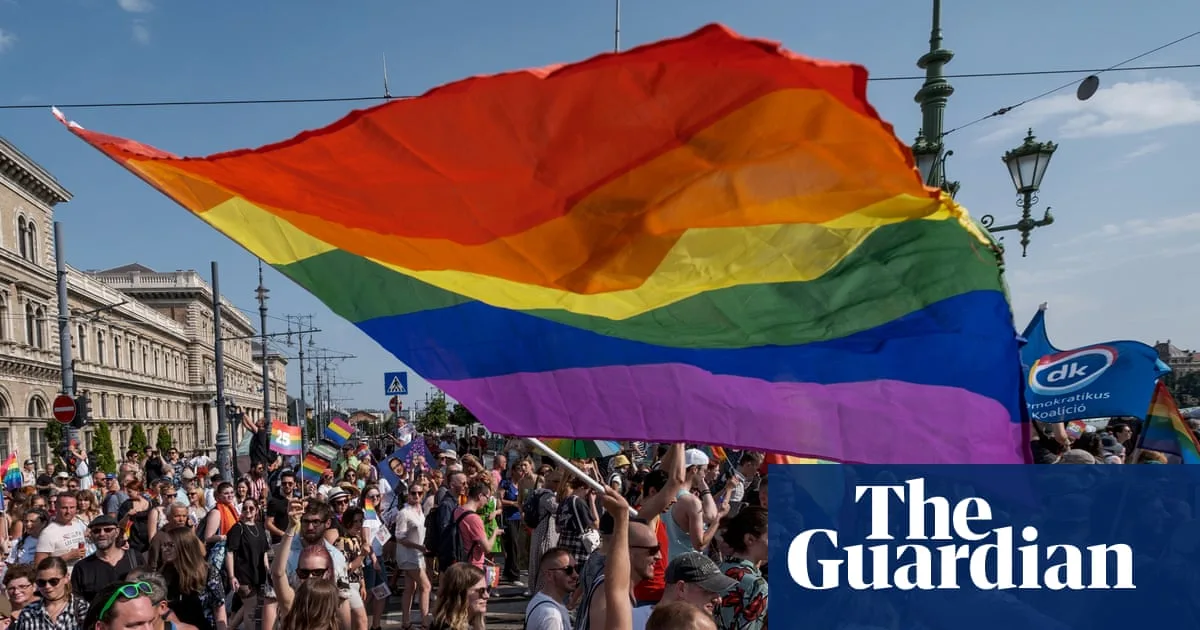
EU Court Rules Hungary's Anti-LGBTQ+ Law Violates Bloc's Fundamental Values
EU Court: Hungary's Anti-LGBTQ+ Law Violates EU Law

EU Court Delivers Landmark Ruling Against Hungary's Anti-LGBTQ+ Legislation

The European Court of Justice has issued a decisive ruling that Hungary's controversial legislation, which bans the availability of LGBTQ+ content to minors, constitutes a clear violation of European Union law. The judgment, delivered on Tuesday, represents a significant legal rebuke to the nationalist-populist government of outgoing Prime Minister Viktor Orbán.

Foundational Treaty Breached

In a landmark decision, the Luxembourg-based court found that the Hungarian law, adopted in 2021, breaches Article 2 of the EU's foundational treaty. This article defines the bloc's core values, including respect for human dignity, freedom, democracy, equality, the rule of law, and respect for human rights, with specific protection for persons belonging to minorities. The court stated that the legislation "stigmatizes and marginalizes" LGBTQ+ persons and fails to uphold the EU's prohibition of discrimination based on sex or sexual orientation.

Content and Context of the Controversial Law

The Hungarian law prohibited the display to minors of any content that depicts homosexuality or gender change. It also introduced harsher penalties for crimes of pedophilia, a provision that critics argue deliberately conflates homosexuality with criminal behavior. The government defended its policies as necessary to protect children from what it termed "sexual propaganda," a stance that led to further measures, including a constitutional amendment that effectively banned the popular Budapest Pride event.

Wide Pickt banner — collaborative shopping lists app for Telegram, phone mockup with grocery list

Human rights groups have widely condemned the legislation, drawing comparisons to Russia's 2013 gay propaganda law. In defiance of the government's stance, over 100,000 people participated in a Budapest Pride march last year, highlighting significant public opposition.

Broader Legal Violations Identified

The court's ruling extends beyond human rights concerns. It also determined that the law breaches rules relating to services within the EU's internal market and violates data protection laws. This comprehensive finding marks the first time the court has ruled against an EU member state for violating Article 2 in such a context, setting a powerful precedent for future cases involving fundamental rights within the bloc.

Political Shifts and Future Implications

The ruling comes amid a major political transition in Hungary. Orbán's government was defeated in a landslide election on April 12 by the center-right Tisza party, led by Péter Magyar, ending Orbán's 16-year tenure. Magyar's government, expected to take office in mid-May, has pledged a more constructive relationship with the EU.

During his campaign, Magyar was cautious about engaging in Orbán's culture-war debates over LGBTQ+ rights. However, in his victory speech, he signaled a potential shift, stating that Hungary would become a country "where no one is stigmatized for loving someone differently than the majority." This ruling places significant pressure on the incoming administration to align national legislation with EU standards and fundamental rights.

The European Court of Justice's decision underscores the EU's commitment to upholding its core values across all member states, reinforcing legal protections for LGBTQ+ individuals and setting a clear boundary against discriminatory national laws.

Pickt after-article banner — collaborative shopping lists app with family illustration




