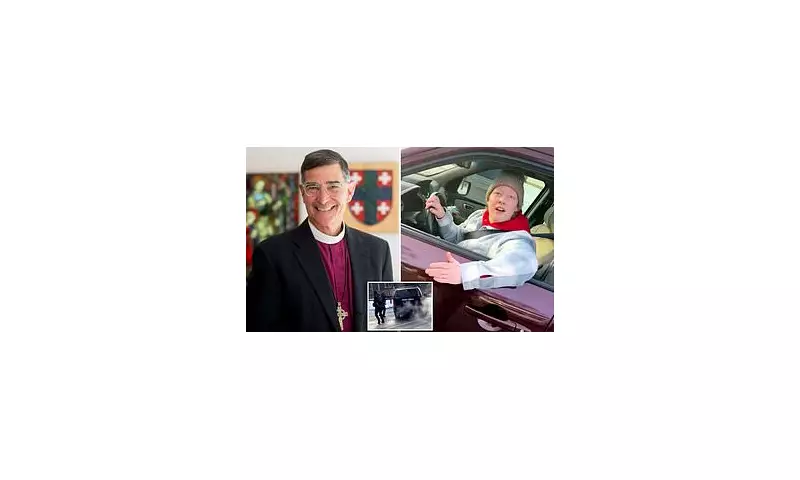
A bishop from the Episcopal Church of New Hampshire has drawn intense national scrutiny after delivering a stark message to his clergy, urging them to finalise their wills and prepare for a potential 'new era of martyrdom'.
A Call to Preparedness and a Declaration of Martyrdom
Bishop Rob Hirschfield made his controversial remarks during a vigil on January 9 honouring Renee Good, who was fatally shot by Immigration and Customs Enforcement (ICE) Officer Jonathan Ross in Minneapolis, Minnesota. Hirschfield explicitly referred to Good as a 'martyr', a label that has fuelled significant debate.
'I have told the clergy of the Episcopal diocese of New Hampshire that we may be entering into that same witness,' Hirschfield explained at the New Hampshire State House. 'And I've asked them to get their affairs in order, to make sure they have their wills written.'

The bishop framed this call to action as a necessary step for Christians ready to 'stand between the powers of this world and the most vulnerable'. He argued that the time for mere statements may be over, requiring physical, non-violent witness.
Contested Narrative of the Minneapolis Shooting
The incident that prompted the bishop's speech occurred on January 7. According to witnesses, Good and her wife, Rebecca, were acting as legal observers during ICE enforcement operations. Surveillance footage shows Good's SUV stationary, apparently blocking a road for about four minutes.
Footage then shows an officer, identified as Ross, approach the vehicle. As the Honda Pilot began to move forward, Ross fired three shots. Trump administration officials have defended Ross, stating he acted in self-defence. However, this account has been challenged by Minneapolis Mayor Jacob Frey and Minnesota Governor Tim Walz, who have questioned the official version based on the available video evidence.
Following the shooting, the White House issued a sharp rebuke to the bishop's comments. Spokesperson Abigail Jackson told NBC News: 'Anyone who interferes with federal law enforcement operations is committing a crime and will be held accountable to the fullest extent of the law.'
Historical Context and Theological Justification
In his address, Bishop Hirschfield placed Good's death within a long historical and theological framework. He lamented what he described as the corruption of the Christian church after its alliance with state power under Emperor Constantine.
'We are now, I believe, entering a time, a new era of martyrdom,' he declared. He cited historical figures like Jonathan Daniels, a New Hampshire seminary student shot dead in Alabama in 1965 while protecting a civil rights activist, as examples of faithful witness.
Hirschfield directly linked Good's death to other high-profile cases of police violence, specifically invoking the memory of George Floyd, who was killed by Minneapolis police in 2020. 'The cruelty, the injustice, the horror that we saw unleashed in Minneapolis... we've seen it so many other times,' he stated.
Despite the strong reaction, Hirschfield told NHPR he was surprised by the attention, calling his message 'nothing new'. He clarified that he was not advocating violence but 'peaceful, non-violent resistance'. His call, he insisted, was about spiritual preparedness rooted in the practice of Jesus's love.
The bishop's remarks have resonated within wider Episcopal leadership. Presiding Bishop Sean W. Rowe recently urged continued advocacy for immigrants and refugees, while Minnesota's Rt. Rev. Craig Loya called for mobilising 'with Jesus's hope' and love in a troubled world.