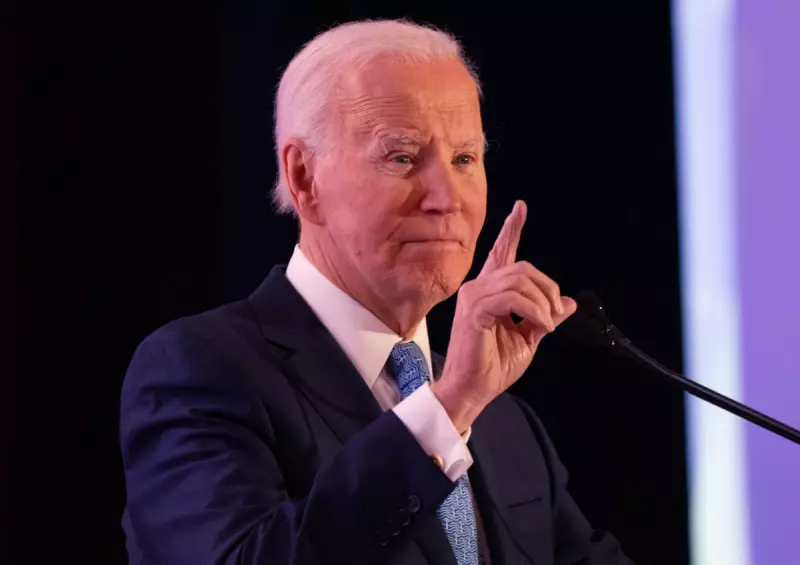
President Joe Biden has forcefully rejected a major piece of Republican legislation, wielding his veto power to block a bill that sought to significantly curtail protections for transgender Americans. The move, announced on Friday, solidifies a defining political battle over civil rights and federal policy.
The Veto and the Bill's Intent
The legislation, known as the Protection of Women and Girls in Sports Act, was passed by the Republican-controlled House of Representatives. Its core provision aimed to legally define sex based solely on a person's reproductive biology at birth. This definition would have effectively barred transgender women and girls from participating on female sports teams at schools and colleges receiving federal funding.
Proponents of the bill, primarily Republican lawmakers, argued it was necessary to ensure fairness and safety in women's athletics. They contended that transgender athletes who went through male puberty retain physical advantages. The bill's passage through the House represented a key victory for social conservatives who have made the issue a central campaigning point.

However, in his veto message, President Biden condemned the legislation as discriminatory. He stated it targeted vulnerable transgender children for political purposes and ran counter to the American value of inclusivity. The President emphasised that the majority of states already have sports associations setting their own rules, making the federal law unnecessary and harmful.
A Broader Clash Over Title IX
This veto is not an isolated incident but the latest salvo in a protracted war over the interpretation of Title IX, the landmark 1972 law prohibiting sex-based discrimination in education. The Biden administration has been actively working to expand the scope of Title IX to explicitly include protections based on gender identity and sexual orientation.
This regulatory push directly conflicts with the goals of the Republican bill and similar laws enacted in over 20 Republican-led states. The administration's proposed rules would, in many cases, prevent schools from imposing blanket bans on transgender athletes, requiring instead a more individualised approach. President Biden framed his veto as a defence of this broader principle, stating his administration's policies are designed to combat bullying and enhance support for all students.
The political divide was starkly illustrated by the immediate reactions. The White House released a fact sheet championing the administration's record on LGBTQI+ equality. Conversely, House Speaker Mike Johnson lambasted the veto, accusing the President of putting "radical gender ideology" ahead of women's rights and vowing that Republicans would continue to fight for the bill's principles.
Political Implications and the Road Ahead
The veto has immediate and symbolic consequences. Practically, it stops the bill from becoming law, as Republicans lack the two-thirds majority in both chambers needed to override a presidential veto. Symbolically, it serves as a powerful statement of the administration's priorities and sets a clear campaign trail contrast ahead of the next election.
This action ensures that transgender rights remain a frontline issue in America's culture wars. It energises both the Democratic base, which sees it as a necessary stand for civil liberties, and the Republican base, which views it as federal overreach undermining women's achievements. The debate now shifts back to the states, the courts, and the regulatory process, where the battle over Title IX's final rules will continue to rage.
Ultimately, President Biden's veto is more than a procedural block; it is a political declaration. It affirms his commitment to an expansive view of civil rights protections, directly challenging a conservative movement seeking to roll them back. The standoff guarantees that the rights of transgender Americans will be a defining and deeply divisive issue in American politics for the foreseeable future.