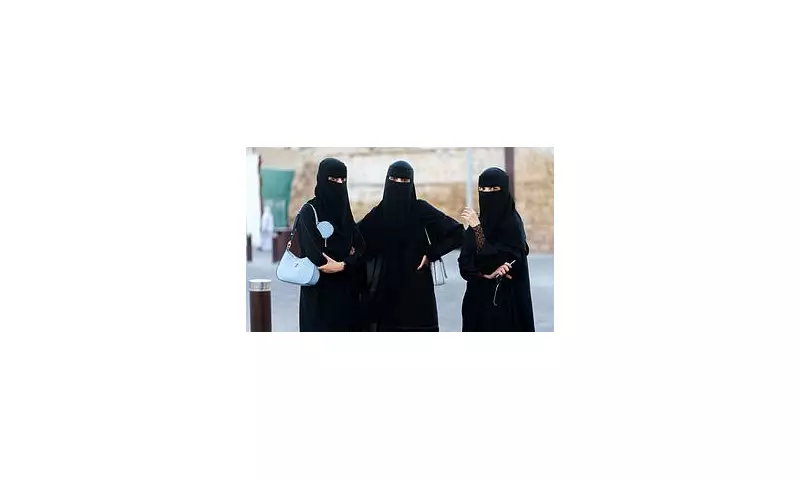
The ruling People's Party (PP) in Spain's Balearic Islands has formally proposed a parliamentary ban on the burka and niqab in public, arguing the garments symbolise female submission and contradict democratic values.
Proposal Framed as Defence of Women's Rights
Presenting the motion in the regional parliament in Palma, Mallorca on Wednesday, PP deputy Cristina Gil stated the full-face Islamic veils were 'incompatible with a democratic society'. She insisted the policy 'is not aimed at any religion' but is designed to defend 'the freedom, dignity and equality of women'.
Gil cited the Spanish constitution's call for gender equality, asserting that 'religious freedom cannot be used to justify discriminatory practices'. She referenced bans in other European nations including France, Belgium, Denmark, Austria, Bulgaria, and Switzerland, declaring 'Spain cannot lag behind in the defense of human rights'.

Comparisons and Calls for National Legislation
According to local reports, the deputy drew stark comparisons between the burka and niqab and what she termed the 'utter barbarities' of female genital mutilation and forced child marriages. The proposal calls on Spain's Prime Minister, Pedro Sánchez of the Socialist Workers' Party, to enact nationwide legislative reforms to prohibit the use of the full-face Islamic veil in all public buildings.
The Balearic government, led by President Marga Prohens of the PP, formed a right-wing minority cabinet in May 2023 with support from the hard-right Vox party. This move aligns with similar legislative pushes elsewhere in Europe.
European Context and Legal Precedents
The proposal in the Balearics follows a wider European trend. In October, Italy's ruling Brothers of Italy party, led by Prime Minister Giorgia Meloni, put forward legislation to ban the burqa and niqab in public spaces to combat 'cultural separatism'. The bill proposes fines from 300 to 3,000 euros for violations.
Similarly, Portugal's parliament approved a bill in October, proposed by the hard-right Chega party, to ban face veils for 'gender or religious motives' in most public spaces, with fines ranging from 200 to 4,000 euros. Forcing someone to wear one could result in a prison term of up to three years.
France was the first European country to introduce a blanket public ban on burqas in 2011. The European Court of Human Rights has consistently upheld such bans, ruling in 2017 that states may restrict these garments to protect 'living together' in society.
The debate over full-face coverings remains deeply polarising across the continent, balancing arguments on security, integration, and religious freedom against firmly held views on gender equality and women's rights.