BAFTA Racial Slur Incident Sparks Complex Debate for Black People with Tourette's
For Black individuals living with Tourette syndrome, a recent incident at the British Academy Film and Television Arts Awards has provoked deeply complicated emotions. During the ceremony, a vocal tic manifested as a racial slur just as two Black stars from the movie "Sinners" were onstage, creating a firestorm that has resonated far beyond the event itself.
Clash Between Disability and Racial Harm
Chloe Winston, a 24-year-old who experiences coprolalia—the same verbal tic as John Davidson, the BAFTA nominee and Tourette syndrome advocate who yelled the slur—expressed the internal conflict many feel. "A tic is not intentional, but it still causes harm. And I think that does require accountability," she said. The utterance, occurring as Michael B. Jordan and Delroy Lindo presented the first award, overshadowed the night's festivities, sparking immediate outrage over the exposure of Black attendees to the slur.
Simultaneously, the disability community voiced frustration at a widespread lack of understanding about Tourette syndrome. However, anger has been particularly directed at broadcaster BBC for its decision to air the racial slur uncensored two hours after the live event, unlike most awards shows that operate on a tape delay. Apologies from both BAFTA and BBC have been criticized as insufficient, with the BBC planning to edit the incident from its iPlayer streaming service.

Advocacy and the Need for Nuance
The ordeal has compelled Black people with Tourette syndrome, from politicians to content creators, to speak out. They assert that showing empathy for those dealing with the disorder does not minimize the pain felt by the Black community. There is a growing demand for acknowledgment of the harm caused, alongside concerns that misinformation or stereotypes about Tourette syndrome could exacerbate racial profiling or discrimination for Black individuals who live with it.
Jhónelle Bean, an American Sign Language interpreter who is Black and has Tourette syndrome, took to TikTok to address the "complexity and duality of the situation," garnering over 3 million views. "Two things can be true at the same time," Bean explained. "Just because he ticced that does not mean it was intentional. But then also that still caused hurt or harm for people that heard it." She criticized the BAFTAs and BBC for retaining the slur in the broadcast, highlighting their power to remove it.
Understanding Tourette Syndrome and Coprolalia
Tourette syndrome is a neurodevelopmental disorder characterized by sudden, involuntary movements and sounds called tics, which can range from mild to severe. According to Dr. Jeremiah Scharf, a tic disorder specialist, symptoms typically emerge during elementary school age and peak between 10 and 14. Roughly 1.4 million people in the U.S. live with Tourette syndrome or a persistent tic disorder.
Coprolalia, defined as the involuntary utterance of obscene and socially unacceptable words, affects an estimated 10%-15% of people with Tourette syndrome. These vocal outbursts are biological and can be triggered by stress, such as lack of sleep or emotional upset. "Unfortunately, for this subset of people, it is incredibly disabling because they don’t want to say those things. It’s very distressing to them," Scharf noted, emphasizing the involuntary nature akin to a sneeze.
Struggles Against Racism and Ableism
The incident has stirred up broader struggles against both racism and ableism. Bean reported encountering discriminatory comments, such as suggestions that Davidson "should have been locked away" or muzzled. At the same time, she disagreed with social media discourse dismissing offense over the slur as something to "get over it."
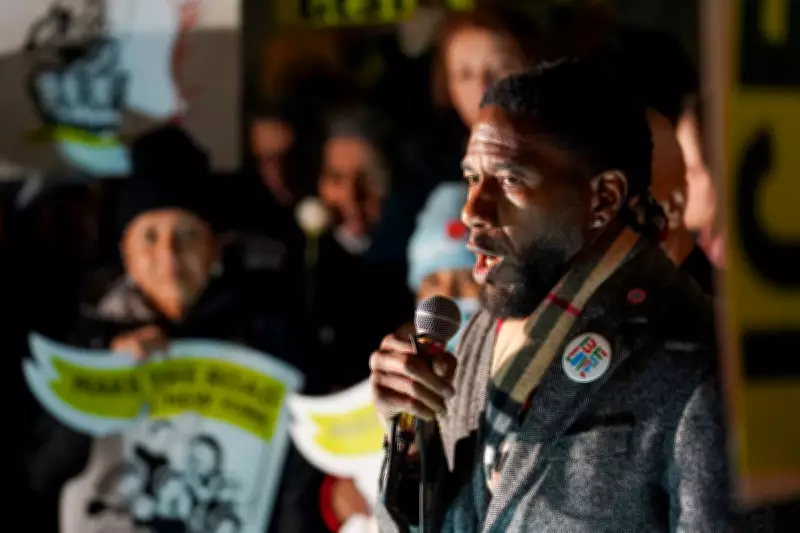
Jumaane Williams, New York City's public advocate who is Black and has coprolalia, described the physical and mental pain of suppressing a tic. While crediting Davidson for removing himself from the situation, Williams stressed the need for care: "I don’t think that happened for the two actors that were there or the Black folks who were there or people who didn’t want to hear the word."

Demand for Support and Community
Advocacy groups are leveraging the BAFTA moment to expand support networks for Black people with Tourette syndrome, who often feel isolated. Reice Griffin, a 20-year-old Tourette Association of America ambassador, highlighted inherent concerns, such as being mistaken for drug use or belligerence due to tics. Interactions with law enforcement are particularly stressful, given historical tensions and a lack of training on Tourette syndrome.
The association is actively working to offer more support for people of color, including virtual meetings for Black young adults. Griffin, who once thought public speaking was impossible due to her condition, now aims to help others feel less alone. "If I could help another young Black girl with Tourette syndrome not feel as alone or help people get diagnosed—that’s the dream," she said.
Williams echoed the need for greater support, sharing his experiences to connect with others. "Sometimes in the street or an event people will bring their family member up which is always a pretty emotional space for me because when I see the kid, I know what they’re going through," he reflected.