
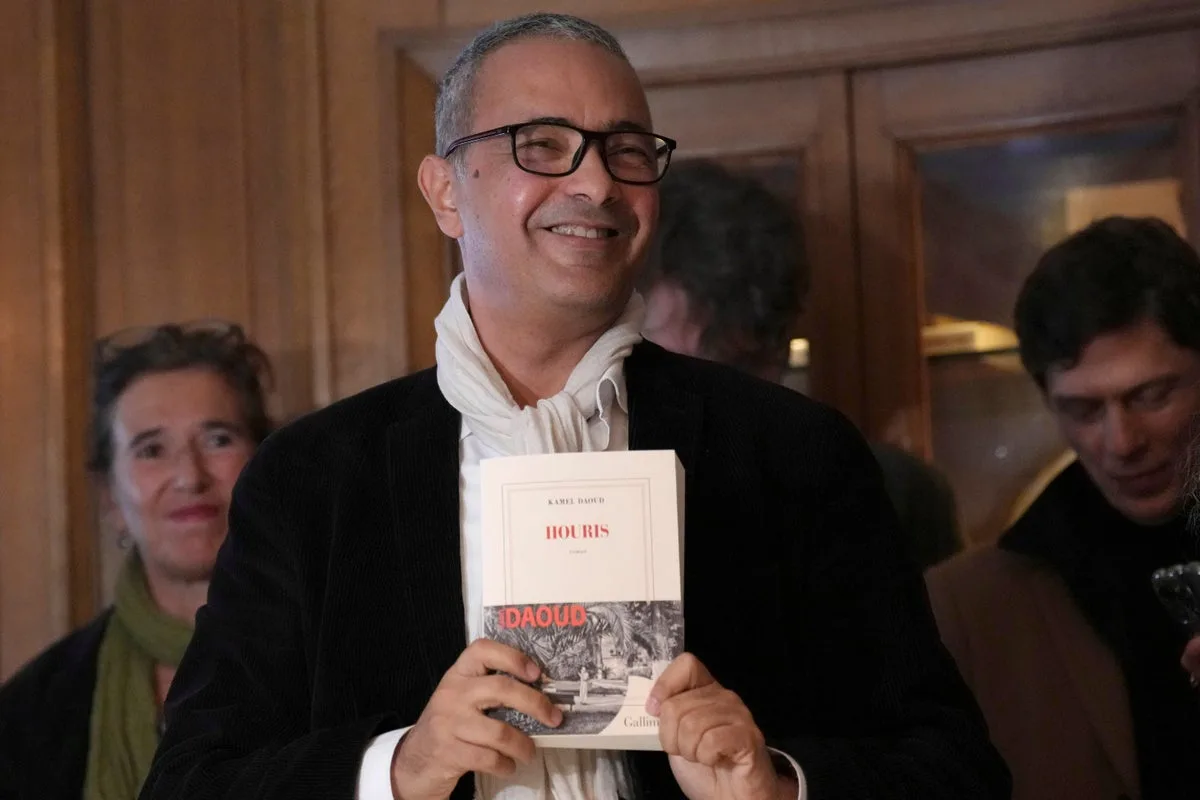
French-Algerian author Kamel Daoud has announced that he has been sentenced to three years in prison in Algeria for his award-winning novel Houris. In a post on X, Daoud stated that the verdict was delivered on Tuesday and that he was also fined 5 million Algerian dinars ($38,000).
Houris, which won France's prestigious Goncourt Prize in 2024, focuses on the victims of Algeria's 'black decade'—the civil war between the army and Islamist insurgents that erupted in 1991 after the cancellation of legislative elections. The conflict resulted in tens of thousands of deaths.
Daoud said he was convicted under the Charter for Peace and National Reconciliation, a 2005 law that granted pardons to armed Islamists and security forces. 'The text punishes any public mention of the civil war,' Daoud wrote. 'Ten years of war, nearly 200,000 dead according to estimates, thousands of terrorists granted amnesty … and only one guilty party: a writer.'
In addition to the prison sentence, Daoud faces two international arrest warrants issued by Algeria in May 2025 and the threat of losing his Algerian nationality. The author, who lives in France, has been critical of Islam, colonialism, and Algerian leaders in his works.
Another French-Algerian writer, Boualem Sansal, has faced similar legal troubles. Sansal was convicted of undermining national unity and insulting public institutions, receiving a five-year sentence under Algeria's anti-terrorism laws. He was granted a humanitarian pardon after an appeal by Germany's president and returned to France last year after serving one year in prison.




