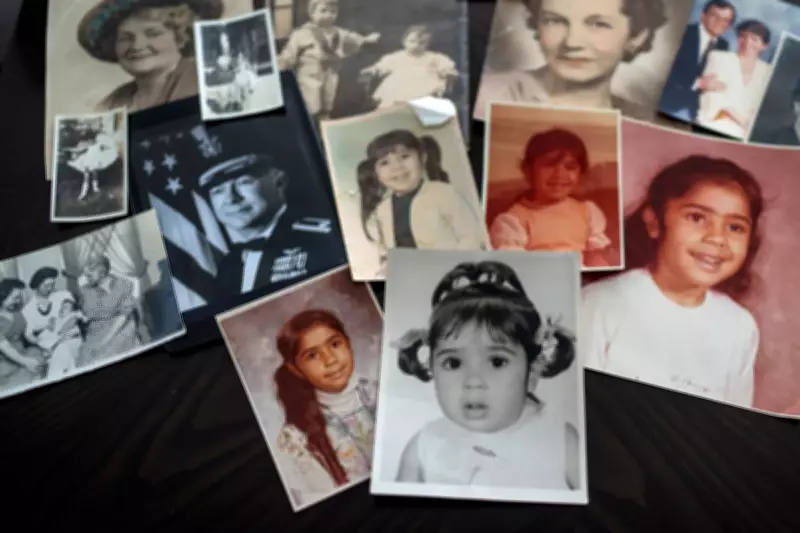
US Veteran's Iranian Adoptee Faces Deportation Amid Rising Tensions
A woman adopted as a toddler from an Iranian orphanage by an American war veteran is now confronting the terrifying prospect of deportation to Iran, a country where Christians face severe persecution and which is currently on the brink of conflict with the United States. This case highlights a critical flaw in adoption and immigration laws that has left thousands of international adoptees in legal limbo without citizenship.
A Life in Limbo Due to Legal Oversight
The woman, whose identity is being protected by The Associated Press due to her ongoing legal situation, received a letter from the Department of Homeland Security earlier this month ordering her to appear for removal proceedings. She is eligible for deportation because she allegedly overstayed her visa in March 1974—when she was just four years old. Having no criminal record, she works in corporate healthcare, pays taxes, and owns a home in California.
"I never imagined it would get to where it is today," she said, expressing fear that deportation to Iran could be a death sentence given her Christian faith and her father's background as a US Air Force officer. "I always told myself that there is no way that this country could possibly send someone to their death in a country they left as an orphan."

Historical Context and Legal Gap
Adopted in 1972 at age two by a veteran who served as a government contractor in Iran, she returned to the US with her family in 1973. Her adoption was finalized in 1975, but at that time, parents had to separately naturalize their children through immigration authorities. Her parents, now deceased, seemingly believed the process was complete, as evidenced by a lawyer's letter from 1975 stating the matter was concluded.
She only discovered she wasn't a citizen when applying for a passport at age 38. Despite years of efforts to rectify her status—contacting the State Department, immigration officials, and lawmakers like Congresswoman Young Kim—she has faced dead ends. "It just baffles me that it's OK to send me to a foreign country that I could potentially die or I could get imprisoned because of a clerical error," she lamented.
Broader Implications and Advocacy
This case underscores a wider issue: Congress passed a bill in 2000 to grant automatic citizenship to international adoptees, but it was not made retroactive, excluding those born before February 27, 1983. A bipartisan coalition, including groups from the Southern Baptist Convention to liberal immigration advocates, has lobbied for legislation to protect older adoptees, yet no action has been taken.
Hannah Daniel, director of public policy for the Ethics and Religious Liberty Commission, called the situation "un-American and unconscionable," emphasizing the collision of concerns about international adoption and global Christian persecution. "We are a nation that prides itself on fighting for religious freedom both here and abroad," she said, "and it feels so antithetical to that to then say we're going to send this person to face a death sentence."
Risks in Iran and Personal Legacy
Ryan Brown, CEO of Open Doors, explained that in Iran, converts to Christianity from Islam face extreme discrimination, often viewed as enemies of the state. "It is assumed that if you are a Christian, that you are aligned to the West and you desire to see the regime toppled," he said, noting that converted Christians are routinely arrested, with some facing death sentences and harsh prison conditions, particularly for women.
The woman fears additional suspicion in Iran due to her father's military service. Reflecting on his legacy, she said, "I'm proud of my father's legacy. I'm part of his legacy. And what's happening to me is wrong. And I know that if he was here, it would break his heart to know that I'm on this path." A judge has delayed her hearing to next month, allowing her to appear remotely, but the threat of deportation looms large as geopolitical tensions escalate.