First US Deportation Flight Arrives in Uganda Under Controversial Third-Country Agreement
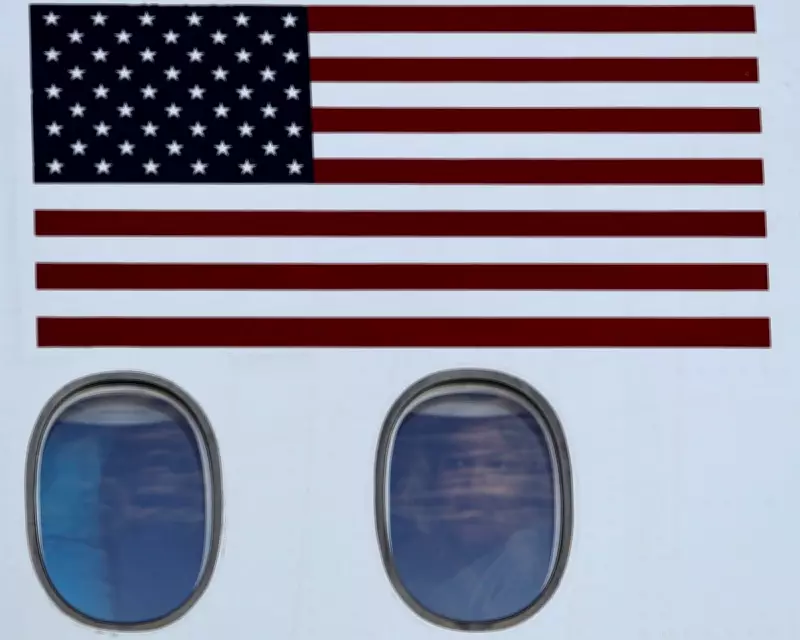
A deportation flight carrying individuals expelled from the United States has landed in Uganda, marking the inaugural implementation of a contentious third-country agreement signed between the two nations in August. The Trump administration is aggressively advancing its strategy of relocating migrants to countries with which they have no prior connections, a policy that has ignited significant legal and ethical debates.
Details of the Deportation Flight and Legal Backlash
The Uganda Law Society, which has strongly condemned the arrivals, confirmed that twelve individuals were aboard the flight. No further details regarding the deportees, including their nationalities, have been publicly disclosed. The society announced plans to file legal challenges in both Ugandan and regional courts, describing the process as "an undignified, harrowing and dehumanising process that has reduced [the deported people] to little more than chattel, for the benefit of private interests on both sides of the Atlantic."
According to an unnamed senior Ugandan government official, the deported individuals will remain in Uganda as "a transition phase for potential onward transmission to other countries." This arrangement underscores the complex and often opaque nature of third-country deportation schemes.

Expansion of US Third-Country Deportation Strategy
The United States has already deported dozens of people to various third countries across Africa, including Eswatini, Ghana, Rwanda, and South Sudan. These deportees originate from diverse regions such as Cuba, Jamaica, Yemen, Vietnam, Laos, and Myanmar, highlighting the global reach of the US immigration enforcement policies.
In a notable example, the US agreed to pay Eswatini $5.1 million to accept up to 160 third-country nationals. Five men were deported there in July, with an additional ten sent in October. Two have since been repatriated to Jamaica and Cambodia, while the remainder are held in a maximum security prison.
Official Statements and Diplomatic Cooperation
Yasmeen Hibrawi, a public affairs counsellor at the US embassy in Kampala, stated that all deportations "are in full cooperation with the government of Uganda." She added, "We do not, however, discuss the details of our private diplomatic communications and for privacy reasons, we cannot discuss the particulars to their cases."
Uganda's agreement with the US, announced in August, involves accepting individuals from third countries who might not qualify for asylum in the US but are "reluctant" to return to their home nations. The Ugandan government has stipulated that it will not accept people with criminal records or unaccompanied minors, though it has not clarified whether the US is providing financial compensation. Uganda already hosts nearly 2 million refugees and asylum seekers, primarily from neighbouring east African countries like the Democratic Republic of the Congo, Ethiopia, Eritrea, and Sudan.
Operational and Humanitarian Concerns
Oryem Okello, Uganda's minister of state for foreign affairs, suggested that the US may be "doing a cost analysis" to avoid dispatching flights with only a few passengers, noting, "You can't be doing one, two people at a time. Planeloads – that is the most effective way." This statement raises questions about the efficiency and humanity of large-scale deportation operations.
The scale of US immigration enforcement is substantial. US Immigration and Customs Enforcement (ICE) detained over 63,000 people in the US as of 12 March, according to government data. A report by the non-profit organisations Human Rights First and Raices revealed that between April 2025 and February 2026, 5,600 people, including toddlers and newborn babies, were imprisoned at an ICE detention centre in Dilley, Texas.
Orders for deportation to Uganda have been issued to hundreds of asylum seekers, according to the Associated Press, indicating that this initial flight may be just the beginning of a broader deportation campaign under the third-country agreement.