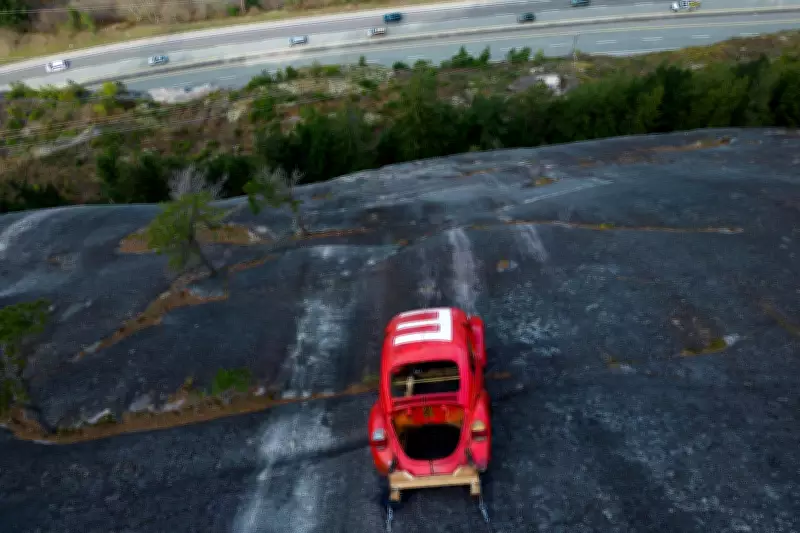
Authorities in British Columbia have issued a stern warning to the public to stay away from a rock face overlooking a major highway, where a red Volkswagen Beetle shell has been suspended in what appears to be an elaborate and potentially dangerous prank. The province's Environment Ministry confirmed on Monday that BC Parks is coordinating efforts to remove the vehicle within the coming week, with investigations underway by the Royal Canadian Mounted Police and park rangers.
Details of the Suspended Vehicle
The car shell, which first appeared last week above Highway 99 in Squamish, is prominently marked with a large 'E' on its roof. This distinctive symbol strongly indicates that the stunt is part of a long-standing tradition among University of British Columbia engineering students, who are known for placing Beetle shells in difficult-to-reach locations as a form of ritual or challenge.
Historical Context and Previous Incidents
This incident echoes a similar event from 2009, when a Beetle fell from the Iron Workers Memorial Bridge. In that case, Vancouver police arrested five students involved in a failed attempt to suspend the vehicle from the span, highlighting the risks associated with such pranks. The university has not yet responded to requests for comment regarding the current situation, leaving questions about student involvement unanswered.

Community and Cultural Concerns
Squamish Mayor Armand Hurford emphasized that the area around the Stawamus Chief rock formation holds deep cultural significance as a "sacred place" for the Squamish Nation. He noted that the site is also a popular destination for hikers and climbers, and what might have been intended as an "innocent prank" has negatively impacted the local community. "This is an area that deserves respect, and that wasn't the case here," Hurford stated, underscoring the need for greater awareness and consideration in such actions.
Ongoing Investigations and Public Safety
With authorities actively working to remove the suspended car shell, the focus remains on ensuring public safety and preventing similar incidents. The combination of environmental risks, cultural disrespect, and potential legal consequences has turned this prank into a serious matter, prompting broader discussions about responsibility and tradition in academic settings.