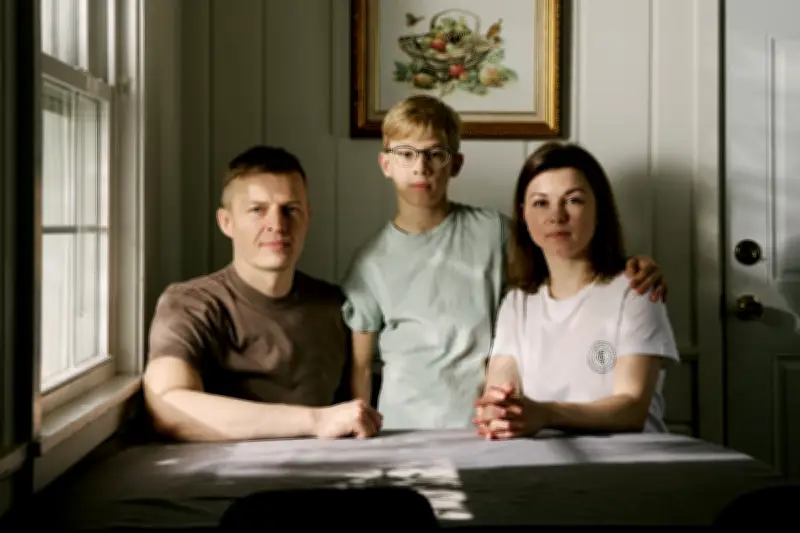
Tamila Vashchuk and her 10-year-old son face an immigration court hearing that could result in their deportation to Ukraine, where ongoing war and unreliable medical supplies would jeopardize the boy's health. The family, who run a successful pierogi business in Cleveland, Ohio, were issued removal orders after returning from Ukraine in December 2022, despite being told by US immigration officials that their humanitarian parole would allow re-entry without issues.
Background and Medical Need
Four years ago, Tamila noticed her son was not growing as expected. Facing high medical costs in Ohio, she and her son returned to Kyiv for affordable diagnostic tests. Before leaving, Tamila visited the US Citizenship and Immigration Services office in Cleveland and called Customs and Border Protection at Cleveland airport, receiving repeated assurances that their humanitarian parole stamps would permit re-entry. However, upon return through Boston Logan International Airport in December 2022, they were immediately issued removal orders for allegedly violating parole terms by leaving the US.
Legal and Health Risks
Tamila and her son now face a hearing rescheduled for August. If deported, the boy's hormonal deficiency requires daily refrigerated medication until age 18, but Russia's attacks on Ukraine's energy infrastructure have reduced electricity generation by 50%, making refrigeration near impossible. Additionally, the medication supply in Ukraine is unreliable, according to the family's doctor. Mykola Vashchuk, the husband and father, does not face deportation as he entered the US only once.
Immigration Court Challenges
Cleveland's immigration court is known for high asylum denial rates. TRAC, a research center at Syracuse University, found that judges there deny asylum in over 70% of cases. The judge assigned to the Vashchuks has the highest denial rate in the court. The Department of Homeland Security stated the family attempted illegal re-entry without valid documents and will receive due process.
Broader Context for Ukrainians in the US
Temporary protected status (TPS) for about 103,000 Ukrainians is set to end in October. The Trump administration froze the Uniting for Ukraine program, which allowed over 235,000 people to enter. Human rights groups urge extension, citing continued armed conflict in Ukraine. The US State Department categorizes Ukraine as a level four: do not travel area due to active combat and attacks on civilian infrastructure.
Community Impact and Family's Plea
Patrick Kearns, executive director of Re:Source Cleveland, notes that Ukrainian immigrants have been a boon to the local economy, with high graduation and post-secondary acceptance rates. He supports the bipartisan Ukrainian Adjustment Act to provide a pathway to permanent residency. The Vashchuks, who have two master's degrees and volunteer at church, have petitioned to dismiss removal proceedings but were denied. Mykola says, "We have appealed for help from local politicians but heard nothing back."