Sunrise Host Confronts Government Over 77,000 Illegal Residents
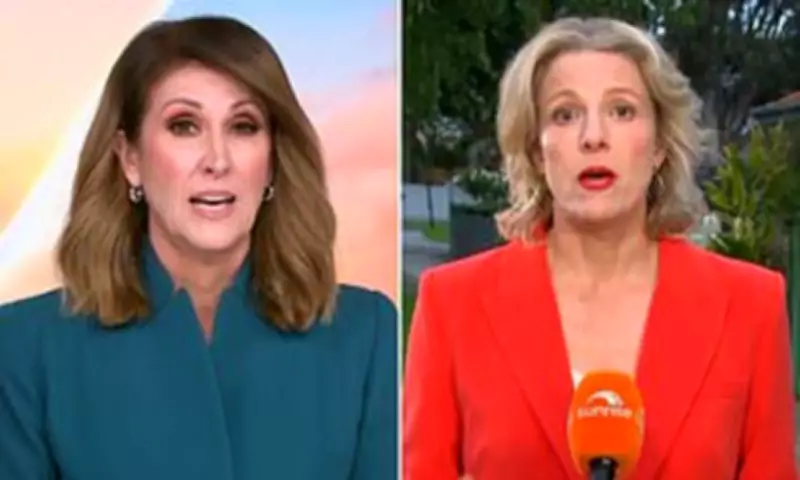
Sunrise presenter Nat Barr has issued a direct challenge to the Albanese government, demanding transparency about their strategy for dealing with the staggering number of individuals residing in Australia without legal authorization. This confrontation follows the revelation through a Freedom of Information request that tens of thousands of people continue to live in the country despite having their visas either cancelled or expired.
Government Data Reveals Alarming Figures
According to official Department of Home Affairs statistics, the number of people living in Australia illegally reached 77,700 by the conclusion of the last financial year. This substantial figure represents a significant challenge for immigration authorities and border security operations nationwide.
During a tense exchange on Wednesday's broadcast, Housing Minister Clare O'Neil stated firmly, 'My party takes a very grim view of people who don't follow the rules.' She elaborated, 'We've done a lot of work so far on trying to make sure that we remove people from the country who are not here with a legal basis. And I'd say very clearly to people, if you do not have a valid visa, you need to leave the country. Our government is working through that backlog at the moment.'

Minister Fails to Provide Specifics
Despite these strong statements, O'Neil struggled to offer concrete details when pressed by Barr about the practical implementation of these policies. The Sunrise host pointedly questioned, 'They're ignoring you, aren't they, because people have overstayed their visa or had it cancelled. How are you finding them if there's 77,000 left?'
In response, O'Neil maintained that the government possesses 'lots of ways of doing that,' explaining, 'Nat, what you see is our security agencies work very closely with the Department of Immigration to try to assist us in keeping on top of that problem.' However, she stopped short of outlining specific operational methods or timelines for addressing the substantial backlog.
Expert Criticism and Security Concerns
The minister's comments came after The Daily Telegraph published the concerning data alongside criticism from national security expert Dr John Coyne, director of the Australian Strategic Policy Institute. Coyne argued that the government has been operating without proper visibility regarding individuals who remain in the country unlawfully.
'These figures are an estimate because the government simply does not know who these people are and who remains in the country,' Coyne stated. 'This is the nature of overstayers. These figures indicate that, as a nation, we have challenges managing our air arrivals into the country, and they show we have a big challenge that has not markedly improved, despite an increase in spending.'
Coyne further emphasized that while Australians have historically focused on maritime arrivals, 'we are not prioritising air arrivals as much as we should.' This observation highlights a potential gap in current border security strategies that requires immediate governmental attention.
Political Context and Opposition Proposals
Immigration has dominated political discourse in Canberra recently, particularly after Opposition Leader Angus Taylor announced plans for a comprehensive overhaul of Australia's migration system. Taylor declared that the number of people attempting to remain in Australia illegally is 'out of control,' proposing several measures including:
- Expanded social media screening of visa applicants
- A new values-based compliance framework
- A 'safe country' list for certain asylum claims
- Tougher action against visa overstayers
- A return to temporary protection visas
While maintaining that Australia's migration program would remain non-discriminatory, Taylor advocated for a stronger stance on values compliance. This policy shift is widely viewed as an attempt to regain support from conservative voters who have shifted allegiance to Pauline Hanson's One Nation party following the coalition's significant election defeat.

Human Rights Concerns and Community Response
The opposition's proposals have faced substantial criticism from human rights organizations, Labor politicians, and community groups. Race Discrimination Commissioner Giridharan Sivaraman issued a stern warning, stating that such policies 'embolden Nazis and white supremacists, and pave the way for hatred towards diverse communities.'
'Whenever migrants are singled out, dehumanised or blamed, it gives permission for racism towards those people,' Sivaraman told AAP. 'Often the only signal as to whether someone is a migrant is the colour of their skin or their accent or their name, so it taps into a deep undercurrent of racism that is still very much flowing in this country.'
Despite Labor's condemnation of Taylor's plan as 'desperate dog-whistling,' Sivaraman noted that both major parties have contributed to scapegoating immigrants in different ways. This political dynamic has created uncertainty within migrant communities, particularly among Chinese-Australians who feel caught between political narratives.
Eric Yan Ma, a committee member of the Chinese Community Council of Australia's Victorian chapter, expressed frustration, telling AAP, 'I feel like nothing has changed since the last election. It is disheartening to see that one side of politics portrays us as a liability and the other side only see the utility of us. How about just see us as humans?'
The ongoing debate highlights the complex intersection of border security, human rights, and political strategy as Australia grapples with significant challenges in immigration management and community cohesion.