Death Investigator Recalls Chilling 2001 Carnegie Deli Massacre Scene
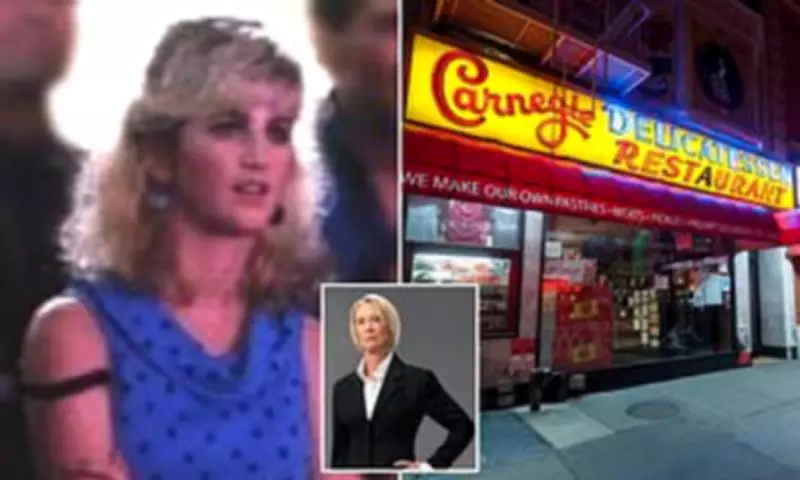
Barbara Butcher vividly remembers the moment she entered the loft-style apartment above Manhattan's famous Carnegie Deli on May 10, 2001. The first thing that struck her was the overpowering stench.
'I recall the smells distinctly. There was the pungent odor of marijuana, the metallic scent of blood, and the rich aroma of red wine sitting on a radiator by the door. These scents hit me all at once, and for some reason, that's what still sticks in my head,' she told the Daily Mail.
As a death investigator and chief of staff in the New York City Medical Examiner's Office, Butcher was dispatched to the grisly scene where five friends had been shot, with three fatalities. Upon arrival, she found the bodies of Charles Helliwell III, 36, and Stephen King, 32, lying face down on the lounge floor, their hands bound behind their backs with duct tape, and pools of blood emanating from their heads.

Survivors and Victim Details
Two others, Anthony Veader, 37, and Rosemond Dane, 36, miraculously survived gunshot wounds to the head and were rushed to a local hospital. Jennifer Stahl, a 39-year-old actor known for her role in the movie Dirty Dancing, was discovered in her recording studio, separate from the others. She suffered a gunshot wound to the head and was also taken to hospital, where she succumbed to her injuries hours later.
Standing amidst the bloody scene, Butcher began her meticulous work to reconstruct the events of that evening in Manhattan's theater district. Her role involved analyzing the scene, forensics, and victims' bodies, as well as interviewing witnesses to uncover what she describes as the 'choreography of murder.'
'When you're in a scene, you absorb everything—blood spatter patterns, body positions. As it comes together, you can see how it all played out. It's the intersection of forensics, the body, and the scene to solve a case,' she explained.
Investigative Process and Collaboration
Butcher's job required close collaboration with police, forensics teams, and medical examiners, though each had distinct objectives. 'Medical examiners perform autopsies to determine cause of death, such as a gunshot wound to the head. My task is to examine the body within the scene's context and relate the two to build the story,' she said.
She emphasized the importance of documentation, noting that it's crucial for backing up evidence in court. Over her career, Butcher has investigated more than 5,500 death scenes, including around 680 homicides, which she considers the 'most interesting job in the entire world.'
Inside the apartment, Butcher quickly gleaned insights into the victims' lives. Stahl, an aspiring actor struggling in her career, had turned to selling high-end marijuana, primarily to friends and entertainment industry contacts. Jars of marijuana buds and posters adorned the walls, while a bottle of red wine and half-drunk glasses painted a picture of the friends socializing before the attack.
Forensic Analysis and Crime Reconstruction
Working with the crime scene unit, Butcher documented and analyzed blood-spatter patterns, gunshot wound angles, and body locations to determine the positions of victims and killers during the shooting. For instance, blood spatter on walls can indicate whether a victim fell or was already prone, while gunpowder smudging and stippling reveal the gun's proximity to the body.
Butcher also assessed the order of death based on body temperatures and rigor mortis, which helped establish that the victims were compliant, lying on the floor as instructed. Evidence of ransacking suggested a robbery gone wrong, with money and marijuana missing. The lack of forced entry indicated the perpetrators were familiar with the apartment and victims.
When Veader and Dane recovered, they provided accounts of the attack. Piecing together the evidence, a narrative emerged: the friends were socializing when the doorbell rang, and a man identifying as Sean was let in. Sean Salley, 29, and Andre Smith, 31, entered, brandished guns, and announced a robbery.

Attack Details and Legal Proceedings
While one assailant tied up four victims, the other led Stahl into her recording studio. Survivors heard her plead for their safety before a gunshot rang out. Salley later claimed he accidentally shot Stahl due to shaky hands, but Butcher's investigation disproved this, showing he held the gun steadily against her forehead.
The other victims were lined up and shot execution-style in the back of the head. Veader survived when the bullet curved around his skull, allowing him to play dead and call 911 after the killers fled. Surveillance footage captured the perpetrators entering and leaving the apartment, leading to their identification.
Smith surrendered weeks later, and Salley was arrested in Miami after the case aired on America's Most Wanted. At trial in 2002, both turned on each other, but Butcher's forensic evidence was pivotal. 'The forensics don't lie. We could tell exactly what he did,' she stated.
Convictions and Lasting Impact
Both Smith and Salley were convicted of three counts of second-degree murder for the deaths of Stahl, Helliwell, and King, receiving three consecutive sentences of 25 years to life. Reflecting on the case nearly 25 years later, Butcher is struck by its senselessness. 'This was completely unnecessary. They could have just robbed everything and walked away. Why kill them? It's the nature of pure evil,' she said.
Butcher's career has included other harrowing cases, such as the 1995 Cherry family triple homicide and identifying victims after the September 11 terrorist attacks. These experiences have left her mindful of life's fragility but also appreciative of its joys. 'It changed how I approached life. I look for danger, but I also pay attention to the good things,' she shared.
Barbara Butcher will be speaking at the Hamptons Whodunit festival, a mystery and true crime event in East Hampton from April 16-19, 2026, with the Daily Mail as media partner.