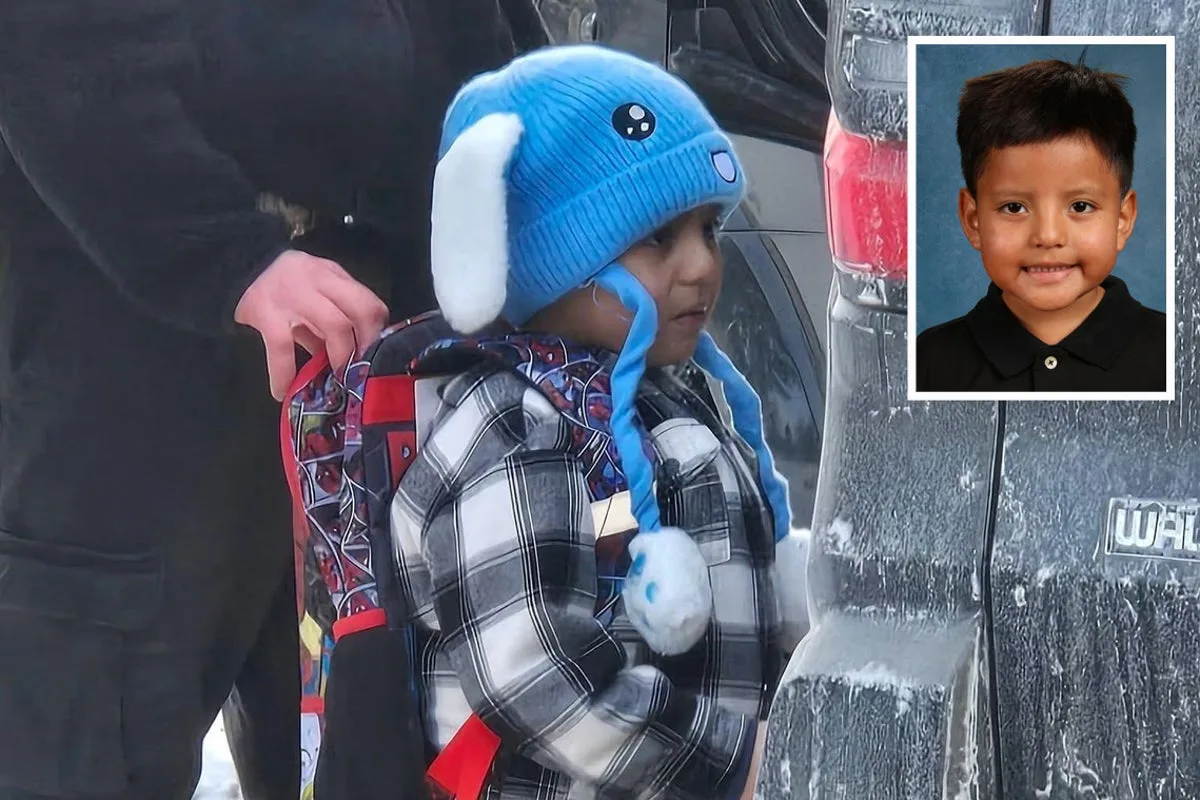
A five-year-old boy and his father were detained by Immigration and Customs Enforcement (ICE) in Minnesota and taken to a facility in Texas, according to school officials and the family’s lawyer. The boy, Liam Ramos, is the fourth student from Columbia Heights Public Schools to be caught up in ICE activity in Minneapolis in recent weeks.
The school district alleges that after officers apprehended Liam’s father, Adrian Alexander Conejo Arias, an agent removed the child from the still-running vehicle, led him to the door and directed him to knock in order to see if anyone else was home. “Essentially using a five-year-old as bait,” said Superintendent Zena Stenvik at a news conference on Wednesday. There was another adult at home who begged agents to let them care for the child but was refused.
Vice President JD Vance, who was in Minneapolis on Thursday, initially said he believed the report was “terrible” but later defended the ICE agents, stating that the father was “an illegal alien” and that agents were justified. “Well, what are they supposed to do?” Vance said. “Are they supposed to let a five year old child freeze to death? Are they not supposed to arrest an illegal alien in the United States of America?”
Department of Homeland Security assistant secretary Tricia McLaughlin said the arrest was “part of a targeted operation” and claimed an agent stayed with Liam for his safety. She stated that ICE did not target the child and that Conejo Arias fled on foot, abandoning his child. “Parents are asked if they want to be removed with their children, or ICE will place the children with a safe person the parent designates,” McLaughlin said.
Liam and his father were taken to a facility in San Antonio, according to family lawyer Marc Prokosch, who said they are not US citizens but have been following the legal process, including applying for asylum. The school district reported that two weeks ago, a ten-year-old girl was taken by ICE on her way to school with her mother, and on the same day as Liam’s detention, a seventeen-year-old student was taken by armed and masked agents on their way to school.