
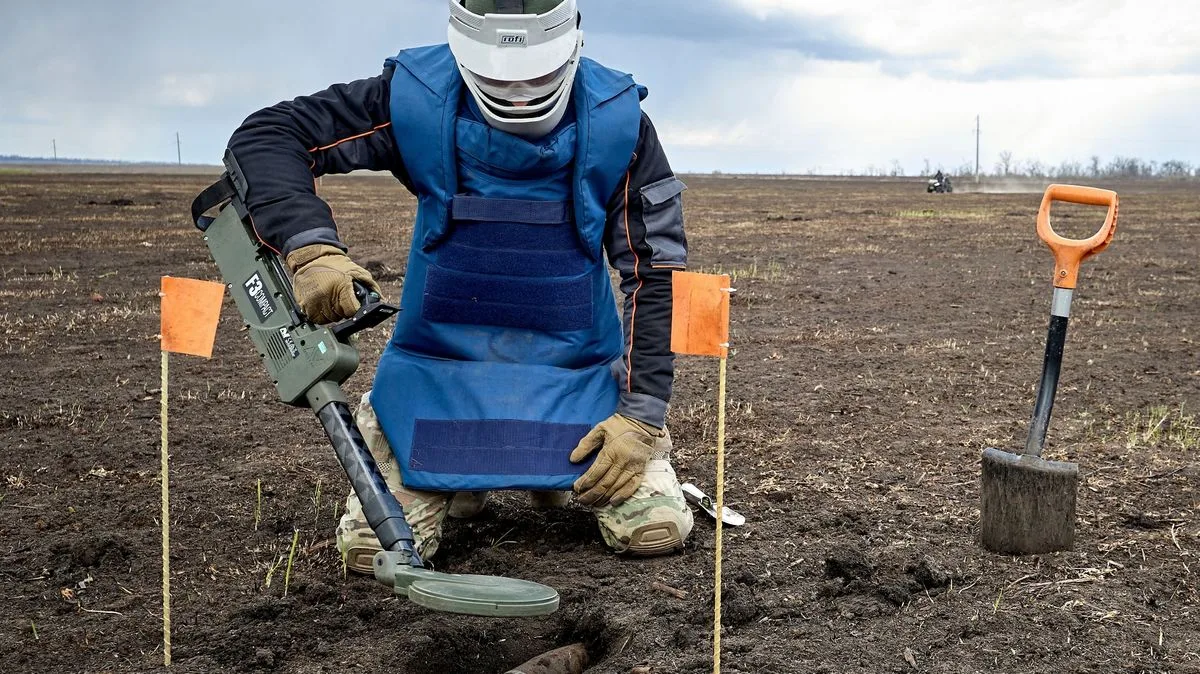
Humanitarian groups have warned that Russian forces are deploying disguised landmines resembling gingerbread men in Ukrainian cities, luring children to their deaths. The devices, known as 'Pryanik' (Russian for 'gingerbread'), are small, round munitions designed to look harmless but can cause severe injury or death when triggered.
Yuriy Boyechko, founder of Hope For Ukraine, said the city of Kherson has effectively become a 'minefield' after Russian forces began using cheap first-person-view (FPV) drones to scatter the disguised explosives across civilian neighbourhoods. 'Russia is using FPV drones to drop these mines all over residential areas in Kherson. If an adult steps on it, or a child finds it while playing in the grass … it will blow them up, or wound them badly,' he said.
Boyechko warned that civilians now face two overlapping dangers: direct drone strikes from above and invisible explosives below their feet. 'Right now, there are two types of dangers that civilians face – one is from the air, the FPV drones that target them directly. The other is the minefield underneath their feet,' he explained.
The 'gingerbread' mines are small enough to fit in the palm of a hand and are often shaped or wrapped to resemble toys or debris, increasing the risk to children. Officials say the activation pressure is extremely low, meaning even a small child stepping on one could trigger an explosion. Volodymyr Prepepelytsia, from the National Police in the Kherson region, said upgraded versions are more sophisticated and powerful, making them harder to detect and clear.
As of April 1, a total of 1,431 people, including 147 children, have been injured by mines and explosive remnants of war since the start of the full-scale invasion. In Kherson alone, authorities have opened hundreds of criminal cases linked to civilian casualties caused by explosives. Humanitarian operations have also been severely disrupted, with aid groups saying delivering food and supplies often turns into a dangerous operation.




