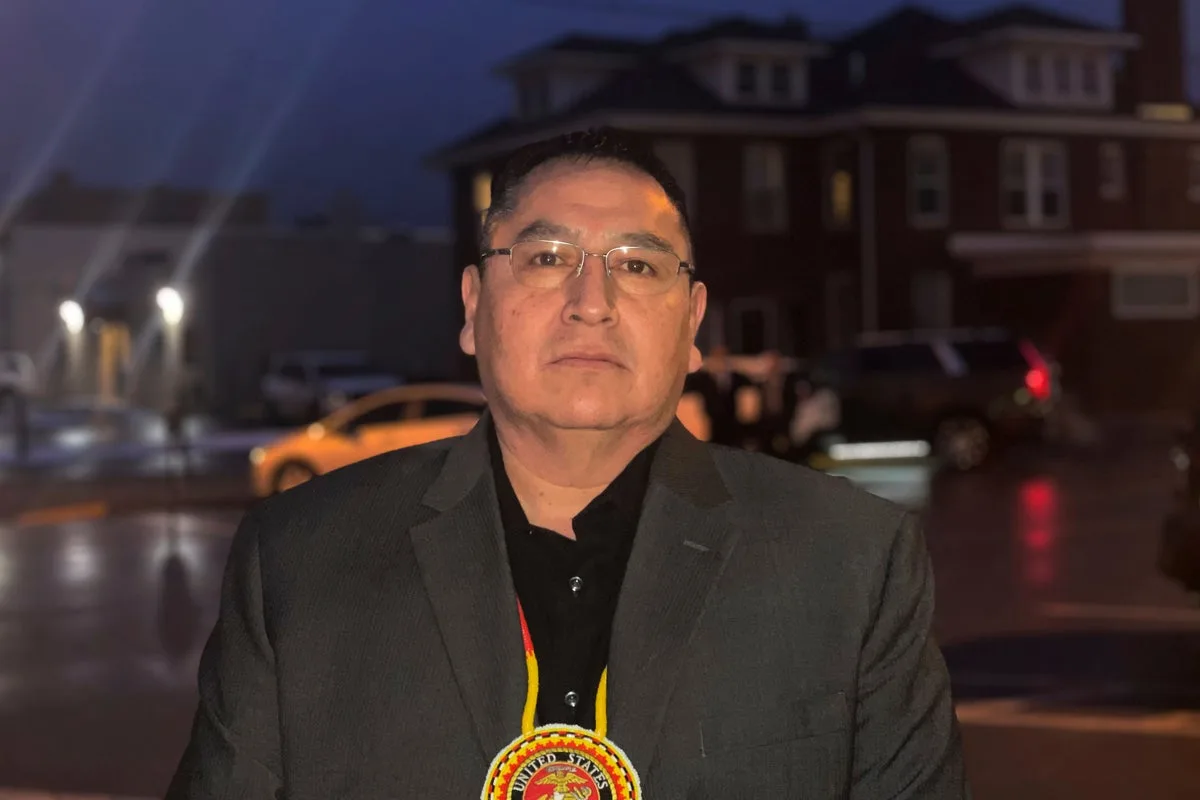
The president of the Oglala Sioux Tribe has retracted earlier claims that immigration enforcement arrested four tribal members and that the federal government demanded an “immigration agreement” in exchange for information about their whereabouts. In a memo released Thursday, President Frank Star Comes Out said his previous statements had been “misinterpreted.”
The U.S. Department of Homeland Security said it could not verify that any officers arrested or even encountered Oglala Sioux members, nor found anyone in detention claiming tribal membership. DHS denied asking for any agreement. Spokeswoman Tricia McLaughlin stated: “ICE did NOT ask the tribe for any kind of agreement, we have simply asked for basic information on the individuals, such as names and date of birth so that we can run a proper check to provide them with the facts.”
Star Comes Out had initially claimed on Facebook that four tribal members were arrested in Minneapolis, where Immigration and Customs Enforcement has launched its largest operation. He said federal officials told the tribe they could access information only by entering an immigration agreement. However, his updated memo clarified that federal officials merely suggested an agreement as “one option for the Tribe to have easier access to information.” He did not specify the agreement type.
The incident occurs amid broader concerns among Native Americans about immigration enforcement and racial profiling. Last year, Navajo Nation President Buu Nygren reported tribal citizens being stopped by ICE in Arizona and New Mexico. In November, actress Elaine Miles, a member of the Confederated Tribes of the Umatilla Indian Reservation, said ICE officers told her her tribal ID looked fake. A member of the Salt River Pima-Maricopa Indian Community was mistakenly slated for ICE turnover in Iowa before being released.
Tensions between the Oglala Sioux and DHS date back to when Homeland Security Secretary Kristi Noem was South Dakota governor. In 2024, Star Comes Out banned Noem from the Pine Ridge Reservation after she claimed without evidence that cartels were infiltrating reservations. Noem was banned from most of the state’s nine reservations during her governorship.