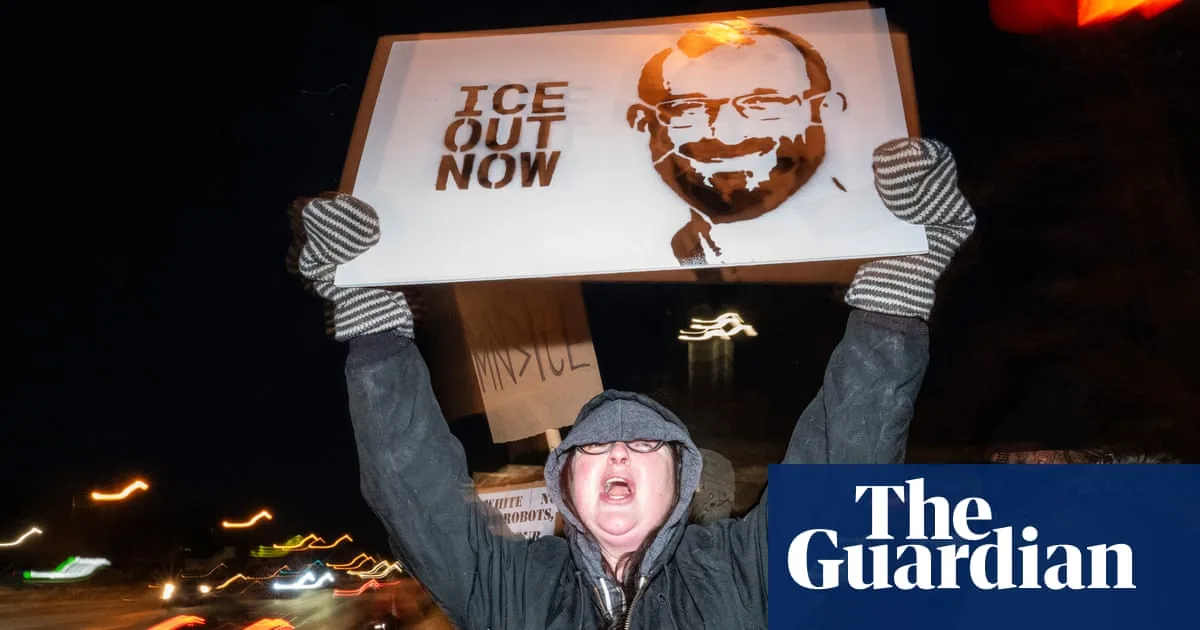
Hundreds of actions are set to take place across the United States on 30 and 31 January, as grassroots organisers protest against Immigration and Customs Enforcement (ICE) activity in their communities. The protests follow the deaths of at least eight people in connection with ICE since the start of the year, including the high-profile killings of Renee Good and Alex Pretti in Minneapolis.
On Friday, organisers led by student groups at the University of Minnesota are calling for a 'national shutdown', urging people to refrain from work, school, and shopping in an effort to stop funding ICE. The 'blackout' day is being referred to as a 'general strike' online. On Saturday, the national grassroots organisation 50501 will stage an 'ICE Out of Everywhere National Day of Action', with protests, demonstrations, and vigils planned in all 50 states and Washington DC.
Organisers are demanding justice for those detained or killed by ICE, including cases that have not gained widespread attention, such as the death of 55-year-old Cuban immigrant Geraldo Lunas Campos in ICE custody in El Paso, Texas, and the detention of five-year-old Liam Ramos in Minnesota. Polling from YouGov this week found that opposition to ICE has increased, with more Americans now supporting than opposing abolishing the agency.
Gloriann Sahay, a national coordinator with 50501, said: 'We are responding to people’s outrage. We’ve seen the Overton window shifting. We’re seeing people from typically non-political spectrums get involved in this conversation and say: “This doesn’t feel like America.”' The actions build on a mass mobilization in Minneapolis on 23 January, where hundreds of businesses closed and thousands protested against a local immigration enforcement surge.
On Friday, student groups will lead walkouts in Minnesota and call on peers nationwide to join. Saturday's protests will target ICE detention facilities, field offices, and airports, as well as the offices of US members of Congress who support ICE. Organisers also plan to challenge Democratic lawmakers who voted to fund the Department of Homeland Security or expand ICE's authority, naming representatives Henry Cuellar, Vicente Gonzalez, Don Davis, Laura Gillen, Tom Suozzi, Jared Golden, and Marie Gluesenkamp Perez.