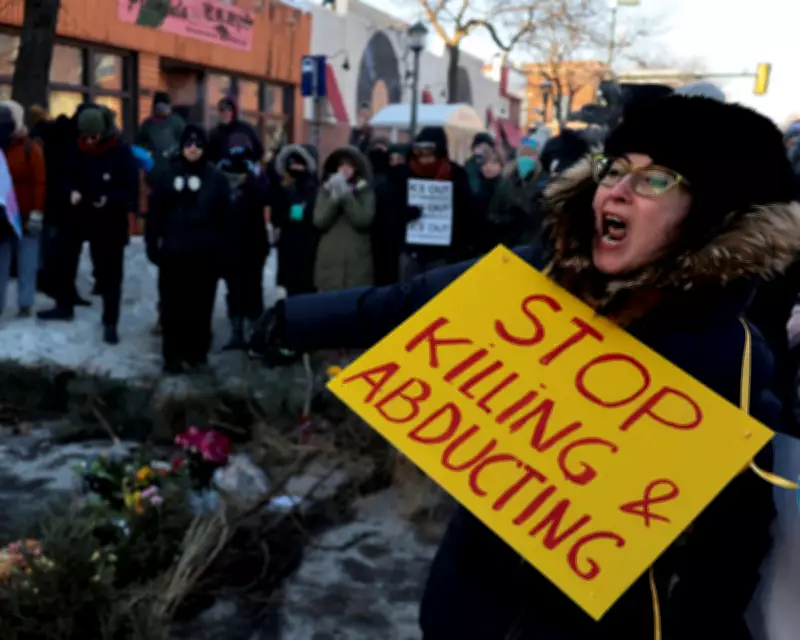
Activists are mobilising for a significant nationwide shutdown this Friday, advocating for a complete cessation of daily activities under the banner of "no work, no school, no shopping." This coordinated action, termed a "blackout" or general strike, represents a growing non-violent movement aimed squarely at the aggressive enforcement tactics of US Immigration and Customs Enforcement (ICE).
Escalating Tensions and Fatal Encounters
The call to action follows renewed and intense scrutiny of ICE operations after a series of fatal shootings involving federal agents. These tragic incidents have claimed the lives of individuals including Renee Good and Alex Pretti in Minneapolis, Keith Porter in Los Angeles, and Silverio Villegas González in Illinois. The national protest leaders, many of whom are students from the University of Minnesota, are now demanding that ICE withdraw from the city following its nearly month-long operation there.
Organisers argue that applying economic pressure through widespread work stoppages and consumer boycotts is a crucial method to demand accountability and push for substantive reform within the agency. "We are calling for this strike because we believe what we have been doing in Minnesota should go national," explained Kidus Yeshidagna, president of the Ethiopian Students Union at the University of Minnesota and a key student organiser.
A Coalition Born from Local Action
Yeshidagna is part of a broad coalition of student groups that successfully orchestrated a shutdown in Minnesota last Friday. Thousands braved sub-zero temperatures to flood the streets, while hundreds of local businesses closed their doors in solidarity, seeking justice for Renee Good, who was shot by an ICE agent while attempting to protect a neighbour. The movement gained further momentum after agents killed another resident, Alex Pretti, who was reportedly observing their activities last weekend.
The coalition, which includes associations representing Black, Somali, Liberian, Ethiopian, and Eritrean students, alongside the graduate labour union, initially convened on 21 January to plan calls for both local and national strikes. "We came out in huge numbers despite the cold," Yeshidagna stated, reflecting on the previous week's demonstrations. "We are now doing it again."
National Reach and Widespread Support
The strike's impact is expected to be felt across dozens of American cities. Businesses ranging from restaurants and clothing retailers to bookstores and coffee shops have already announced closures in support. According to action trackers, protesters are planning gatherings at city halls, courthouses, statehouses, and legislative buildings in major urban centres including Philadelphia, New York, Boise, and Columbus.
Furthermore, students at high schools and colleges in states like Florida and California are staging walkouts. In locations such as Milwaukee and Buffalo, Wyoming, people are organising at parks and on street corners. Notably, some demonstrations, including those in Washington DC, are targeting locations outside Target stores. This focus intensified after ICE agents violently detained two Target employees in Richfield, Minnesota, prompting activists to amplify calls for a sustained boycott of the retail giant.
Growing Momentum and Celebrity Endorsement
Support for the strike has swelled significantly throughout the week. Yeshidagna confirmed to the Guardian that the families and neighbours of Renee Good and Alex Pretti have contacted student organisations to express their solidarity. Hundreds of organisations, including student groups from other states, various labour unions, and major organising bodies like 50501, have pledged their support for the action.
"We want to obstruct the pillars that are upholding the Trump administration," declared Gloriann Sahay, a national coordinator with 50501. "By showing up, we are showing we are more in number and that we are not afraid of this terror being reigned down upon us." The movement has also garnered attention from high-profile celebrities, including Ariana Grande, Macklemore, and Pedro Pascal, who have publicly called for participation in the strike.
Broader Context and Political Stakes
For Yeshidagna, who grew up in St Paul and was a high school student just 15 minutes away from where George Floyd was killed in 2020, this activism is a continuation of a personal commitment to protest and leadership. Since the Trump administration deployed ICE officers to Minnesota, he and his peers have witnessed friends and family members become targets. "We've been seeing clear racial profiling in Minnesota," he asserted. "This isn't just an immigrant issue. This is a human rights issue that is also affecting US citizens."
Friday's planned protests coincide with a looming partial government shutdown in Washington. Senate Democrats, along with some Republicans, have stated they will oppose any spending bill that includes funding for the Department of Homeland Security, the parent agency of ICE. Democrats are advocating for a suite of reform measures, such as banning agents from wearing masks during operations and requiring ICE to obtain warrants before making arrests.
This national day of action underscores a deepening conflict over immigration policy and enforcement, positioning grassroots activism directly against federal authority in a call for systemic change and accountability.