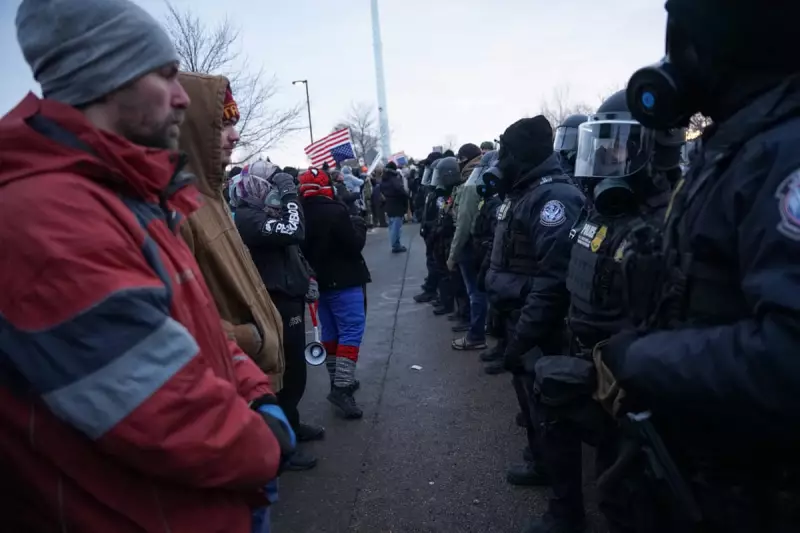
In Minneapolis, Minnesota, a dramatic escalation of federal immigration enforcement has created what local leaders are describing as a "siege" atmosphere, with residents facing unprecedented levels of police presence and aggressive tactics.
A Military-Scale Operation
The Department of Homeland Security's "Operation Metro Surge" represents the largest immigration enforcement mobilization to date, with approximately 3,000 federal agents deployed to the Twin Cities region. This massive show of force has an outsized impact in Minneapolis and St Paul, where the combined population is less than one-fifth that of Los Angeles.
The scale of the operation means federal immigration officers now outnumber the Minneapolis police force by a ratio of five to one, creating a visible and intimidating presence throughout the community.

Aggressive and Indiscriminate Tactics
Federal agents have adopted increasingly aggressive methods that have alarmed both residents and local officials. Armed officers have appeared at sensitive locations including schools, daycares, churches and mosques, while masked agents are stopping residents at traffic lights and during routine activities like walking to grocery stores.
Perhaps most concerning are reports of warrantless home entries. Last week, agents used a battering ram to break down the door of Garrison Gibson, a 38-year-old Liberian man, arresting him without judicial authorization. Over the weekend, they forced their way into the home of 56-year-old US citizen ChongLy "Scott" Thao, leading him outside in his underwear during subfreezing conditions.
Targeting Beyond Undocumented Immigrants
The operation's reach extends far beyond undocumented immigrants. Agents are reportedly targeting individuals with legal immigration status, valid visas, US citizens, and tribal citizens. On Tuesday, local law enforcement reported that even their off-duty officers of color had been stopped and questioned at gunpoint by immigration agents.
This broad targeting has been emboldened by a Supreme Court ruling in September that provided legal cover for agents to stop, question and detain people based on appearance, accent or vocation.
Community Impact and Response
The psychological and economic impact on Minneapolis communities has been severe. Immigrants and people of color are avoiding work, school and shopping out of fear of being stopped by ICE. Approximately 80% of immigrant-run businesses were closed last week, with some remaining establishments posting signs barring federal agents and locking their doors.
"Almost every single Latin business has their doors closed," said Juan Leon, owner of Leo's Tow in west St Paul. "They're trying to strangulate our income."
Overwhelmed Systems and Community Organizing
Minneapolis's 911 dispatchers have been overwhelmed by calls from residents encountering immigration enforcement. Police Chief Brian O'Hara reported that callers have frequently been injured by chemical irritants and crowd-control weapons used by federal agents against immigrant targets, advocates and bystanders.
In response, community members have organized mutual aid efforts and food-delivery services for immigrants too afraid to leave their homes. Volunteer legal observers post at street corners, using whistles and car horns to alert residents when agents are in the area.
"What you have is moms, grandmas, teenagers out on the streets day in and day out doing everything that they can to protect their communities," said Andrew Falstrom, a longtime community organizer. "But whatever we do, we won't be able to match a federal force backed by billions of dollars."
The situation represents what many residents describe as a suspension of regular life, with one US citizen from Colombia telling the Guardian she now carries her passport everywhere and has never felt "the level of fear and constant concern that I feel now."