Federal Judge Rejects Minnesota's Bid to Halt ICE Raids Despite Citing 'Excessive Force'
Judge Denies Minnesota Motion to Stop ICE Raids

Federal Judge Denies Minnesota's Attempt to Halt ICE Operations

A federal judge has rejected Minnesota's legal bid to stop Immigration and Customs Enforcement (ICE) operations within the state, despite acknowledging serious concerns about federal agents' conduct. US District Judge Katherine Menendez issued the ruling on Saturday, denying a motion filed by Minnesota Attorney General Keith Ellison that sought to halt the Trump administration's immigration enforcement actions across Minnesota.

Operation Metro Surge and Legal Challenge

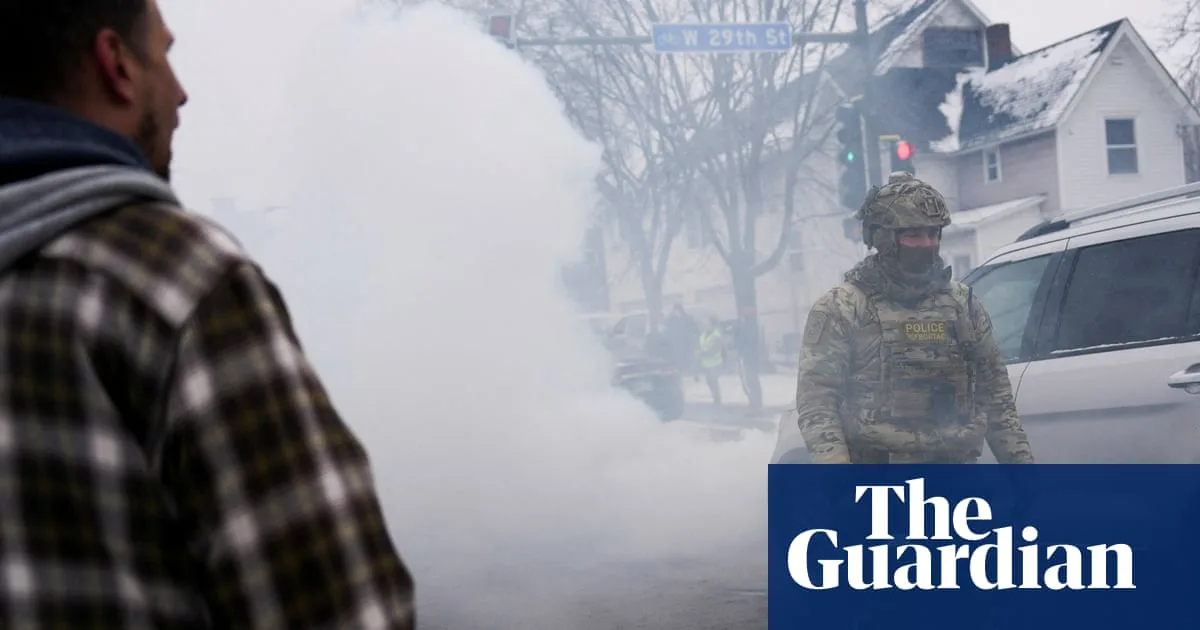
The legal challenge specifically targeted Operation Metro Surge, an immigration enforcement initiative launched by the Trump administration in December that has seen increased federal resources deployed in Minnesota to detain and deport undocumented migrants. Attorney General Ellison brought the case against multiple federal officials including Department of Homeland Security Secretary Kristi Noem, ICE Director Todd Lyons, and several other immigration enforcement leaders.

Ellison argued that the massive federal operation represented unconstitutional overreach by the federal government, violating principles of shared power between state and federal authorities as outlined in the 10th Amendment. However, Judge Menendez determined that Minnesota had failed to establish sufficient legal precedent to justify halting the ICE raids.

Judge's Critical Assessment of ICE Conduct

Despite rejecting Minnesota's legal motion, Judge Menendez offered a strikingly critical assessment of federal immigration enforcement practices in her ruling. She noted that "since Operation Metro Surge began, there have been multiple shootings of Minnesota residents by federal immigration enforcement agents."

The judge further stated that "there is evidence that ICE and CBP agents have engaged in racial profiling, excessive use of force, and other harmful actions" during their operations in Minnesota. This acknowledgment came alongside her legal determination that existing precedent couldn't be applied to halt what she described as the unprecedented deployment of armed federal immigration officers.

Impact on Minnesota Communities

Judge Menendez detailed numerous negative consequences stemming from the federal immigration operations in Minnesota:

  • Increased police overtime costs straining local budgets
  • Significant drops in school attendance as families fear enforcement actions
  • Delays in emergency response services due to community apprehension
  • Economic hardship for small businesses affected by enforcement activities

The judge also suggested evidence indicated the federal government may have surged operations specifically to pressure Minneapolis officials into repealing their sanctuary city status. This policy, adopted by numerous cities and states, prohibits local law enforcement from sharing residents' immigration status with federal agents, aiming to encourage undocumented migrants to report crimes without deportation fears.

Recent Violence and Political Context

The ruling comes amid heightened tensions following several high-profile incidents involving federal immigration agents in Minnesota. In recent weeks, two Minnesota residents have been fatally shot during encounters with ICE agents:

  1. Renee Good was killed by an ICE agent on January 7 while attempting to move her car during a confrontation with officers
  2. ICU nurse Alex Pretti was fatally shot by a federal agent just last week

Minnesota officials have pointed to these incidents as examples of violence perpetrated against civilians by immigration enforcement agents, though the Department of Homeland Security has defended the agents' actions as self-defense in both cases.

Political Reactions and Sanctuary Policy Debate

The legal decision represents a victory for the Trump administration's immigration enforcement approach, with Attorney General Pam Bondi celebrating on social media: "Another HUGE legal win in Minnesota just now... Neither sanctuary policies nor meritless litigation will stop the Trump Administration from enforcing federal law in Minnesota."

Meanwhile, Minnesota officials have maintained their commitment to sanctuary policies. Minneapolis Mayor Jacob Frey has repeatedly called for an end to Operation Metro Surge, defending sanctuary policies as a "safety strategy" rather than an immigration approach. During a recent CNN town hall, Frey emphasized: "We want people who are undocumented to have the confidence to call 911 without the fear that they'll get deported in doing so. That is a safety strategy."

Governor Tim Walz has similarly called on the Trump administration to scale back the immigration enforcement operations, reflecting the ongoing tension between state and federal authorities over immigration policy implementation.

Broader National Context

The Minnesota case occurs against a backdrop of nationwide protests against ICE operations, with demonstrators frequently clashing with federal agents and local law enforcement. Last Friday saw participation in a "national shutdown" protest where people across the country refused to make purchases or go to work to send a message to the Trump administration about immigration policies.

ICE Out protests are expected to continue this weekend as tensions remain high between immigration enforcement advocates and critics who argue current practices endanger community safety and violate civil liberties. The Department of Justice has consistently argued that sanctuary policies encourage illegal immigration, threatening litigation against jurisdictions that maintain such approaches.

As ICE raids continue across the country, the Minnesota ruling highlights the complex legal and political landscape surrounding immigration enforcement, where federal authority clashes with state autonomy and community safety concerns intersect with national immigration policy objectives.




