
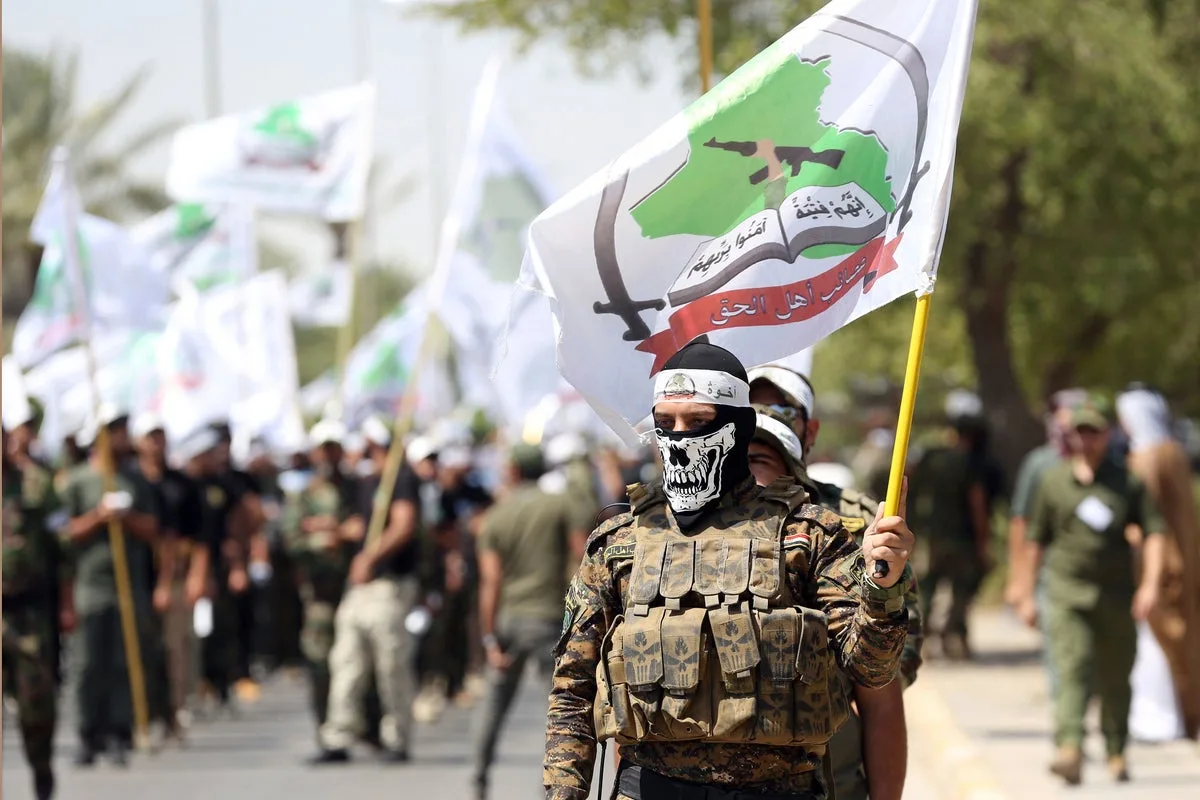
One of Iraq's most powerful Iran-backed armed groups, Asaib Ahl al-Haq, announced on Tuesday that it would begin placing its weapons under government control. The group has formed a committee to oversee the move, including an inventory of fighters, weapons, and equipment, and to coordinate with the commander-in-chief of the armed forces. The decision is presented as a response to calls from Iraq's top Shiite religious authority and the Iran-aligned Coordination Framework, the largest parliamentary bloc.
This development marks a significant step in the new government's effort to bring militias under state command. Prime Minister Ali al-Zaidi, a 40-year-old banker sworn in last month, has made a state monopoly on arms a central part of his programme. Under pressure from Washington, al-Zaidi is working to assert state authority over weapons, with the Trump administration tying defence cooperation and funding to efforts to curb Iran-linked factions.
The move follows a similar announcement by influential Shiite cleric Muqtada al-Sadr, who said his Saraya al-Salam militia would split from his political movement and integrate into state institutions. However, not all armed factions are cooperating. Kataib Hezbollah and Harakat al-Nujaba have rejected disarmament, linking the issue to Iraq's sovereignty and the presence of foreign troops. Kataib Hezbollah welcomed other factions' moves but said its own armed activity would continue as part of 'resistance work'.
Many Iran-backed militias are funded through the Iraqi state budget and embedded within the security apparatus, though not under government control. The Popular Mobilization Forces, a state-backed umbrella of mostly Shiite armed groups formed in 2014, still includes groups that maintain their own command and ties to Iran. The war in the Middle East has exposed the fragility of Iraq's state institutions and their limited ability to restrain these groups, with a parallel confrontation between Washington and the militias deepening the crisis.




