Iranians Describe Nightly Bombings and Internet Shutdowns at Turkish Border
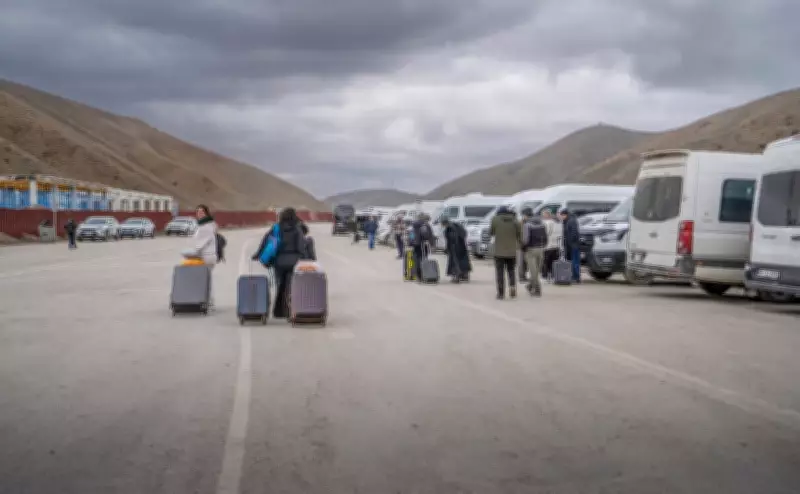
At the Kapıköy border crossing in eastern Turkey, a mountain pass between snow-topped peaks, Iranians fleeing their homeland share harrowing tales of nightly bombings and crippling internet blackouts. This gateway to the west from Iran has become a focal point for those seeking refuge from the escalating conflict.
Personal Stories of Flight and Fear
Amir, a 33-year-old foreign exchange and cryptocurrency trader from Tehran whose name has been changed for safety, could not help but laugh bitterly when asked why he left Iran. "Boom," he responded simply. "Because of the war. Every night they are bombarding." Amir expressed no bitterness toward the American and Israeli campaign, stating, "We must want to get rid of the regime." He thanked former US President Donald Trump, citing the internet blackout imposed by the Iranian regime over the last month as a key factor: "No internet, no job."
A pharmacologist from Tehran, traveling to see her three adult daughters in Europe, echoed this sentiment. "All of the people live with anxiety," she said. "I don't like Trump but it is right this time for the Iranian people. We are very tired about the revolution of the Islamic republic of Iran."

Migration Patterns and UN Data
Despite these personal accounts, Kapıköy—which translates to "village of the gate"—has not witnessed massive exodus numbers. According to the UN refugee agency (UNHCR), close to 64,000 Iranians arrived in Turkey between 3 and 30 March, while more than 48,000 Iranian nationals returned to the Islamic Republic. A UNHCR spokesperson noted, "The current volume of movement remains notably lower than pre-conflict levels, when crossings from both sides averaged approximately 5,000 individuals per day."
Turkey has prepared for potential influxes by creating buffer zones and establishing tent cities for up to 90,000 people, though these measures have not yet been necessary. Heavily armed soldiers patrol the route from the border to Van, with four army and security service checkpoints in place.
Internal Displacement and Economic Strain
Salvador Gutiérrez, chief of mission in Iran for the International Organization for Migration, reported via video call from Tehran that people are moving internally within Iran, largely to northern provinces near the Caspian Sea. He noted that some are returning to Tehran and other cities as part-government-owned corporations order employees back to work. "Many people have savings or are receiving some support from their families, so I would say they are waiting to see what the outcome will be of this situation," Gutiérrez said.
The economic impact is severe. The International Organization for Migration estimates more than 82,000 residential units have been hit by US and Israeli strikes, affecting 180,000 people. Muhammed, 42, who runs a travel business and was heading to Oman, said, "I have had to completely close the offices. I have said to my staff to go and just rest for minimum two months and after that I don't know what will happen." He described nightly bombings near his home: "Each night I hear the big noises and then boom, boom. It was very hard for the first three days, but after four, five days it is normal to your mind."
Varied Perspectives and Reticence
Not all voices at the border express support for regime change. Selma Ghaemzadeh, 24, from Maragheh in north-east Iran, said her city had recently come under attack but she was proud to live in a "strong not a weak country." She was traveling to Van for shopping and could not imagine a permanent move: "It is not safe, but Iran is my country and it is safe for me."
Many others were too scared to talk, fearing repercussions from Iranian authorities. High-profile dissidents hiding in Van have been snatched and returned to Tehran in the past. One woman in designer clothing abruptly stopped speaking after being told by a man to keep quiet, referencing the UK-based Persian-language TV station Iran International, which the Iranian regime has labeled a terrorist actor.

Returns and Reunions
Interestingly, on some days, more people return to Iran via Turkey than leave, often to be closer to relatives in peril. The Iranian men's national football team passed through Kapıköy after a friendly match in Antalya. Among other returnees were a couple who said they were doctors living in Canada. The wife, smartly dressed with a white scarf, insisted on sharing her story: "This war is affecting everybody. My mum passed away from the stress, the heart attack she had. She was 65. She didn't have anything wrong with her at all. This war is affecting everyone, either directly or like my mum." She plans to stay in Tehran as long as her father needs her.
The people passing through Kapıköy are largely western-facing, well-educated, and with financial means, making their sentiments not necessarily representative of all Iranians. Yet their stories highlight the profound human cost of conflict, internet suppression, and economic strain in a region gripped by uncertainty.