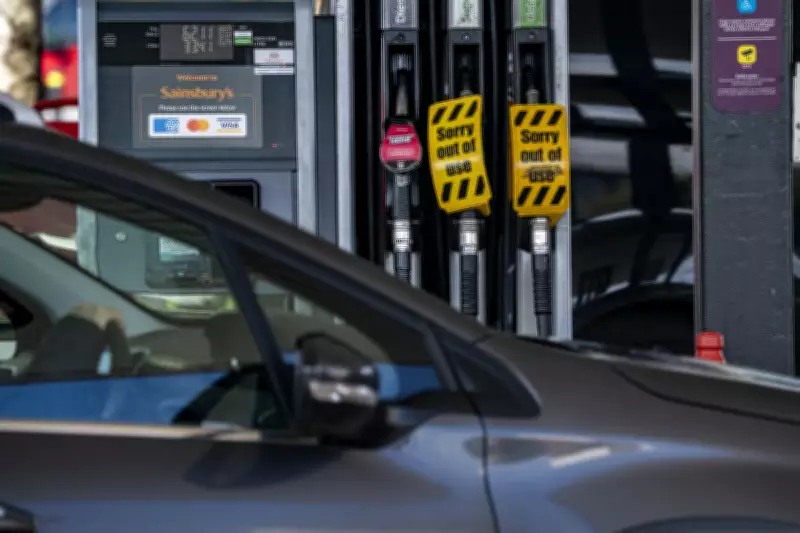
The British public could face elevated prices for up to eight months after the conclusion of the war in Iran, a senior minister has indicated. The ongoing conflict, which began with US-Israeli operations against Iran, has led to the closure of the Strait of Hormuz, a critical maritime route that previously handled approximately one-fifth of the world's oil and gas shipments. This disruption has caused a sharp increase in oil prices.
Government Urges Calm Amid Price Rises
The government has appealed to drivers to continue refuelling their vehicles as usual despite rising costs at petrol stations, and to avoid altering travel plans amid concerns about potential shortages of jet fuel. Chief Secretary to the Prime Minister Darren Jones stated that the conflict is expected to keep pushing up prices for energy, food, and air travel in the months ahead, as disruptions to energy supplies affect production rather than leading to empty supermarket shelves.
“You’re going to see prices go up a bit as a consequence of what Donald Trump has done in the Middle East,” Mr Jones told the BBC’s Sunday With Laura Kuenssberg programme. “That’s probably going to come online not just in the next few weeks, but the next few months. There’s going to be a long tail from this.”

Duration of Economic Impact
When questioned about how long these higher prices might persist, Mr Jones suggested a timeframe of approximately eight months after the Strait of Hormuz is reopened and the conflict de-escalates. “I think our best guess is eight-plus months from the point of resolution that you’ll see economic impacts coming through the system,” the minister explained.
Last week, Donald Trump announced an indefinite extension of the US ceasefire with Iran, which paused most hostilities. However, further progress towards ending the conflict has stalled after the US president instructed his envoys not to travel to Pakistan for talks this weekend.
Government Contingency Planning
The government is intensifying its planning to mitigate the impact, focusing on real-time monitoring of stock levels and strategies to address supply chain disruptions. The Prime Minister will chair another meeting of the Middle East Response Committee, a Cabinet group established to manage the crisis, while a contingency planning team led by Mr Jones meets twice weekly.
Mr Jones remarked: “The Government here in the UK, the work that I’m doing with the Prime Minister is looking at all of those things and saying, ‘What can we do within our power to help people to get through those difficult times?’”
Securing Carbon Dioxide Supplies
The government is also working to secure stocks of carbon dioxide (CO2), which is essential for the food industry, breweries (to carbonate drinks), defence purposes, and medical applications such as MRI scanning. Mr Jones said he is striving to ensure an adequate supply of beer during the World Cup. “I raised this issue because if there is a problem with jet fuel on holidays and carbon dioxide on beer, the summer might be pretty depressing for people, but we’re doing everything we can to make sure that it’s not the case,” he stated.
Airlines and Airports Respond
UK airlines have affirmed that they are not currently experiencing a jet fuel shortage, as they purchase fuel in advance and airports maintain reserves. However, the government says it is “closely monitoring” stock levels. Airports will ease regulations to allow airlines to cancel flights without losing their allocated take-off or landing slots if fuel shortages prevent operations. Additionally, the government plans to temporarily relax laws requiring airlines to operate partially full flights from UK airports, as reported by The Times. This would enable flight schedules to be consolidated months before potential fuel shortages, reducing the number of available flights but minimising disruption and last-minute cancellations.

Supermarket Preparedness
Supermarkets have confirmed they are collaborating with the government to prepare for a worst-case scenario where the ongoing war leads to shortages of carbon dioxide used by food producers. At the outbreak of war, the government provided funding to reactivate the Ensus bioethanol plant, which produces CO2 as a by-product, to bolster supplies. It is also taking steps to decouple electricity prices from gas prices to protect households and businesses from price spikes.
Leaked government documents outlining a reasonable worst-case scenario suggest that certain foods could become scarce on supermarket shelves if the Strait of Hormuz remains closed through the summer. In response, the Liberal Democrats have called for a Bill in the next King’s Speech to prioritise food security on the government’s agenda.