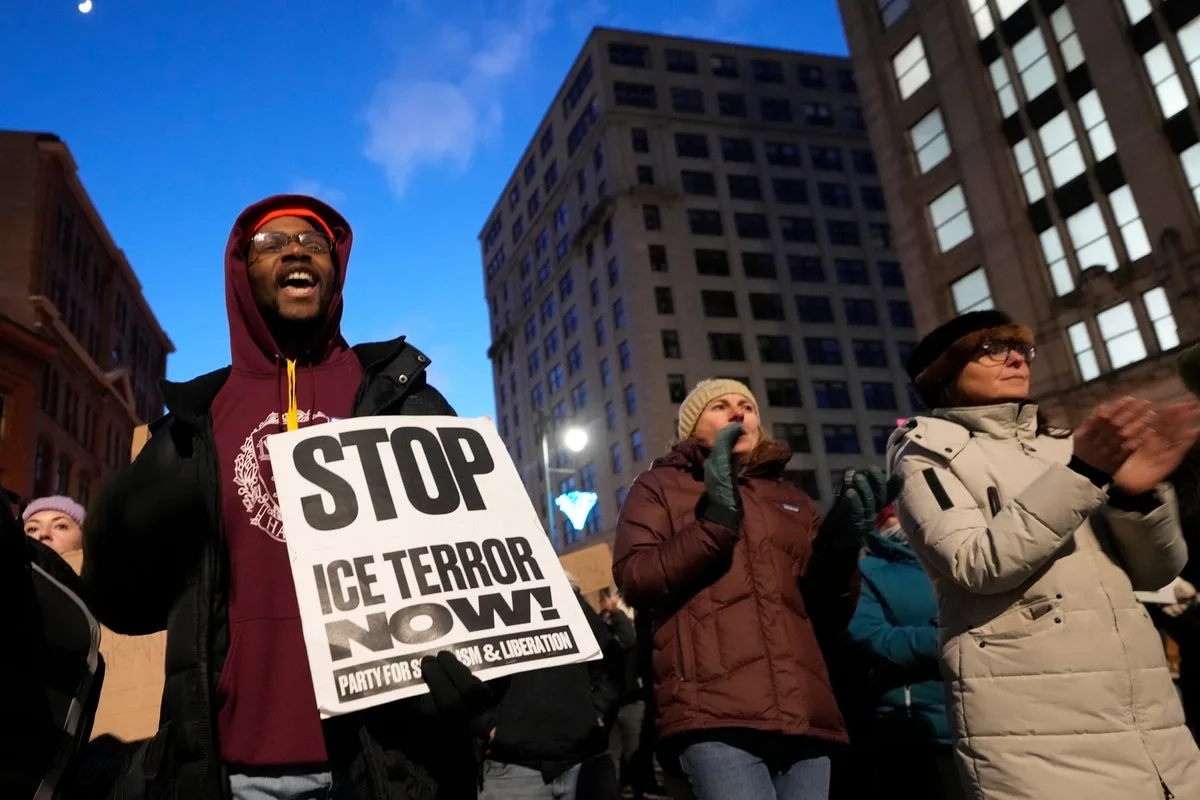
Federal immigration authorities have asserted that their recent enforcement surge in Maine specifically targeted what they describe as "the worst of the worst" criminal offenders. Immigration and Customs Enforcement (ICE) officials reported detaining more than one hundred individuals statewide during an operation dubbed "Operation Catch of the Day," a name referencing the region's fishing industry. In public statements, ICE emphasised the arrest of dangerous felons, including individuals accused of child abuse and hostage-taking.
Discrepancies Between Official Claims and Legal Documents
However, an examination of court records presents a more nuanced and complicated picture than the agency's public narrative suggests. While some detainees did have convictions for violent crimes, many others were held for unresolved immigration proceedings or had been arrested but never convicted of any criminal offence. This pattern has raised significant questions about the accuracy and transparency of ICE's enforcement priorities in Maine.
Case Studies Highlight Enforcement Concerns
One case prominently highlighted by ICE involves Dominic Ali, a native of Sudan. ICE stated that Ali was convicted of multiple serious charges, including false imprisonment, aggravated assault, and violating a protective order. Court documents confirm that Ali was convicted in 2004 for violating a protective order and again in 2008 for second-degree assault, false imprisonment, and obstructing the reporting of a crime. Prosecutors detailed that during the 2008 incident, Ali threw his girlfriend to the floor of her New Hampshire apartment, kicked her, and broke her collarbone. A judge later described his conduct as "nothing less than torture" before sentencing him to five to ten years in prison.
After being paroled to ICE custody, an immigration judge ordered Ali's removal in 2013. However, the Executive Office for Immigration Review has provided no further information, leaving his current status unclear.
Questions Over Arrests Versus Convictions
Other cases reveal even greater discrepancies. Elmara Correia, an Angola native, was highlighted by ICE as having been "arrested previously for endangering the welfare of a child." Maine court records, however, show that someone with that name was charged in 2023 only with violating a law related to learner's permits for new drivers—a case that was subsequently dismissed. Correia has since filed a petition challenging her detention, and a judge has issued a temporary emergency order preventing authorities from transferring her from Massachusetts, where she is currently held.
Her attorney clarified that Correia entered the United States legally on a student visa approximately eight years ago and has never faced expedited removal proceedings.
Local Officials Voice Serious Concerns
Portland Mayor Mark Dion publicly questioned ICE's methodology during a news conference, expressing concern that the agency failed to distinguish between mere arrests and actual convictions. Dion specifically referenced another individual named in ICE's release: Dany Lopez-Cortez, whom ICE described as a "criminal illegal alien" from Guatemala convicted of operating under the influence. The mayor questioned whether such a conviction, while serious, truly qualifies as among the "worst of the worst" offenders that ICE claims to target.
Legal Challenges and Broader Patterns
Immigration attorneys have filed multiple habeas petitions on behalf of detainees, arguing that rapid transfers disrupt access to legal counsel and pending immigration proceedings. Boston attorney Caitlyn Burgess reported filing petitions for four clients detained in Maine and transferred to Massachusetts, noting that the most serious charge any faced was driving without a license. All had pending immigration court cases or applications.
Attorney Samantha McHugh filed five habeas petitions for Maine detainees and anticipated filing three more, stating that none of her eight clients have any criminal record. She described agents arriving in unmarked vehicles and trespassing on private property to detain individuals who were simply at work or eating lunch.
Historical Cases and Unresolved Status
Federal court records indicate that immigration cases involving criminal convictions can remain unresolved for years or be revisited long after initial rulings. Ambessa Berhe, whose mug shot was included in ICE's "worst of the worst" materials, was convicted of cocaine possession and assaulting a police officer in 1996, and again for cocaine possession in 2003. In 2006, a federal appeals court in Boston vacated a removal order for Berhe and returned the case to the Board of Immigration Appeals for further consideration.
According to court documents, Berhe was born in Ethiopia, taken to Sudan by adoptive parents, and admitted to the United States as a refugee in 1987 when he was approximately nine years old.
Operation Scope and Demographic Context
ICE has stated that "Operation Catch of the Day" targets about 1,400 immigrants in Maine, a state with a population of roughly 1.4 million people, of whom approximately 4% are foreign-born. Immigration attorneys and local officials note that similar concerns about enforcement accuracy have emerged in other cities where ICE has conducted similar surges, with many targeted individuals lacking criminal records.
The discrepancies between ICE's public characterisations and the details revealed in court records continue to fuel debate over immigration enforcement practices, transparency, and the true nature of those detained in recent operations.