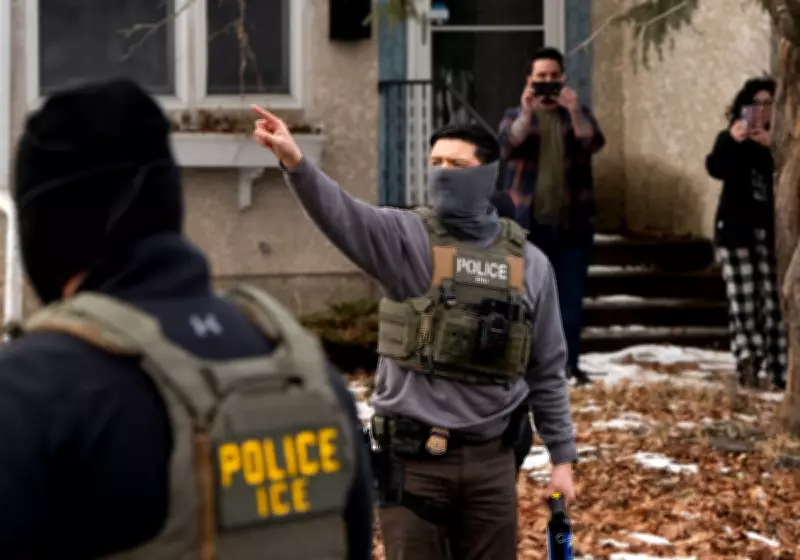
ICE Training Hours Slashed by 40 Percent During Trump Administration Hiring Surge
Immigration and Customs Enforcement dramatically reduced training times for new recruits during a major hiring initiative aimed at fulfilling the Trump administration's deportation objectives, according to newly obtained records. The Washington Post acquired four previously undisclosed training outlines from between July and January that detail hour-by-hour how instruction was curtailed.
Substantial Reductions in Critical Training Areas
The documents reveal that approximately 240 hours were eliminated from ICE's basic training regimen, representing more than 40 percent of total instructional time. The majority of these cuts occurred in August 2025 when the Trump administration directed ICE, under Department of Homeland Security oversight, to double its field agent numbers by early 2026.
Initial reductions exceeded 100 hours, including about 28 hours of firearms training, dozens of hours of classroom instruction, and nearly all fitness training hours. Following additional cuts in autumn 2025, 75 percent of training hours dedicated to assessing practical skills—including firearms proficiency—were eliminated. Furthermore, 26 hours previously allocated to evaluating immigration enforcement-specific skills were removed entirely from the curriculum.

Accelerated Training and Agency Response
By January 2026, more than 900 agents had completed the abbreviated training program—more than triple the number who graduated between August 2024 and August 2025. ICE acknowledged accelerating training schedules but maintained that total training hours remained consistent through longer daily sessions and an additional training day each week.
The agency stated to The Washington Post: "ICE officers go through a rigorous on-the-job training and mentorship. New agents apply their training to real-life scenarios while on duty, preserving ICE's reputation as one of the most elite law enforcement agencies not only in the U.S., but the entire world."
Whistleblower Allegations and Congressional Scrutiny
The training documents emerged one week after whistleblower Ryan Schwank, a former ICE lawyer and training instructor, testified before Congress that new hires receive "deficient, defective and broken" instructional courses. Schwank warned: "Without reform, ICE will graduate thousands of new officers who do not know their constitutional duty, do not know the limits of their authority and who do not have the training to recognize an unlawful order. That should scare everyone."
DHS countered these claims, asserting that recruits receive 56 days of training plus an average of 28 days of on-the-job instruction. The department emphasized that no training requirements were removed, but rather the schedule was intensified from five days weekly at eight hours daily to six days weekly at twelve hours daily.
Political Context and Public Concerns
The training reductions occurred within the context of Trump's "One Big Beautiful Bill" spending package, which allocated a record $165 billion to DHS, including funds to hire 10,000 new ICE agents for what was described as the largest deportation program in U.S. history.
Recent events have intensified scrutiny of ICE operations. Last month, Democrats blocked new agency funding following fatalities and violence involving immigration agents. Earlier this year, two American citizens—Renee Good and Alex Pretti—were killed by federal immigration agents in Minnesota.
Public opinion reflects concerns about ICE's methods. A February Ipsos survey indicated Americans oppose ICE's measures by a 2-to-1 margin, with 58 percent disapproving of Trump's immigration handling. The DHS inspector general is conducting multiple investigations into ICE, including examinations of its hiring program, use of expedited removal authority, use of force, and detention facilities.