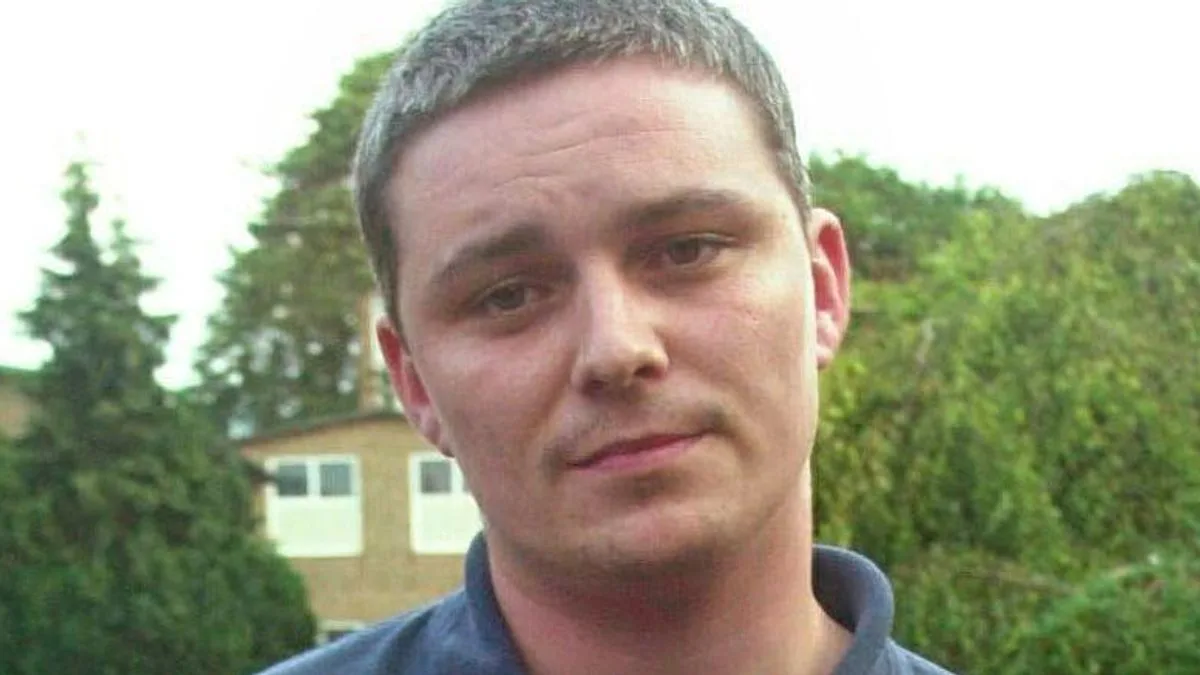
Ian Huntley's Seven Deceptive Gestures Revealed in Soham Murder Police Interviews
Huntley's Seven Gestures That Gave Away His Guilt in Soham Case

Ian Huntley's Seven Chilling Gestures Exposed His Guilt in Police Interviews

Soham killer Ian Huntley, who was convicted of the murder of schoolgirls Holly Wells and Jessica Chapman, has been seriously injured in a prison attack. The depraved school caretaker's guilt was inadvertently revealed through seven distinct gestures during police questioning, according to body language experts.

The Tragic Disappearance of Holly Wells and Jessica Chapman

Holly Wells and Jessica Chapman, both ten years old, had their entire futures stretching before them when they were murdered by their school caretaker Ian Huntley. The inseparable best friends were enjoying their summer break together when they vanished on August 4, 2002.

After attending a family barbecue at Holly's home, the well-liked schoolgirls slipped out unnoticed to visit a vending machine at a nearby leisure centre. As they returned towards Holly's home, they passed the residence occupied by Huntley, who enticed them inside by falsely claiming his girlfriend, Maxine Carr, was present.

Carr worked as a teaching assistant at the girls' school and knew both children well. While the young girls were indoors, Huntley killed them both and concealed their bodies.

The Desperate Search and Media Frenzy

When Holly's parents discovered the girls were missing and Jessica failed to return for her 8:30pm curfew, both families initiated a frantic search. Police launched a colossal manhunt involving over 400 officers working around the clock.

The entire local vicinity was meticulously searched, with volunteers including local residents and US Air Force personnel from a nearby base joining the effort. Every registered sex offender in Cambridgeshire and Lincolnshire was questioned, yet there appeared to be no trace of the primary school students.

For thirteen days, a substantial media appeal ensured Holly and Jessica remained at the forefront of every newspaper and news broadcast. Eerily, Huntley himself participated in media interviews and even joined the search for the missing girls.

The Alibi That Raised Suspicion

Maxine Carr, who provided Huntley's alibi for the evening the girls vanished, eagerly engaged with journalists. In one interview, she presented reporters with a card Holly had crafted for her on the final day of term, expressing gratitude for her being such a wonderful teaching assistant.

Carr told a television reporter: "No one believes they would ever run away. They were very close to their families. This is something that I will keep for the rest of my life. It's what Holly gave me on the last day of term."

Her eerie slip-up was noticed almost immediately - she had referred to Holly in the past tense. Suspicion began to mount against the duo, who were brought in for questioning twelve days after the girls' disappearance.

The Distressing Discovery

The following day, a gamekeeper made a heartbreaking discovery - Holly and Jessica were found lying side by side in a ditch near an RAF base in Suffolk, approximately ten miles from Soham. It was Huntley himself who inadvertently revealed his own guilt through seven specific gestures during police questioning.

Seven Indicators of Deception

Body language expert Cliff Lansley has disclosed the minute movements made by Huntley as he was interrogated about his relationship with Holly and Jessica. Mr Lansley identified seven distinct indicators of deception during Huntley's responses.

"There are multiple things wrong," Mr Lansley explained. "He has clamped his hands. He is rubbing and manipulating his fingers to try and comfort himself. And his shoulder is raising slightly on the right-hand side. Then when he says 'no,' the volume comes down fifty percent and he synchronises his head one to two seconds afterwards. So, there are seven, eight indicators of deception here when he is using just three words."

Mr Lansley also pointed out that Huntley's deceit was evident when he "forgot to take the sad expression off his face." He added: "Indicator two, he is contradicting these affirmative statements with a slight head shake. And in addition, we have got gestural leakage from his shoulder - it is raising a couple of millimetres on his right-hand side which contradicts the positive, affirmative statements he is making. That is a strong signal of deception."

Expert Analysis of Huntley's Behaviour

Dawn Archer, an expert in verbal communication, noted that Huntley was "very good at using the truth and then using it to his advantage." She elaborated: "The most convincing way to tell a credible lie is to stick closely to the truth. This is somebody that history has shown got away with lying for a long time and got away with being abusive for a long time. And I think people who get away with that kind of behaviour believe they won't be caught. So they have a certain level of confidence when they tell their lies."

Forensic psychologist Kerry Daynes alleged that Huntley had been plotting his attack "for some time." She stated: "There was no planning on the part of Huntley in terms of him not knowing that Holly and Jessica were going to arrive that day. He's already assaulted young girls, so he's rehearsed it behaviourally. So, this isn't something that comes out of the blue. This is something that's been in the back of his mind, maybe in the forefront of his mind, for some time."

Legal Consequences and Sentencing

On August 20, 2002, Huntley was charged with two counts of murder, while Carr faced charges of attempting to pervert the course of justice. She was subsequently charged with two counts of assisting an offender.

Huntley received a minimum sentence of forty years before he can be considered for parole, meaning he won't be eligible for release until at least 2042. Carr was sentenced to three-and-a-half years imprisonment for her role in providing a false alibi and obstructing the investigation.

The seven gestures that exposed Huntley's guilt during police interviews remain a chilling reminder of how non-verbal communication can betray even the most calculated criminals, providing crucial evidence in one of Britain's most notorious murder cases.