US Faith Movement Demands End to Family Detention Amid ICE Crackdown
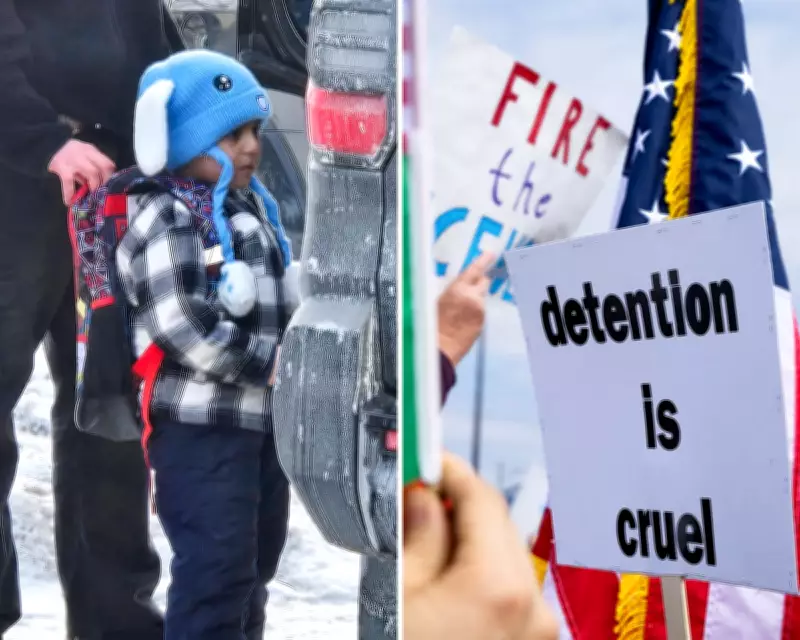
In late January, hundreds of protesters gathered near the Dilley immigration processing center in south Texas, where numerous children are detained. This demonstration is part of a resurgent, faith-backed campaign calling for an end to family detention in the United States. The movement has gained momentum following the arrest and detention of five-year-old Liam Conejo Ramos, who was photographed wearing a Spider-Man backpack and blue bunny hat during Minnesota's ICE surge.
Ramos and his father, with pending asylum claims, were sent to Dilley, making the child a symbol of the Trump administration's immigration crackdown. "One of the attempts [of the protests] was to make sufficient noise so that the people inside would know that they were not forgotten by the outside world," said Amerika Garcia Grewal, an event organizer. "There's just no acceptable time for a child to be in detention."
Conditions and Legal Violations at Detention Facilities
Dilley, reopened early last year after being shuttered under Biden, has faced criticism for inhumane conditions, including a measles outbreak, lack of clean drinking water, and inadequate medical care. Critics argue these conditions violate a 1997 legal settlement that sets a 20-day limit on child detention. Representative Joaquin Castro noted Ramos was not eating well while detained.

Brian Todd, manager of public affairs for CoreCivic, the company running Dilley, denied allegations about clean water and stated healthcare is available. ICE did not respond to requests for comment. Trudy Taylor Smith, a lawyer with the Children's Defense Fund, emphasized, "The only reason that this is allowed to continue is because it's currently legal. [Congress] could pass legislation at any time to outlaw the detention of families."
Broader Activism and Public Opinion Shift
The movement extends beyond Dilley, targeting new detention center constructions. Recently released documents outline ICE's plan to spend $38 billion on warehouses for detention centers. "I don't know how much more explicit the administration could be about their intention to cruelly house people in inhumane conditions," Smith said.
Public opinion is shifting; a recent poll shows 65% of respondents across the political spectrum believe ICE has gone too far, up from 54% last June. State-level efforts, such as New Mexico's bill banning ICE detention centers and Illinois's limits on private facilities, offer potential paths forward. However, many activists aim for full abolition of the prison industrial complex.
Intergenerational Trauma and Lasting Impacts
Ramos was released in early February after a federal judge questioned the government's justification for detaining a child with a pending asylum claim. Yet, the psychological toll persists. "He's not the same boy he was before," Ramos's father, Adrian Conejo Arias, said. "He can't sleep well at night. He wakes up three or four times a night screaming: 'Daddy, Daddy.'"
Rev Erin Walter of the Texas Unitarian Universalist Justice Ministry warned, "What we are putting these families through is going to affect the entire planet for generations to come. We've got to stop this trauma and cruelty as soon as we possibly can." Smith added, "Even though Liam may be home and safe, where he always should have been, there are hundreds of other Liams [and] there will be thousands as long as this continues."
The protest ended with teargas, highlighting the tensions. In his ruling, Judge Fred Biery included Bible verses, underscoring the moral urgency of the issue. As the movement grows, it continues to challenge policies and advocate for humane treatment of immigrant families.