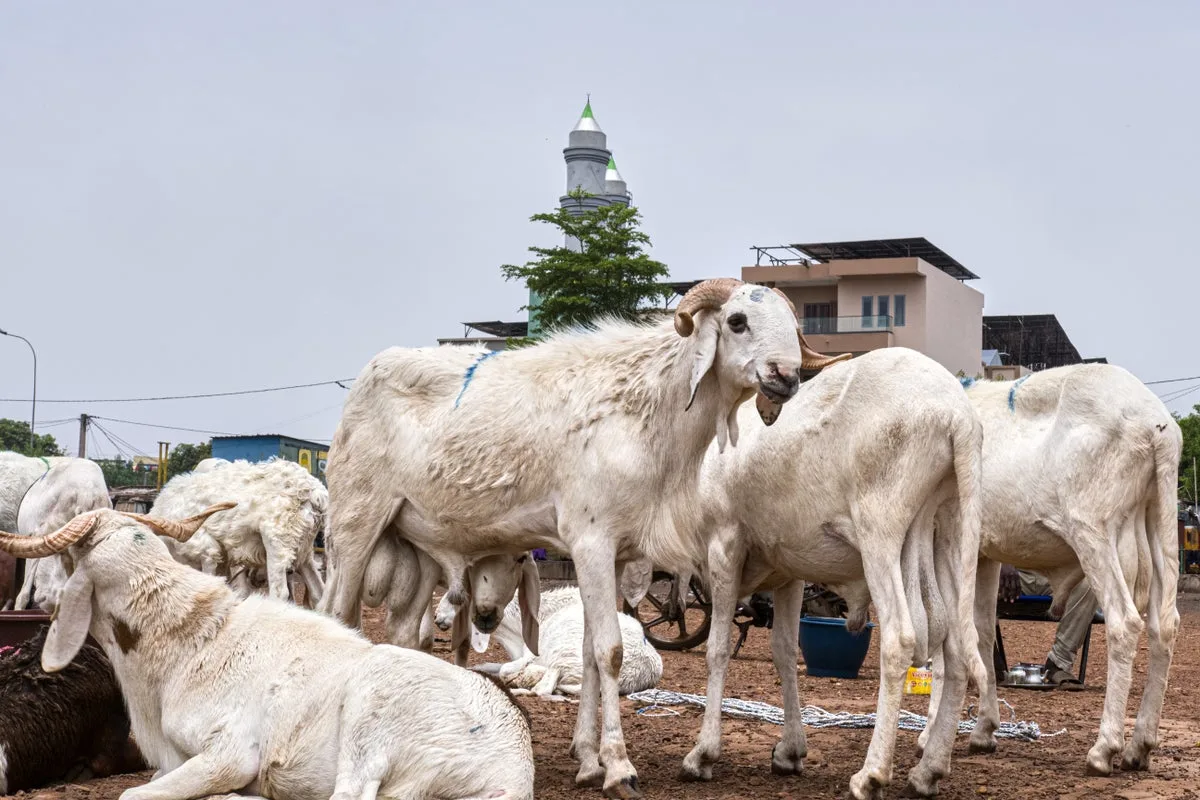
As Muslims worldwide prepare to celebrate Eid al-Adha, the feast of sacrifice, the holiday carries a bitter edge in Mali’s capital, Bamako. A blockade by armed groups linked to al-Qaida has sent sheep prices soaring, putting the central ritual of slaughtering an animal beyond the reach of many families.
The shortage and high prices are largely due to a blockade of Bamako announced earlier this month by fighters from Jama’at Nusrat al-Islam wal-Muslimin, an al-Qaida-linked group. The militants regularly attack convoys of trucks and vehicles transporting goods to the capital, often setting them ablaze. Landlocked Mali depends heavily on fuel and goods trucked in from coastal neighbours like Senegal and Ivory Coast.
The blockade is not total, as the armed groups avoid holding roadblocks for long, fearing retaliation from the Malian army. Goods continue to trickle into Bamako, staving off an outright food shortage for now. Nonetheless, it has driven up prices for some goods like meat and led to fuel shortages, forcing residents to line up at the few gas stations still selling fuel.
Mountaga Touré, a 38-year-old teacher, said he visited several livestock markets before ultimately giving up on buying a sheep for the feast, noting that the price of sheep has almost doubled since the blockade was announced. “The small sheep that used to cost $177 are now $266 or more,” Touré said. In some neighbourhoods of Bamako, residents have swapped the traditional sheep for cows, pooling money to purchase one so they can have meat during the holiday.
The Malian army and its Russian Africa Corps mercenaries are circumventing the blockade by escorting convoys of trucks carrying goods and fuel to supply markets in Bamako. However, the escorts and strikes have not been enough to adequately supply the capital, residents say. Livestock trader Amadou Cissé, 45, said he usually brings up to 200 sheep to Bamako for the holiday, but this year he barely brought 50 because there is not enough space in army-escorted trucks.
The blockade follows sweeping, coordinated attacks by separatist and jihadi forces across Mali last month, the largest in the country in over a decade. Mali has been plagued by insurgencies fought by militants affiliated with al-Qaida and the Islamic State group, as well as a separatist rebellion in the north for over a decade. Following a 2020 military coup, the ruling junta turned from Western allies to Russia for help combating Islamic militants, but the security situation has worsened in recent times.