Disabled Woman Abandons Walker in Desperate Bid for Dover Dinghy Amid Channel Tragedy
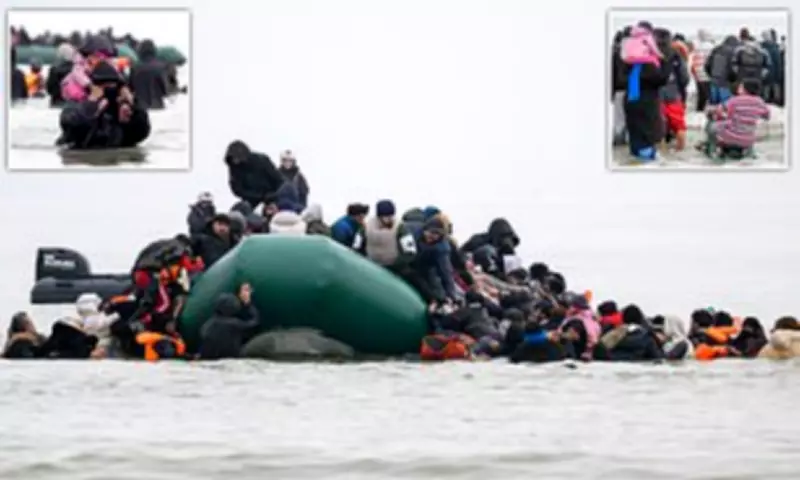
A disabled woman dramatically ditched her walker and waded into chest-high water, splashing and straining as she desperately fought for a space on an overcrowded rubber dinghy bound for Dover. The elderly woman was one of hundreds of migrants who piled onto boats heading to Britain just hours after the UK agreed to pay France £2 million a week to patrol beaches.
Two Dead and Three Injured in Chaotic Crossing Attempt
Two people have died and three were injured in the incident, according to police reports. Smugglers took advantage of improved weather conditions in Northern France to launch at least five boats following a week of zero crossings. The Daily Mail witnessed around 50 migrants sprint across Gravelines Beach to the water after spending the night hiding in the dunes.
They removed their coats, socks, and shoes before pulling up their trousers and donning life vests as they waited for smugglers to arrive with the boat. The large group, composed mostly of Arab and African men, was followed by eight police officers who stood filming on their phones.

Panic and Confusion on the Shoreline
It was another 40 minutes before the boat made its way to shore, but it became clear it was already half-full. Migrants inched further into the water, desperate to secure a place. Smugglers screamed at asylum seekers to get into position, growing frustrated as the crowd struggled to obey orders amid panic and confusion.
Two men, both believed to be in their 40s, were pronounced dead despite rescue efforts. Emergency crews, including an air ambulance, rushed to the scene between Calais and Dunkirk.
Heartbreaking Scenes of Desperation
The disabled woman, who had been sitting on her walker during the long wait, abandoned the aid and was carried towards the boat by a relative. A desperate mother perched her two-year-old daughter on her shoulders as she tried to navigate the chest-high water.
It took smugglers two attempts to manoeuvre the dinghy into position before migrants scrambled through the waves, wrestling for space on board. Desperate screams echoed across the beach as those already crammed on board reached out frantically, hauling others from the water onto the boat.
French Police Intervention and Smuggler Escape
Meanwhile, four migrants who appeared to be struggling were pulled from the Channel by French police on a patrol boat and transferred to a nearby coastguard vessel. The migrant boat appeared to turn away but came around a third time to take on more passengers, though more than a dozen asylum seekers gave up and reluctantly walked back to safety.
The four smugglers who orchestrated the launch then stepped off the boat, walked back to shore, and casually strolled past police officers without so much as a glance from law enforcement. Police later handed out space blankets to a Kurdish mother and her two children, who were soaked after wading into the water and failing to get on board.
Gruelling Journey Back and Political Fallout
Those left behind had to make the gruelling 20km journey back to their camp, hopeful to make the journey to Britain another day. The tragic incident adds to the growing toll of crossings as migrants continue to risk their lives attempting to reach Britain from France.
The UK is to pay France £16.2 million to patrol beaches for the next two months as part of a renewed deal. Under a three-year agreement first signed in 2023, Britain has paid £476 million to France for extra patrols to catch migrant smuggling gangs.
Renewed Deal and Political Criticism
While the agreement had been due to expire, talks to renew it have been extended by two months, as Home Secretary Shabana Mahmood pushes for more enforcement officers to be deployed by France. UK sources said Mahmood was 'driving a hard bargain to deliver a better deal for the British people,' adding: 'We need more bang for our buck.'
Conservative shadow home secretary Chris Philp said Labour were paying France for 'continued failure.' He stated: 'We shouldn't pay the French a penny until they agree to substantially increase their prevention rate and start intercepting at sea by force - as they promised last summer.'

Dangerous crossings in the Channel have increased over the past three years, with 41,472 people arriving in the UK by small boat in 2025. The tragic incident underscores the ongoing humanitarian and political challenges surrounding migration across the English Channel.