Mexican Civilians Form Armed Patrols to Combat Cartel Siege in Guerrero
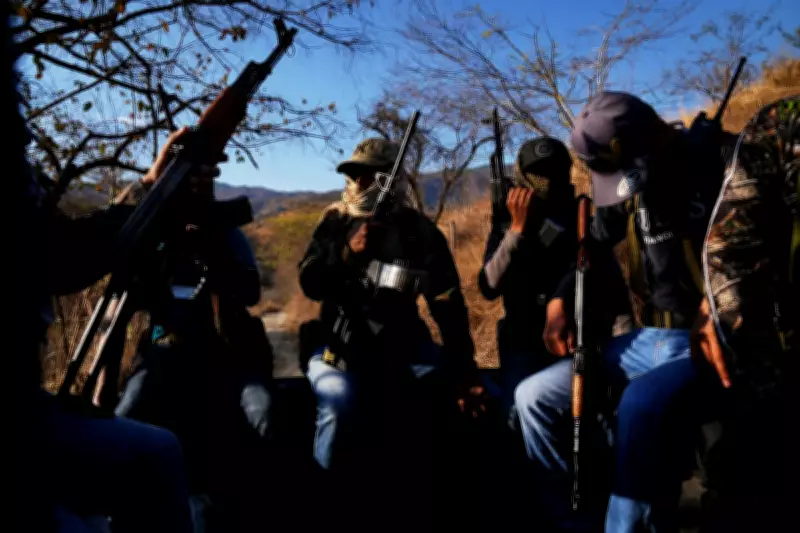
In the rugged mountains of Guerrero, central Mexico, civilians are taking up arms against a powerful drug cartel, forming self-defense patrols equipped with AK-47s and grenades. These groups, known as "autodefensa," have emerged as a desperate response to cartel violence in areas where government security forces are largely absent.
Vigilantes Stand Against Cartel Aggression
Jesús Domínguez, 34, leads a 50-man force through thick brush, armed with military-grade weapons smuggled from the United States. From a watch post overlooking Guerrero's peaks, he explains the dire situation: "The government doesn’t care about us, and it’s impossible for our arms to compete with the cartel's. They come at you with a ton of force, so you need to respond with force…If you don’t, they’ll overwhelm you." The vigilantes in Guajes de Ayala join a volatile landscape of warring armed groups, including cartels with reach across Latin America and local mafias, in regions ravaged by decades of cartel splintering.
Origins of the Self-Defense Movement
The vigilante group was formed in 2020 when La Nueva Familia Michoacana, designated a foreign terrorist organization by the Trump administration, attempted to control seven mountain communities along a strategic route to Acapulco. Residents reported illegal logging and forced recruitment into gang fights. With Mexican military and police absent, locals armed themselves, leading to nearly a year of sporadic firefights. Communities dwindled from 1,600 to 400 people as residents fled on foot. After a pause, the vigilantes rearmed in October when the cartel resumed pushing into their territory, setting up fentanyl labs and using drones for surveillance.

Now, the men guard their towns from mountain posts and monitor 100 cartel gunmen camped nearby with their own drones. Javier Hernández, the group's leader, states: "We don’t want to be part of their ranks and we don’t want to leave our lands. We don’t want to be slaves to any cartel."
Complex Security Landscape in Guerrero
Conflict is deeply entrenched in Guerrero, with a history of militancy dating to 1960s guerrilla movements. The situation has grown more complex as cartels fracture into rival factions, creating a kaleidoscope of armed groups. According to a 2025 DEA report, five cartels operate in the state, alongside local gangs and vigilante groups, many allied with larger cartels. Mónica Serrano, a professor studying violence in Guerrero, notes: "It's one of the most vexing challenges facing the country and is at the root of the violence."
Self-defense forces first appeared around 2013 in Michoacan and Guerrero as desperate measures to avoid cartel crossfire. However, in areas where criminal groups dominate, vigilante movements often face co-option or massacre. Mexico's government remains split on whether to engage with vigilantes or treat them as criminals. Domínguez reflects: "They corner you and you can't do anything. That’s how what’s been created – which began as autonomy – is corrupted. People end up joining criminal groups just to survive."
U.S.-Sourced Weapons and Cartel Ties
The Guajes de Ayala community claims independence but wields advanced equipment, including drone detection systems, tapped radio frequencies, and expensive DJI drones for spying. Their AK-47s and AR-15s bear "MADE IN USA" stamps from gun makers in Florida, South Carolina, and Poland, highlighting how strict Mexican gun laws lead to arms smuggling from the U.S. One gunman admitted purchasing weapons from cartels, while another revealed past ties to the Jalisco New Generation Cartel (CJNG). Some vigilantes even wear hats referencing Nemesio Oseguera Cervantes, the slain CJNG leader.
Local criminal gangs allied with Nueva Familia Michoacana allow residents transit rights to avoid complete encirclement. Hernández asserts his group shares intelligence with law enforcement and rejects alliances with predatory vigilante groups.

Political and Security Implications
The proliferation of armed groups tests Mexican President Claudia Sheinbaum as she navigates pressure from the Trump administration and fears of increased violence post-El Mencho's killing. Under Sheinbaum, security forces have intensified crackdowns, leading to a decade-low homicide rate, but Hernández disputes this: "It’s a lie. They say the government is doing wonders, but it’s nothing but propaganda." Experts warn that El Mencho's death could trigger violent power struggles among criminal groups.
A Marine captain in Guerrero, speaking anonymously, confirmed preparations for possible group reorganizations and assured that forces respond to rural calls for help.
Ghost Towns and Human Toll
The villages of Guajes de Ayala have become ghost towns, with vacant homes and fleeing residents. Marisela Mojica, Domínguez's mother, sent six family members away after her daughter's kidnapping, stating: "If they come to kill us all, I want one of us to still be alive." She hasn't seen her family in six years or met two grandchildren born in exile.
Schools and government clinics have shuttered as teachers and medical staff fear crossing cartel territories. Hernández, patrolling the silent mountains, laments: "These mountains are a place of silence. You have no voice, and no one hears you."