
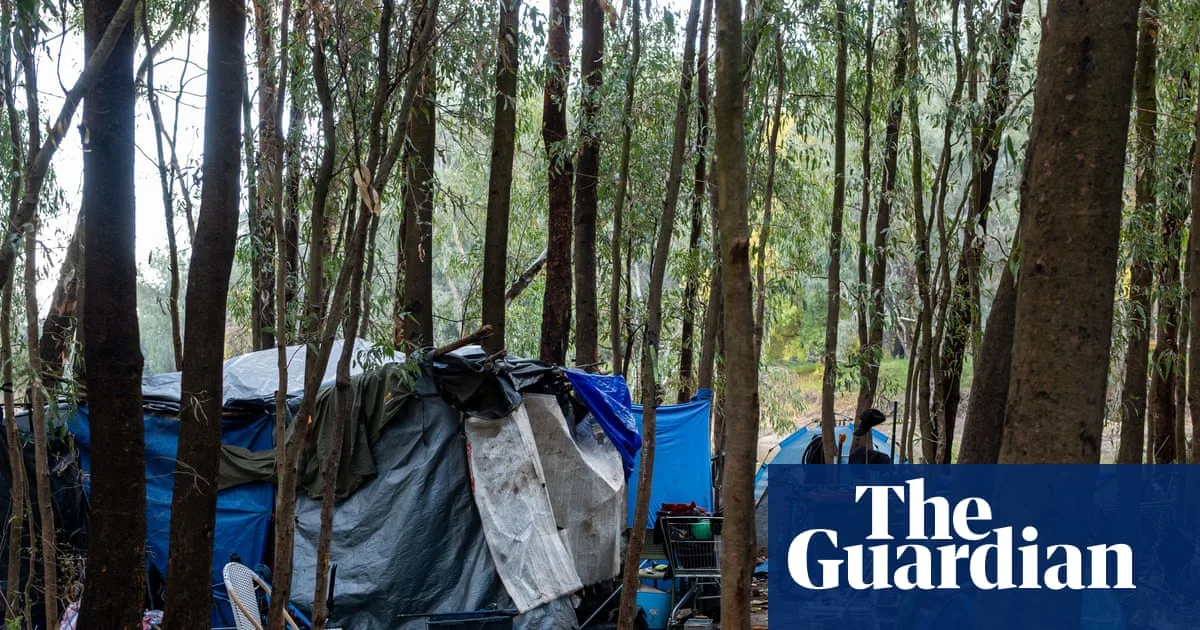
A newborn baby has been found dead at a homeless encampment in Wagga Wagga, New South Wales, sparking outrage over the lack of sanitation and housing support. The tent where the infant and its twin were born is up to a 15-minute walk from the nearest public toilets or running water, with residents describing conditions as 'worse than a Syrian war camp'.
Police were called to the Murrumbidgee riverbank on Saturday after the 37-year-old mother went into labour. One of the twins was found deceased, while the other was taken to hospital in a critical condition and later transferred to a Sydney hospital. The mother has been discharged and has not returned to the camp, according to a local resident.
The encampment, which houses about 10 tents, is seen by social services as a safer area for vulnerable individuals, including young women. However, the nearest public toilets are closed overnight, and access to water from a nearby apartment block has been restricted after complaints about residents bathing and intimidating others. Wagga Wagga City Council said it provided general advice to the apartment management but does not manage private infrastructure.
Councillor Amelia Parkins has called for urgent short-term measures, including waste collection and water access, and has questioned whether the council requested the water restriction. 'Access to clean water is a fundamental human right,' she said. The council stated it was unaware the woman was pregnant and that public amenities remain open during normal hours.
The tragedy has prompted calls for more permanent housing solutions, with residents urging the New South Wales government to invest in social housing. A meeting is scheduled for Thursday between the state housing minister, Rose Jackson, local MP Joe McGirr, and Mayor Dallas Tout to discuss the incident. Parkins noted a 'feeling of hopelessness and helplessness' in the community.




