
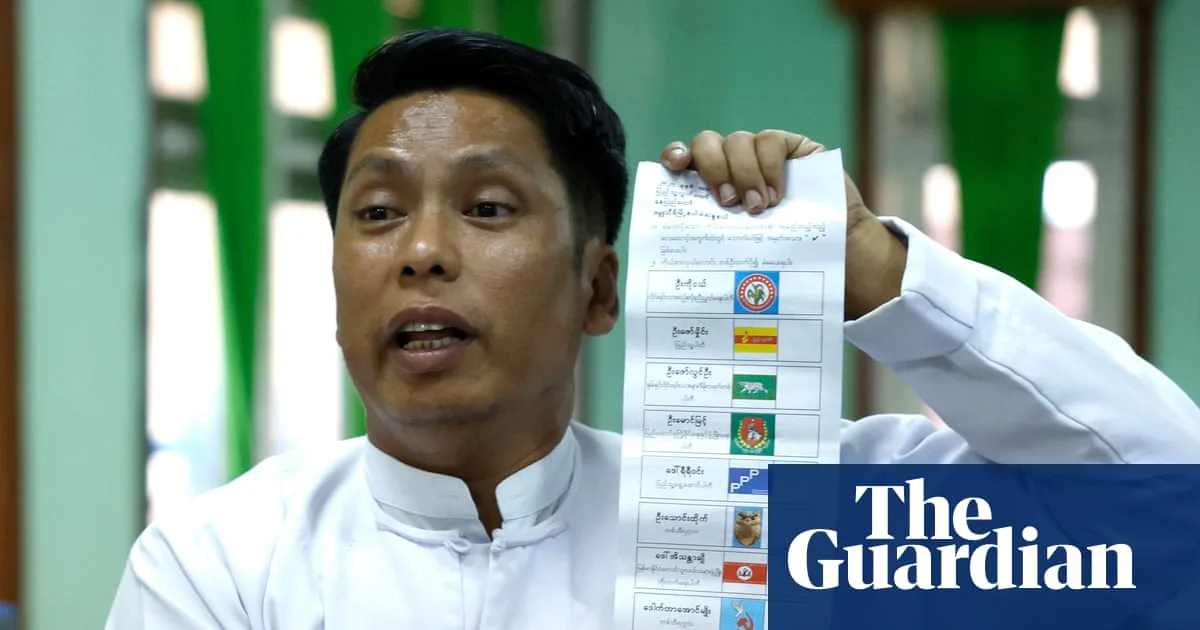
Myanmar's military-backed Union Solidarity and Development Party (USDP) is leading in the first phase of a contentious general election, the first vote since the 2021 coup, according to early results cited by state media. The ruling junta, which sparked a nationwide rebellion after crushing pro-democracy protests, has touted the election as a step towards stability.
Partial results released by the Union Election Commission for 56 constituencies show the USDP, led by retired generals, winning 38 of 40 seats in the lower house. The Shan Nationalities Democratic Party and the Mon Unity Party each secured one seat. In regional contests, the USDP won 14 of 15 seats tallied, with the Akha National Development Party taking one.
For the upper house, only one seat has been declared, won by the Wa National Party. No date has been set for the final result. The election has been criticised by the UN, some Western countries, and human rights groups for excluding anti-junta parties and making it illegal to criticise the polls.
The junta reported a voter turnout of 52% in the first phase, lower than the roughly 70% seen in 2015 and 2020 general elections, according to the International Foundation for Electoral Systems. Two more rounds of voting are scheduled for 11 and 25 January, covering 265 of Myanmar's 330 townships, some of which the junta does not fully control.
Aung San Suu Kyi, the Nobel laureate deposed by the military in 2021, remains in detention. Analysts say the junta's attempt to form a stable government amid ongoing conflict is risky, and broad foreign recognition is unlikely for any military-controlled administration with a civilian veneer.




