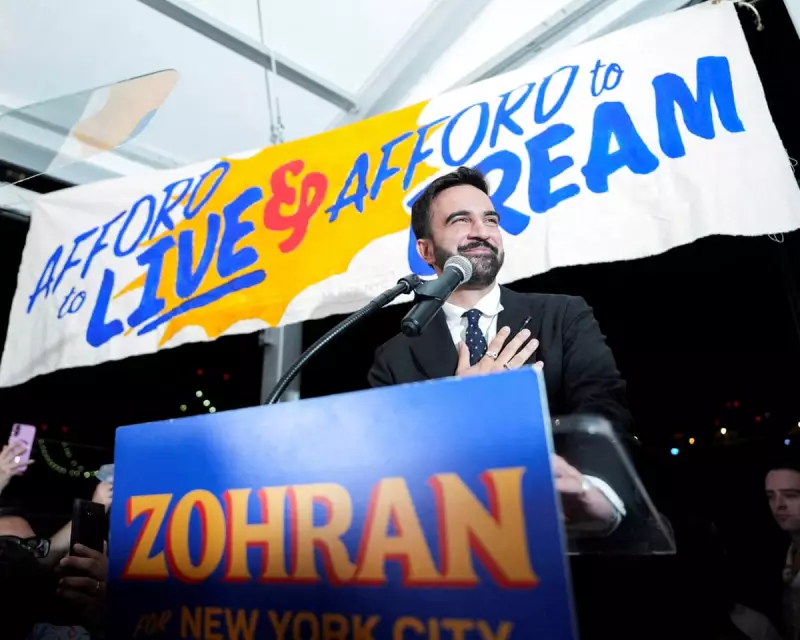
In a striking demonstration of modern political strategy, Zohran Mamdani has shown how so-called identity politics, when executed authentically, can secure electoral victory. The newly elected mayor of New York achieved his success by rooting his campaign in personal experience while ironically embodying the American melting pot tradition.
The Real Meaning of Identity Politics
Mamdani's approach offers crucial lessons for progressives worldwide, despite New York's specific demographic and economic context. The term identity politics has increasingly carried negative connotations, often dismissed as superficial representation politics disconnected from material concerns. However, Mamdani revived the concept's original meaning as defined by the Black feminist socialist organisation, the Combahee River Collective in 1977.
Identity politics was originally conceived as a path to liberation through understanding how systems oppress people across different identities, requiring collective action to dismantle these structures. Mamdani tapped into this simultaneous experience of multiple oppressions, building his campaign around the shared reality of being a New Yorker while addressing how different communities live that experience.
Building a Coalition Through Shared Struggle
The successful candidate released campaign materials in Urdu, Hindi, Spanish and Arabic, consistently focusing on economic messages that resonated across communities. His platform emphasised rent freezes, free buses, universal childcare and making New York affordable for families and small businesses.
Mamdani masterfully combined policy with personal touches, such as his humorous comment in Arabic about Queens having superior knafeh compared to New Jersey. This approach represented more than symbolic representation - it constituted genuine political enfranchisement.
In his victory speech, he quoted the Arabic phrase ana minkum wa alaikum, meaning I am of you and for you, and specifically named those forgotten by city politics: Yemeni bodega owners, Mexican abuelas, Senegalese taxi drivers, Uzbek nurses, Trinidadian line cooks and Ethiopian aunties.
From Margins to Mainstream
Mamdani's strategy involved physically showing up in spaces occupied by working-class people and communities of colour - visiting taxi ranks and late-night shift workers. He forged a powerful metaphor of a city sustained by those labouring in darkness while bringing his own identity into the light.
As a Muslim who grew up amid Islamophobia and faced a racist campaign against him, Mamdani resisted pressure to downplay his identity. His approach revealed how identity politics done right becomes generative rather than divisive.
When heckled about his position on Gaza, unlike establishment Democrats who might dismiss protesters, Mamdani responded: I want you to be able to afford this city too, my brother. This exemplified his commitment to building bridges across communities facing shared economic struggles.
Mamdani's victory demonstrates that the problem isn't particular racisms or prejudices, but an entire system that excludes those without capital in all its forms. His message resonated equally with college-educated white parents struggling with childcare costs and immigrant taxi drivers unable to pay rent.
Ironically, Mamdani's campaign embodied the virtues of the American melting pot, showing how diverse communities increasingly recognise the ways the country fails to live up to its ideals. His success against opposition from both the right and his own party suggests American liberal politics has lost its way in serving capital while taking a superficial approach to identity.
While New York's specific circumstances don't perfectly map onto other political landscapes, Mamdani's win offers a crucial reminder: voters across all identities want leaders who are genuinely of them and for them.