How Zohran Mamdani's Hybrid Campaign Won NYC Mayor Race with 100,000 Volunteers
Mamdani's Hybrid Campaign Strategy Secures NYC Mayoral Victory

In a striking demonstration of modern political strategy, Zohran Mamdani secured the New York City mayoral election with a decisive 50.4% of the vote, outperforming most poll predictions. His victory is being widely attributed to an innovative campaign that successfully bridged the digital and physical worlds of voter engagement.

The Ground Game: A Volunteer Army of 100,000

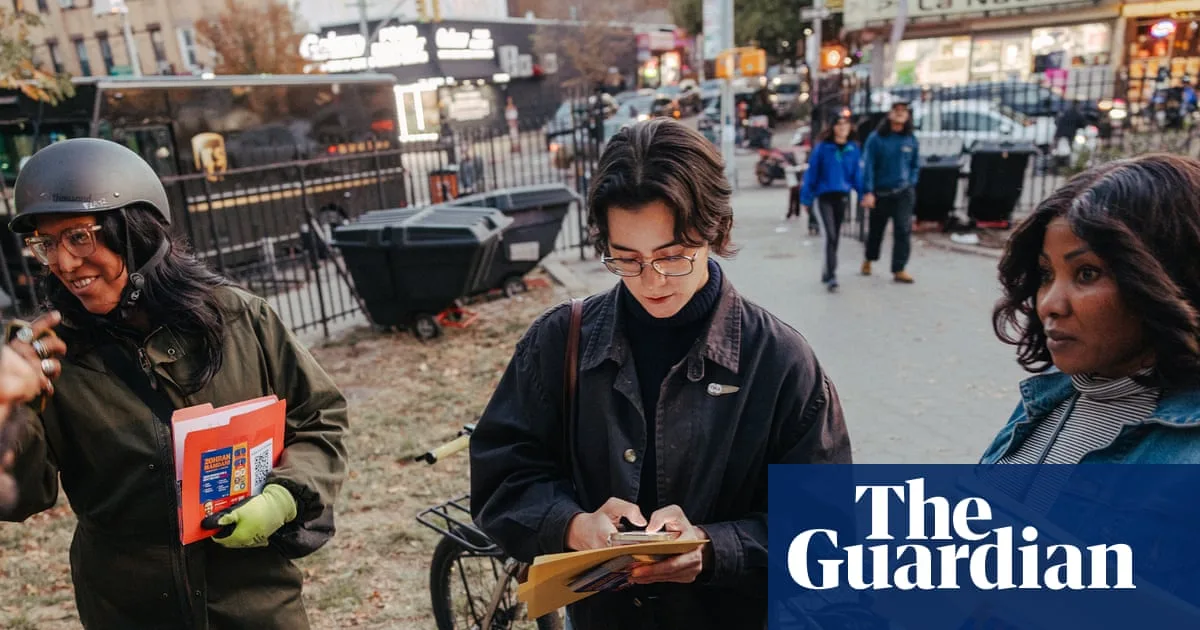
While online campaigning has dominated political discourse for over 15 years, Mamdani's effort placed a remarkable emphasis on traditional, on-the-ground mobilisation. The campaign claims to have mobilised an unprecedented force of over 100,000 volunteers for door-to-door canvassing across the city's five boroughs. This massive ground operation stands in contrast to recent academic research, which has found limited empirical evidence for the effectiveness of such tactics, except in very specific scenarios.

Political communication scholars note the difficulty in isolating the impact of any single campaign method, as efforts like television ads, social media pushes, and canvassing often run concurrently. In a vast electoral landscape like New York City, it is unlikely that Mamdani's personal door-knocking could have swayed the result alone. The true innovation lay not in choosing between digital or physical outreach, but in weaving them together.

Mastering the 'Hybrid Media' Environment

Mamdani's campaign operated in what researchers term a 'hybrid media' environment. This modern reality sees political battles waged simultaneously across multiple fronts: in person, on legacy news channels, and across a fragmented social media ecosystem. Each platform demands a tailored approach; a policy announcement might suit a televised news segment, while viral reach on TikTok could require partnering with an influencer or adopting a completely different creative tone.

The Mamdani campaign excelled in this hybrid space. Its digital team was adept at producing content that captured online attention. Crucially, it then converted that online engagement into tangible, real-world action. This addressed a growing concern among academics about 'slacktivism'—where a simple like or share online gives a supporter a sense of completion, potentially reducing more active forms of participation like volunteering or voting.

From Digital Clicks to Real-World Knocks

A key success was the campaign's ability to use its online presence as a recruitment and mobilisation tool. The figure of 100,000 door-knockers did not materialise in a vacuum; it was fuelled by effective digital organising that turned online followers into offline foot soldiers. Furthermore, the candidate's in-person campaigning—whether on street corners or in taxi queues—was amplified through strategic sharing on platforms like Instagram and TikTok, extending its reach far beyond the immediate physical audience.

This created a powerful feedback loop: compelling real-world moments were packaged for digital circulation, which in turn drew more people into the campaign's volunteer ecosystem. The construction of campaign stops with 'shareable' social media content in mind is becoming an integral part of modern political strategy.

In conclusion, the narrative surrounding Zohran Mamdani's victory should not be simplified to a triumph of old-school canvassing over digital flash, or vice versa. As analysed by Professor Stuart Soroka of UCLA, the success stems from a sophisticated, integrated approach. The Mamdani campaign serves as a textbook example of a modern, hybrid campaign, illustrating the co-evolution of digital and on-the-ground political organising. Its legacy will likely be a blueprint for how future campaigns can synthesise scaleable online outreach with the enduring power of personal, local connection.




