
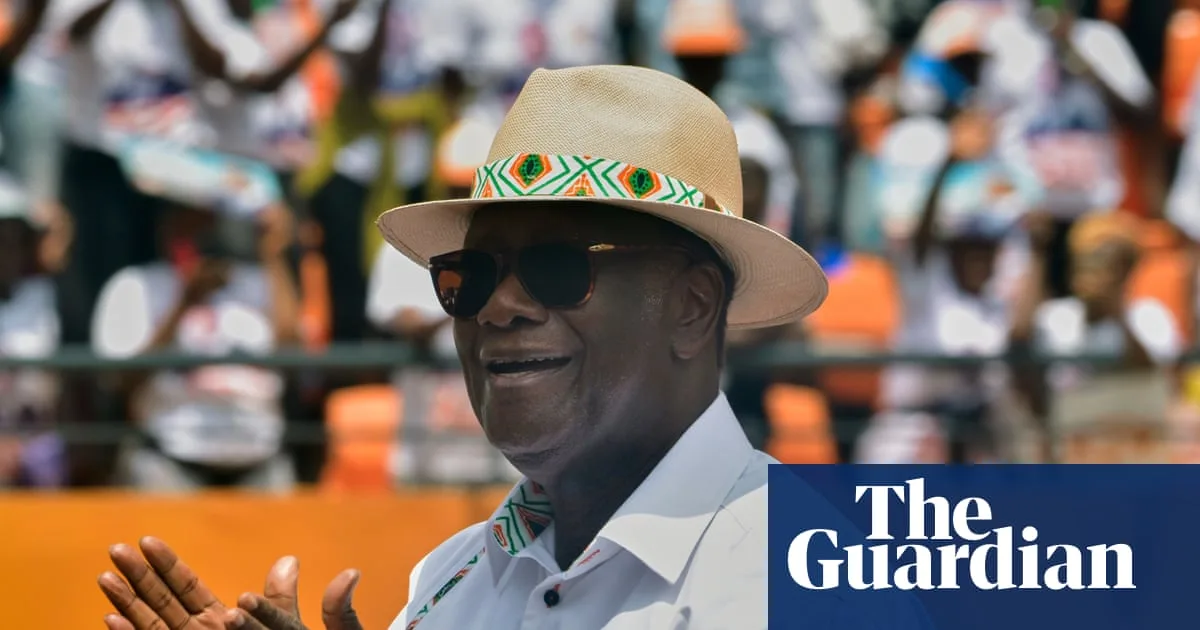
Protests have been banned and opposition figures sidelined as Ivory Coast’s 83-year-old President Alassane Ouattara ignores calls to step down ahead of the 25 October presidential election. The latest crackdown saw more than 200 protesters teargassed and arrested across Abidjan earlier this month, including in neighbourhoods near a bridge named after Ouattara.
Ouattara, who first took office in 2011, has overseen rapid infrastructure development and economic growth, with supporters hailing new bridges in Abidjan as symbols of stable leadership. However, opposition leaders allege that security personnel ransacked their homes without a warrant this month, in a sign of mounting repression.
Main opposition candidate Simone Ehivet Gbagbo, Ivory Coast’s former first lady, called for peaceful elections. “These elections can be won without bloodshed,” she said, urging voters to participate rather than boycott or march. Gbagbo, once known as “the iron lady,” is challenging Ouattara alongside three former ministers.
Ouattara confirmed his candidacy in July, after a controversial victory in 2020 when he changed his mind about stepping down following the death of his party’s designated candidate. Two leading opposition figures have been sidelined: former President Laurent Gbagbo is entangled in a past legal conviction, and former Credit Suisse banker Tidjane Thiam was disqualified over nationality issues.
Communication Minister Amadou Coulibaly defended the president: “The president is exercising his legal right under the constitution.” Officials point to a drop in poverty from 55% in 2011 to 37% in 2024, though the cost of living has soared and average life expectancy stands at just 59. Simone Gbagbo countered: “A beautiful Ivory Coast with roads is good, but happy Ivorians are better… Ivorians are not happy.”




