Hungary Enters New Political Era as Orbán's Long Rule Ends
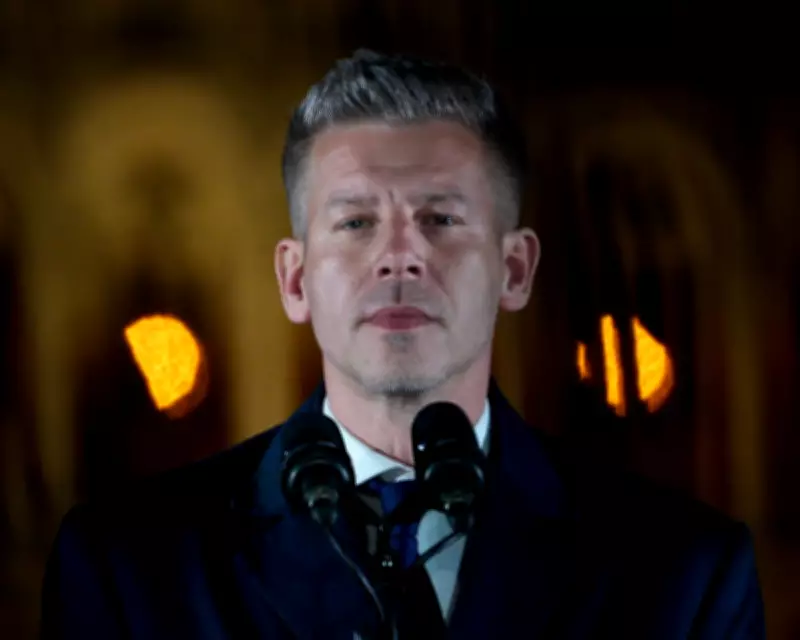
Hungarians have awakened to a profoundly altered political reality following a landmark election that has unseated Prime Minister Viktor Orbán after sixteen consecutive years in power. The victory of Péter Magyar and his Tisza party represents a seismic shift in the nation's trajectory, with immediate implications for its relationships with the European Union, the United States, and Russia.
Less than three hours after polling stations closed on Sunday, Orbán publicly acknowledged his defeat, describing the outcome as "painful but unambiguous." The final results, with 98.74% of votes counted, project that Magyar's Tisza party will secure 138 of the 199 parliamentary seats—a commanding supermajority that grants the new government the authority to amend the constitution and reshape key legislation.
A Night of Unprecedented Celebration
Election night in Budapest was marked by extraordinary scenes more reminiscent of a major sporting triumph than a political event. Crowds filled the streets, dancing and celebrating what many perceived as a historic turning point. One journalist on the ground noted that "people do not normally dance in the streets over politics," capturing the exceptional atmosphere that prevailed throughout the capital.

The sentiment among voters was captured by one Budapest resident who, when asked about his confidence in an opposition victory, simply replied: "vibes." This intuitive sense of impending change proved accurate, as Magyar's campaign successfully channeled widespread public discontent over corruption, rising living costs, and deteriorating public services.
The Rise of Péter Magyar
Magyar, a 45-year-old lawyer and former insider within Orbán's Fidesz party, has undergone a remarkable political transformation. Once married to former justice minister Judit Varga and closely connected to senior Fidesz figures, he has reinvented himself as an anti-establishment whistleblower. His rapid ascent to prominence began in 2024 following a government pardon scandal involving a child abuse case, during which he publicly accused Fidesz of systemic self-protection.
His appeal stems from this unique combination of insider knowledge and outsider critique. While he has promised concrete actions—including repairing Hungary's strained relationship with the EU, implementing robust anti-corruption measures, and redirecting funds toward neglected public services—he has maintained deliberate ambiguity on many policy specifics and largely avoided engaging in culture-war issues.
International Reactions and Implications
The international response to Magyar's victory has been swift and largely celebratory among European leaders. Magyar reported receiving congratulatory calls from French President Emmanuel Macron, NATO Secretary-General Mark Rutte, German Chancellor Friedrich Merz, and European Commission President Ursula von der Leyen.
Spanish Prime Minister Pedro Sánchez declared on social media that "today Europe wins and European values win," while Polish Prime Minister Donald Tusk welcomed Hungary "back" to the European fold with a message that included the phrase "Russians, go home." British Prime Minister Keir Starmer characterized the election as "an historic moment, not only for Hungary, but for European democracy."
Notably absent was immediate comment from the White House, particularly from US Vice-President JD Vance, who had campaigned for Orbán in Budapest earlier in the week. Vance had described his trip as "unprecedented" assistance for Orbán's re-election bid and had accused the EU of interfering in Hungary's democratic processes.
Challenges Ahead for the New Government
As the celebrations subside, attention turns to the formidable challenges facing the incoming administration. Rebuilding democratic institutions after sixteen years of what critics describe as state capture and institutional erosion represents a monumental task. The reconstruction of a democratic framework, revitalization of Hungary's economy, and restoration of international alliances will require sustained effort and political will.

Observers suggest that voters, weary of what one journalist characterized as Orbán's "never apologise, always double down" approach to governance, may demonstrate patience with early missteps—provided the new government maintains transparency and accountability.
Orbán has indicated he will continue his political career from the opposition benches, telling supporters: "We are going to serve the Hungarian nation and our homeland from opposition as well." Meanwhile, Magyar framed the victory in patriotic terms, declaring: "Today, we won because Hungarians didn't ask what their homeland could do for them—they asked what they could do for their homeland. You found the answer."
The election results mark not merely a change in government but potentially a fundamental reorientation of Hungary's domestic priorities and international alignments. As one correspondent noted from Budapest, "There's an overwhelming sense that things will now get better here." Whether this optimism translates into tangible improvements remains the central question facing Hungary's new political leadership.