A bombshell national poll has plunged Sir Keir Starmer's Labour Party into a deeper unpopularity crisis, with the Greens surging to second place ahead of both Labour and the Conservatives. The YouGov voting intention survey, conducted among 2,073 adults, reveals a dramatic shift in the political landscape following last week's by-election humiliation for the Prime Minister.
Poll Results Show Historic Shifts
According to the poll, support for the Greens has risen to 21 per cent, a four-point increase since their victory in the Gorton and Denton by-election. This marks the highest national voting intention score ever recorded for the Green Party. Meanwhile, Nigel Farage's Reform UK leads the poll at 23 per cent, with Labour and the Tories tied at a mere 16 per cent each, both down two points. The Liberal Democrats remain unchanged at 14 per cent.
Projections Paint a Stark Picture
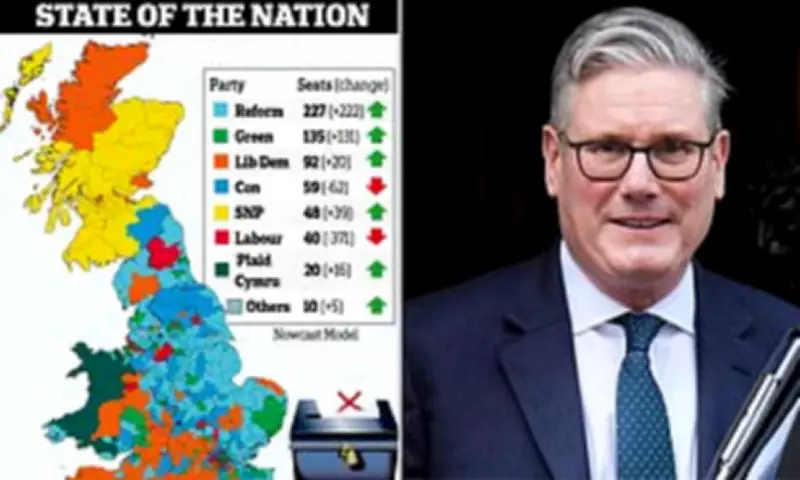
The Election Maps UK Nowcast Model, which simulates a general election held tomorrow, projects that Reform UK would emerge as the largest party with 227 seats, an increase of 222. The Greens would become the second-biggest party with 135 seats, while the Lib Dems would secure 92 MPs. In a devastating blow, the Tories are projected to win only 59 seats, a drop of 62, and Labour would lose 371 MPs, leaving it with just 40.

Coalition Warnings Intensify
These results have prompted urgent warnings about the potential for a 'scary coalition of the Left' at the next election. Robert Jenrick, a Reform MP, stated that this possibility must be 'taken seriously', cautioning that it could consign Britain to 'five, ten years' of decline. He told TalkTV that the election is likely to be a straight fight between Nigel Farage and Reform on one side, and a coalition involving Keir Starmer, Zack Polanski's Greens, the Lib Dems, Plaid Cymru, and the SNP on the other.
Demographic Insights Reveal Green Appeal
The poll highlights the Greens' broad appeal across key demographics. They are the most popular party in all age groups under 50, with 49 per cent of 18 to 24-year-olds and 27 per cent of 25 to 49-year-olds willing to back them. Additionally, the Greens are the most popular with female voters, supported by 23 per cent. The data also shows significant voter migration, with 31 per cent of those who backed Labour at the last general election now planning to vote for the Greens, while only 43 per cent remain loyal to Labour.
Analysis and Implications
Anthony Wells of YouGov suggested that the polling surge is likely driven by 'publicity from the Gorton and Denton by-election'. The model indicates that if Left-wing parties formed a coalition, they would command 335 seats, nine more than needed for a majority. This scenario underscores the deepening crisis for Labour, which now faces its lowest polling figure on record, and raises critical questions about Sir Keir Starmer's leadership and the party's future strategy in a rapidly evolving political environment.