

Green Party Triumphs in Gorton and Denton Byelection, Redefining UK Politics
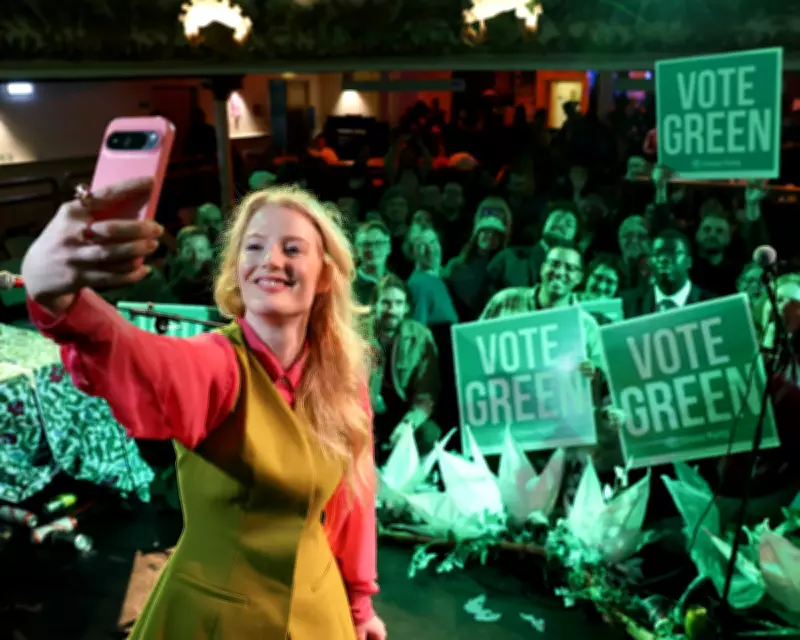
In a dramatic upset that has sent shockwaves through the British political establishment, the Green Party's Hannah Spencer secured a resounding victory in the Gorton and Denton byelection on 26 February 2026. Celebrating with supporters at the Niamos arts centre in Manchester, Spencer's win represents a profound rejection of the traditional two-party system and signals a growing voter appetite for radical change.
A Campaign Built on Authenticity and Grassroots Mobilisation
The Greens' campaign in Gorton and Denton will be scrutinised for years as a masterclass in modern political strategy. Just under two years ago, the party languished in third place with a mere 13% of the vote and minimal local infrastructure. Facing a Labour machine that had dominated the constituency for generations, boasting a majority exceeding 13,000 votes in 2024, the Greens appeared to be facing an insurmountable challenge.
However, through a relentless focus on the cost of living crisis and the selection of Hannah Spencer, a local plumber whose authenticity resonated deeply with voters, the party forged an unprecedented connection with the electorate. Combining sharp-edged social media outreach with traditional door-knocking tactics, the Greens galvanised thousands of activists, many participating in political campaigning for the first time. By polling day, the party was inundated with volunteers, a testament to the grassroots energy they had unleashed.

Labour's Disgrace and the Failure of Starmerism
Labour's response to the byelection was characterised by denial and deceit. Throughout the campaign, party officials insisted the race was solely between Labour and Reform UK, dismissing the Greens as irrelevant. This false narrative, likely contradicted by their own internal data, risked paving the way for a Reform victory had the Green surge not been so overwhelming. A Labour minister even reportedly expressed a preference for a Reform win over a Green triumph.
The party's tactics descended into disrepute, with accusations of distributing misleading leaflets from a fictitious tactical voting organisation and attacking the Greens for their principled stance on drug policy reform. This behaviour underscores the vacuity of the Starmer project, which relied on crushing the left within Labour while offering no animating vision or reckoning with Britain's broken economic model. The result in Gorton and Denton, a seat ranked 127th on the Greens' target list, suggests that no Labour MP can now feel secure.
Reform's Flawed Strategy and the Rejection of Scapegoating
Reform UK's campaign, led by the hard-right demagogue Matthew Goodwin, failed to resonate with the electorate. Despite betting on GB News name recognition and a split progressive vote, fewer than 29% of voters opted for Reform's toxic rhetoric scapegoating migrants. Many working-class voters denounced the party as a mere rebranding of the Conservatives or condemned its bigotry, challenging media caricatures that portray this demographic as inherently xenophobic.
The Gaza Factor and the Smear Campaign Ahead
While multiple issues drove the Green victory, the conflict in Gaza undoubtedly played a role. The Greens' principled opposition to what many view as genocide, contrasted with Labour's continued support for arms sales to Israel, resonated with voters across religious and ethnic lines. However, this stance has already been demonised by opponents, with Reform leader Nigel Farage alleging "dangerous Muslim sectarianism" and Labour figures accusing the Greens of whipping up hatred.
This smear campaign, likely to intensify, represents an unholy alliance between Reform, Conservatives, Blairites, and sections of the media. Hannah Spencer's victory speech directly confronted this divisiveness, emphasising common ground among Britons of diverse backgrounds and rejecting the politics of scapegoating.

A New Political Dawn or a Temporary Insurgency?
The Greens' victory under leader Zack Polanski's unabashedly populist strategy, which channels voter anger and fuses it with hope, has been decisively vindicated. For too long, British politics has oscillated between snuffing out hope and stoking fear, with main parties converging around a failed economic model. In Gorton and Denton, thousands revolted against this wretched consensus.
Labour now faces an existential crisis, torn between Blairite factions urging further defiance and others demanding a frantic pivot to win back disillusioned voters. However, with a parliamentary party crowded with cynical careerists, such a shift appears increasingly implausible. The re-emergence of the left beyond Labour's institutional walls suggests that the party may be irreplaceable in its current form.
As British politics enters a new era, the Greens' triumph offers a glimpse of an alternative future—one built not on fear and scapegoating, but on hope and genuine grassroots engagement. Whether this moment marks the beginning of a sustained political realignment or a temporary insurgency remains to be seen, but the landscape has undeniably shifted.





