

The line between celebrity and politician has blurred dramatically. Where once the worlds of showbusiness and Westminster were distinct, a growing number of familiar faces from our TV screens are now making bold bids for political power, with decidedly mixed results.
The Reality TV Candidates: Ambition Meets the Ballot Box
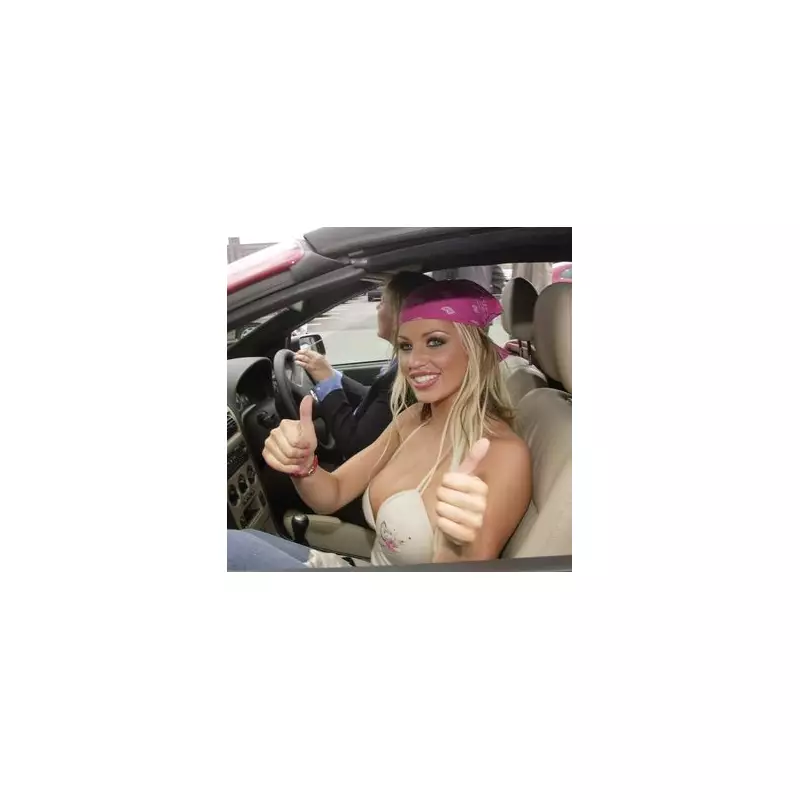
Perhaps one of the most memorable, if unsuccessful, forays was by model and media personality Katie Price. In a campaign run with assistance from the Daily Star, Price stood for Parliament in the Stretford and Urmston constituency of Greater Manchester under her modelling name, Jordan. Her unconventional manifesto, which reportedly included policies like free plastic surgery and more nudist beaches, failed to win over voters. Despite this loss in 2019, the 47-year-old has since become a vocal campaigner on specific issues, notably addressing online abuse and disability hate crime faced by her son, Harvey, in appearances at the House of Commons.
More recently, reality TV figure Spencer Pratt, best known in the UK for his appearance on Celebrity Big Brother with wife Heidi Montag, announced a dramatic political move. After his Los Angeles home was destroyed by wildfires last year, Pratt declared his candidacy for Mayor of Los Angeles at a 'They Let Us Burn' rally, stating, "Business as usual is a death sentence for Los Angeles."

From Coronation Street to the Commons: Successful Transitions
Some small-screen stars have managed to build substantial political careers. Tracy Brabin, known to millions in the 1990s as Coronation Street's Tricia Armstrong, made a seamless transition. Her final episode aired the very day Tony Blair became Prime Minister. She later served as the Labour MP for Batley and Spen from 2016 to 2021 and is now the Mayor of West Yorkshire.
Another successful switch was made by Gyles Brandreth. The familiar TV-am and Good Morning Britain presenter, famed for his colourful jumpers, served as the Conservative MP for the City of Chester from 1992 to 1997 before happily returning to broadcasting.
Perhaps the most iconic example of a journalist-turned-politician is Martin Bell. The BBC war correspondent, recognisable in his white suit, famously quit journalism just days before the 1997 general election to stand as an anti-sleaze independent candidate in Tatton, Cheshire. He soundly defeated the Conservative MP Neil Hamilton, who was facing allegations of misconduct.
Campaigners and Contenders: The Mixed Bag of Results
The political ambitions of other celebrities have met with varying degrees of success. Comedian and actor Suzy Eddie Izzard, a long-time Labour activist, campaigned to be the party's candidate for Brighton Pavilion in 2023 but was ultimately not selected.
Josh Tapper, who found fame on Channel 4's Gogglebox with his family, left the show for a government role in the Cabinet Office. He later stood as a Labour candidate in Hertsmere, Hertfordshire, against Conservative Oliver Dowden in 2024. Although he lost, he significantly reduced the Tory majority and stated he was proud of a campaign that "got Dowden working harder here than ever before."
Of course, the most globally significant example remains Donald Trump. Before his two terms as US President, the 79-year-old was the star of the US version of The Apprentice from 2004 to 2015. The show, created by British producer Mark Burnett, earned him an estimated $400 million and placed him firmly in the public eye, paving an unlikely path to the White House where he defeated Hillary Clinton in 2016.
Even current Tory MP Esther McVey began her career in the public eye on GMTV alongside Eamonn Holmes, demonstrating that a media background is no longer a barrier to a serious political career in the UK.
This trend shows no sign of slowing. As Spencer Pratt's mayoral bid proves, the allure of political office for those accustomed to the spotlight remains strong, proving that in modern politics, name recognition can be a powerful, if not always decisive, currency.






