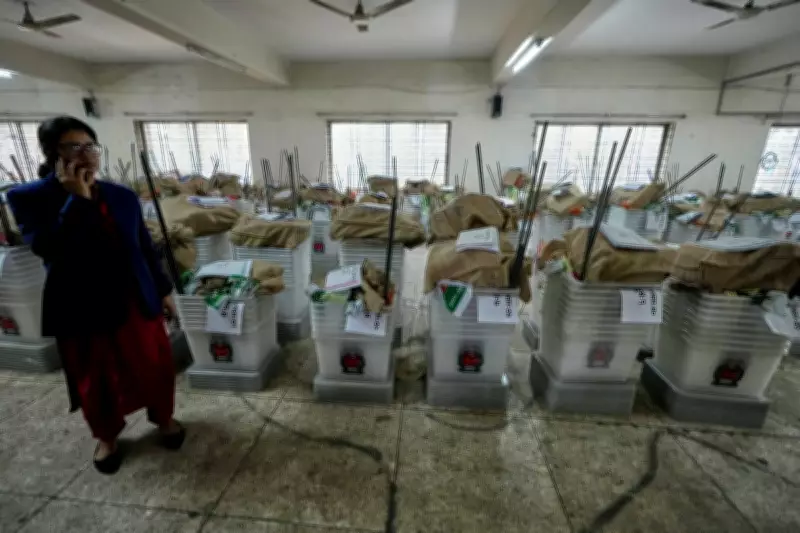
Bangladesh Votes in Historic Election Following 2024 Uprising That Toppled Hasina
Polls have opened across Bangladesh for voters to cast ballots in a parliamentary election widely viewed as a critical test of the nation's democracy after years of intense political turmoil and upheaval. This landmark vote marks the first election since the 2024 uprising that led to the collapse of former Prime Minister Sheikh Hasina's government, with security measures exceptionally tight at tens of thousands of polling stations throughout the country.
Massive Voter Turnout and Security Measures
More than 127 million people are eligible to participate in this pivotal election, with balloting continuing throughout Thursday and results anticipated to be announced on Friday. The interim administration, led by Nobel Peace Prize laureate Muhammad Yunus, has pledged to oversee a fair and transparent electoral process, ensuring that the vote reflects the will of the Bangladeshi people after a period of significant unrest.
Political Landscape and Key Contenders
The election is being contested without the participation of Sheikh Hasina's party, which has been banned from the polls following her flight into exile in India after the 2024 protests. Leading the race to form the next government is Tarique Rahman of the Bangladesh Nationalist Party (BNP), the son of former Prime Minister Khaleda Zia. Rahman returned to Bangladesh in December after spending 17 years in self-exile in London, adding a dramatic twist to the political narrative.

Challenging the BNP is an 11-party alliance spearheaded by the Jamaat-e-Islami, the country's largest Islamist party, setting the stage for a highly competitive and closely watched electoral battle. The outcome of this election will determine the composition of Bangladesh's Parliament, which consists of 350 seats elected by plurality to serve a five-year term.
Historical Context and Democratic Implications
This election represents a watershed moment for Bangladesh, as it seeks to rebuild its democratic institutions following the mass protests that ousted Hasina's government. The involvement of an interim administration under Yunus aims to restore public trust and ensure a peaceful transition of power, with the international community closely monitoring developments. The high voter eligibility and stringent security underscore the importance of this vote in shaping the nation's future trajectory.