

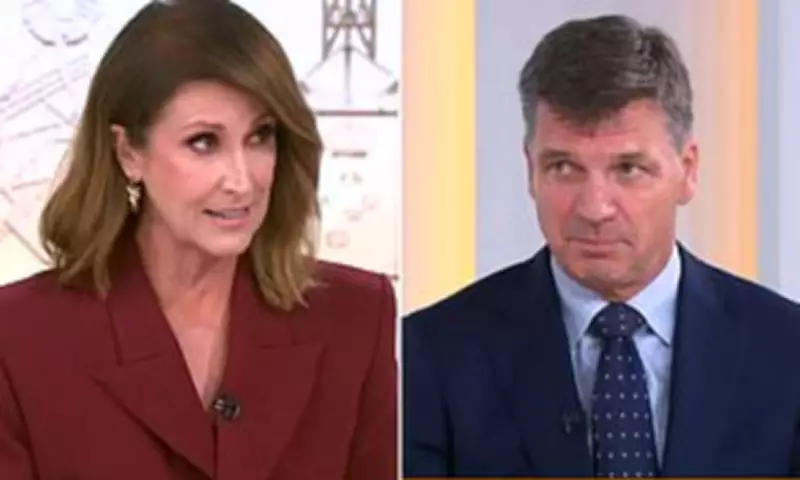
Sunrise Host Nat Barr Confronts New Liberal Leader Over Party's Electoral Collapse
In a tense exchange on Sunrise, host Nat Barr has directly challenged new Liberal leader Angus Taylor on his strategy to reverse the party's plummeting support, following his takeover from former leader Sussan Ley. Barr pointedly highlighted the Coalition's recent electoral setbacks, setting the stage for a critical discussion on the party's future direction.
Confrontation Over Voter Loss and Leadership Change
"You lost nine seats at the last election," Barr stated bluntly. "Polls indicate you are losing approximately 7,000 voters every single day. What concrete actions can you implement that Sussan Ley was unable to achieve?" This opening salvo underscored the urgency facing Taylor as he steps into the leadership role amid significant public disillusionment.
Taylor's Response: Refocusing on Cost of Living and Core Policies
In his reply, Taylor emphasised a renewed commitment to addressing the economic pressures facing Australians. "Firstly, we must acknowledge the mistakes made in the past," he conceded. "However, our absolute priority must be restoring Australians' standard of living and safeguarding their way of life." He outlined a multi-faceted policy approach aimed at tackling key voter concerns.

Taylor detailed plans for a pragmatic energy policy to reduce prices, a stricter immigration framework prioritising Australian interests, and a focus on housing affordability. "We require a robust economy that can revive our living standards during a period of rising inflation and interest rates," he asserted. "Many are losing hope of home ownership or business success—this trend must be reversed immediately."
Energy Policy Shift and Immigration Stance
Signalling a potential departure from previous positions, Taylor hinted at openness to nuclear power as part of a broader energy strategy. "Our energy system should embrace all available technologies," he argued, criticising Labor's approach for contributing to significant price hikes.
When pressed by Barr on his immigration comments, Taylor clarified his stance on excluding individuals who reject fundamental democratic values. "We are referring to those who do not accept the core beliefs that underpin our nation's success," he explained. "This includes democracy, rule of law, and freedoms of speech and religion. If people cannot embrace these principles, they should not be permitted entry."
Deputy Leader Jane Hume Addresses Party Positioning
Barr further questioned deputy leader Jane Hume about the party's electoral standing relative to One Nation, probing whether a rightward shift was imminent. "Jane, you are nearly being overtaken by One Nation. How will you reclaim those votes? Will the party move further to the right?" Barr inquired.
Hume firmly rejected any alignment with reactionary politics. "The Liberal Party will never become a party of grievance," she stated. "We do not need to shift left or right. Our mission is to remind Australians that we represent the unrepresented—focusing on families and small businesses, not sectional interests."
Upcoming Frontbench Reshuffle and Polling Data
Taylor is anticipated to unveil a revamped frontbench shortly, with policy announcements likely accompanied by a reshuffle that could reintegrate figures like Andrew Hastie and Jacinta Nampijinpa Price into senior roles. "They are magnificent members of our team," Taylor remarked, referencing their previous departures over migration issues.
Recent polling underscores the challenges ahead. A Resolve poll of 1,800 participants, conducted after Taylor's ascension, shows Labor leading with 32% of the primary vote, while One Nation and the Coalition are tied at 23%. This represents a slight improvement for a Taylor-led Coalition compared to a Ley-led opposition. Earlier Newspoll data, predating the leadership change, recorded One Nation at 27% and the Coalition at 18%, highlighting the volatile electoral landscape.






