Zelensky Defends Athlete's Tribute Amid Olympic Controversy
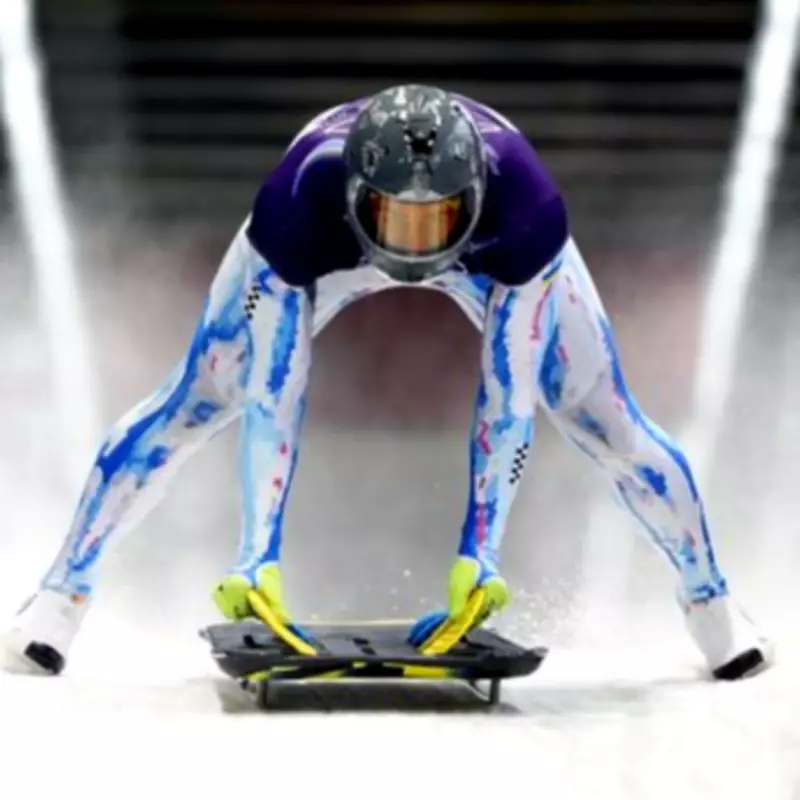
Ukrainian President Volodymyr Zelensky has launched a scathing attack on Olympic authorities over their attempt to prohibit a Ukrainian skeleton racer from wearing a helmet dedicated to fallen sports heroes. The dispute centres on Vladyslav Heraskevych, a 27-year-old athlete and flag bearer for Ukraine at the Winter Olympics, who intended to use the Games in Cortina, Italy, to highlight the human cost of Russia's ongoing invasion.
Helmet of Remembrance Sparks International Row
Heraskevych's helmet features portraits of Ukrainian athletes who have been killed since Russia's full-scale invasion in 2022, with imagery sourced from training sessions and competitions. During a recent training session, he wore the helmet, prompting the International Olympic Committee (IOC) to consider a ban under Rule 50.2 of the Olympic Charter, which forbids political demonstrations at sporting events.
In a forceful statement, Zelensky expressed his gratitude to Heraskevych, stating, "I thank the flag bearer of our national team at the Winter Olympics, Vladyslav Heraskevych, for reminding the world of the price of our struggle." He added, "This truth cannot be inconvenient, inappropriate or called a political demonstration at a sporting event. It is a reminder to the entire world of what modern Russia is."

Appeal and Safety Compliance
The National Olympic Committee of Ukraine has formally appealed to the IOC, requesting permission for Heraskevych to compete wearing what they term a "helmet of memory." In their appeal, the organisation emphasised that the helmet meets all safety requirements and IOC regulations, arguing it serves as a poignant memorial rather than a political statement.
Meanwhile, the backdrop to this controversy remains grim. Early this morning, Russian forces attacked the Zaporizhzhia region, injuring several civilians, including a one-year-old child. This incident underscores the ongoing violence that has plagued Ukraine for nearly four years, with civilian areas repeatedly targeted.
Broader Conflict and Diplomatic Efforts
The helmet row occurs amid broader geopolitical tensions. The United States is actively attempting to broker a peace deal between Ukraine and Russia, though negotiations face significant hurdles. Russia insists on retaining control of eastern Ukrainian territories and imposing strict limits on Kyiv's military capabilities as part of any agreement.
War statistics reveal the scale of the conflict:
- Russia has suffered an estimated 1,247,580 troop casualties, including deaths and injuries.
- Ukrainian forces have destroyed 11,654 Russian tanks.
- A total of 435 Russian warplanes and 347 helicopters have been shot down.
In response, Ukraine has executed a series of devastating drone attacks on Russian infrastructure, targeting refineries and energy export facilities. These strikes have significantly depleted Russian President Vladimir Putin's war resources. Additionally, Ukraine has launched long-range assaults on missile sites, such as the Kapustin Yar test site hit in January, where several hangar-type buildings were destroyed.
Humanitarian Crisis and Winter Weaponisation
As the conflict drags on, humanitarian conditions in Ukraine have deteriorated. Russian forces have consistently targeted civilian housing and energy resources, crippling heating systems during a harsh winter with temperatures often dropping to minus 20 degrees Celsius. Zelensky has accused the Kremlin of weaponising the extreme cold, exacerbating the suffering in cities like Kyiv.
This Olympic dispute highlights the intersection of sport and politics, with Zelensky using the platform to condemn Russian aggression and honour Ukraine's losses, even as diplomatic and military struggles continue unabated.