
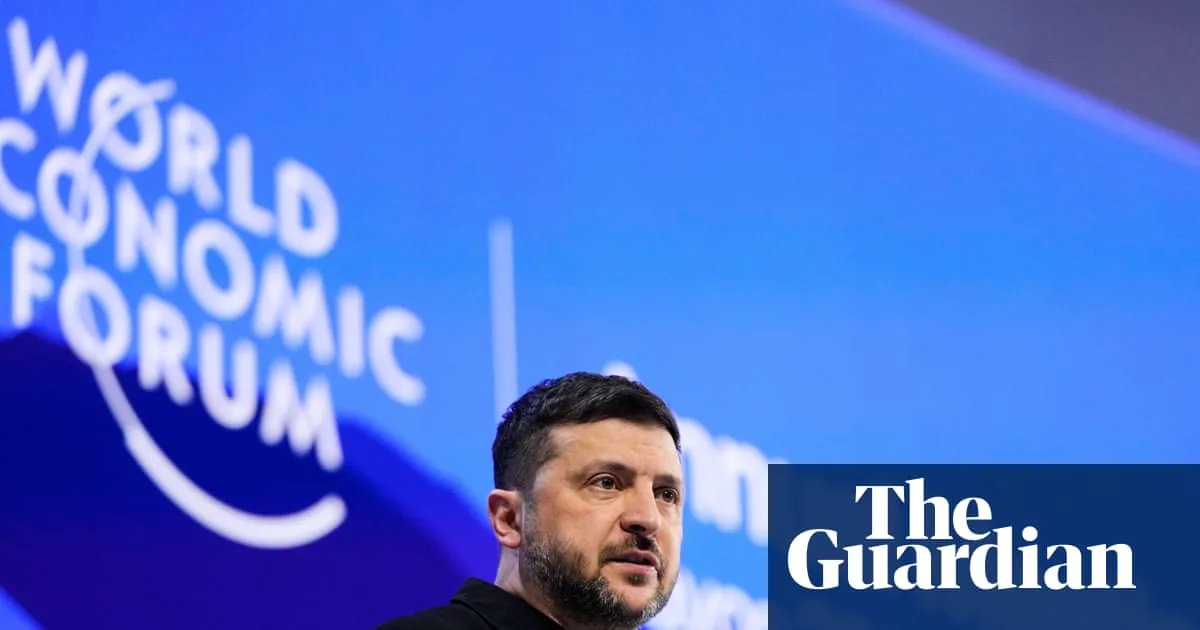
Volodymyr Zelenskyy has criticised European leaders for being in “Greenland mode” as they wait for direction from Donald Trump on Ukraine and other crises. Speaking at the World Economic Forum in Davos, the Ukrainian president said Europe had failed to take decisive action.
“Just last year, here in Davos, I ended my speech with the words ‘Europe needs to know how to defend itself’,” Zelenskyy said. “A year has passed, and nothing has changed.” He accused leaders of complacency, saying they hoped the US would cool down on its demands for Greenland without a plan if it does not.
Zelenskyy suggested Ukraine could help defend Europe in the event of a Russian incursion into Greenland, noting: “We know what to do if Russian warships go near Greenland, Ukraine can help with that.” He called for a more muscular European role in targeting Russia’s “shadow fleet” of oil tankers and said the continent needed a “united armed forces”.
His speech came as Trump’s envoy Steve Witkoff met Vladimir Putin in Moscow to advance peace talks, and as European leaders scrambled over the US territorial demands. Zelenskyy met Trump earlier on Thursday, with Trump describing the talks as “good” but noting “a ways to go”.




