Kazuo Ishiguro's Simple Prose Proves Ideal for Film Adaptations
Kazuo Ishiguro, the Nobel Prize-winning author, has famously claimed to try writing "unfilmable novels," yet his works consistently translate beautifully to the silver screen. This paradox highlights how his restrained and unadorned prose style, devoid of flashy literary techniques, makes his stories uniquely suited for cinematic interpretation. Unlike more ostentatious writers such as Martin Amis, whose novels often struggle in adaptation, Ishiguro's clarity and emotional depth allow filmmakers to capture the essence of his narratives with ease.
The Film-Friendly Nature of Ishiguro's Work
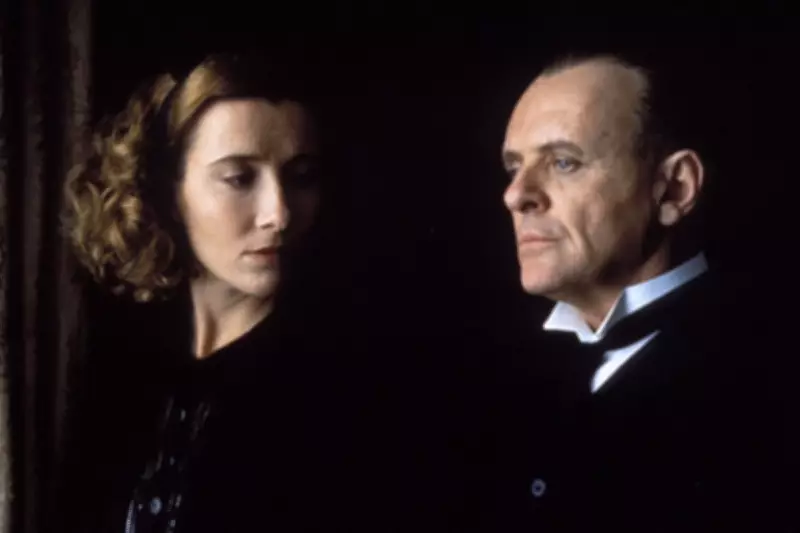
Ishiguro's Booker Prize-winning novel, The Remains of the Day, was masterfully adapted into a Bafta award-winning film, while his acclaimed sci-fi tale, Never Let Me Go, became a celebrated sci-fi thriller. These successes underscore his status as one of Britain's most cine-literate authors. His prose, characterized by its simplicity and emotional resonance, functions like a series of unhurried prompts, inviting readers and filmmakers alike to visualize the story. This approach contrasts sharply with showboating authors like Vladimir Nabokov or Philip Roth, whose complex styles often falter in film adaptations.
Recent Adaptations and Upcoming Projects
In 2026, a wave of Ishiguro adaptations was anticipated, though some projects have faced delays. Taika Waititi's adaptation of Klara and the Sun, featuring Jenna Ortega, stalled near completion, while Guillermo Del Toro's stop-motion treatment of The Buried Giant is only in its early stages. However, A Pale View of Hills, based on Ishiguro's 1982 debut, is set for release. This hushed, tense tale explores buried secrets and banked emotions, shifting from 1980s England to postwar Nagasaki, and delves into themes of family adaptation and hidden truths.

Structural Similarities to Genre Fiction
Critics often label Ishiguro as highbrow, but structurally, his novels share similarities with genre masters like Raymond Chandler, Agatha Christie, and John Le Carre. His stories are emotional whodunnits or existential spy thrillers, powered by investigative zeal and shadowed corners. For instance, in Never Let Me Go, the heroine Kathy lays a trail of breadcrumbs for viewers, while in The Remains of the Day, the butler Stevens belatedly realizes his love and the dark secrets of his workplace. These elements—buried secrets, unreliable narrators, and truth-seekers—align perfectly with cinematic storytelling.
Ishiguro's Cinephilia and Adaptability
Ishiguro's deep appreciation for cinema enhances his adaptability. He has served on juries at Cannes and Venice film festivals and earned an Oscar nomination for writing Living, a remake of Akira Kurosawa's Ikiru. His favorite recent films include Justine Triet's Anatomy of a Fall and Gints Zilbalodis's Flow. He views storytelling principles as consistent across mediums, and his own background—born in Nagasaki, raised in Surrey, and starting as a songwriter—has prepared him for Hollywood's demands. His cultural omnivorousness allows his open-ended human stories to thrive in adaptation, ensuring a second life on screen.
The Enduring Appeal of Ishiguro's Narratives
Ishiguro describes his novels as campfire tales, alive and in flux, playing out differently with each telling. This fluidity is evident in adaptations like The Remains of the Day, where Stevens's version of events is tripped up by facts and feelings, or in A Pale View of Hills, where a mother concocts parallel stories to obscure the truth. By embracing adaptation rather than guarding his texts rigidly, Ishiguro allows his stories to evolve, resonating with new audiences. His best novels boast a remarkable strike rate in film, proving that simplicity and emotional depth can transcend the page to captivate on screen.