White House Declares Iran in 'Weak Position' Amid Hormuz Standoff
The White House has insisted that the United States holds all the cards as Iran tightens its grip on the strategically vital Strait of Hormuz by seizing two ships. Despite an extended ceasefire, the ongoing stand-off over this critical maritime pinchpoint continues to inflict significant pain on the global economy, with energy prices soaring and the cost of goods remaining elevated.
Trump Extends Ceasefire as Tehran Faces Internal Divisions
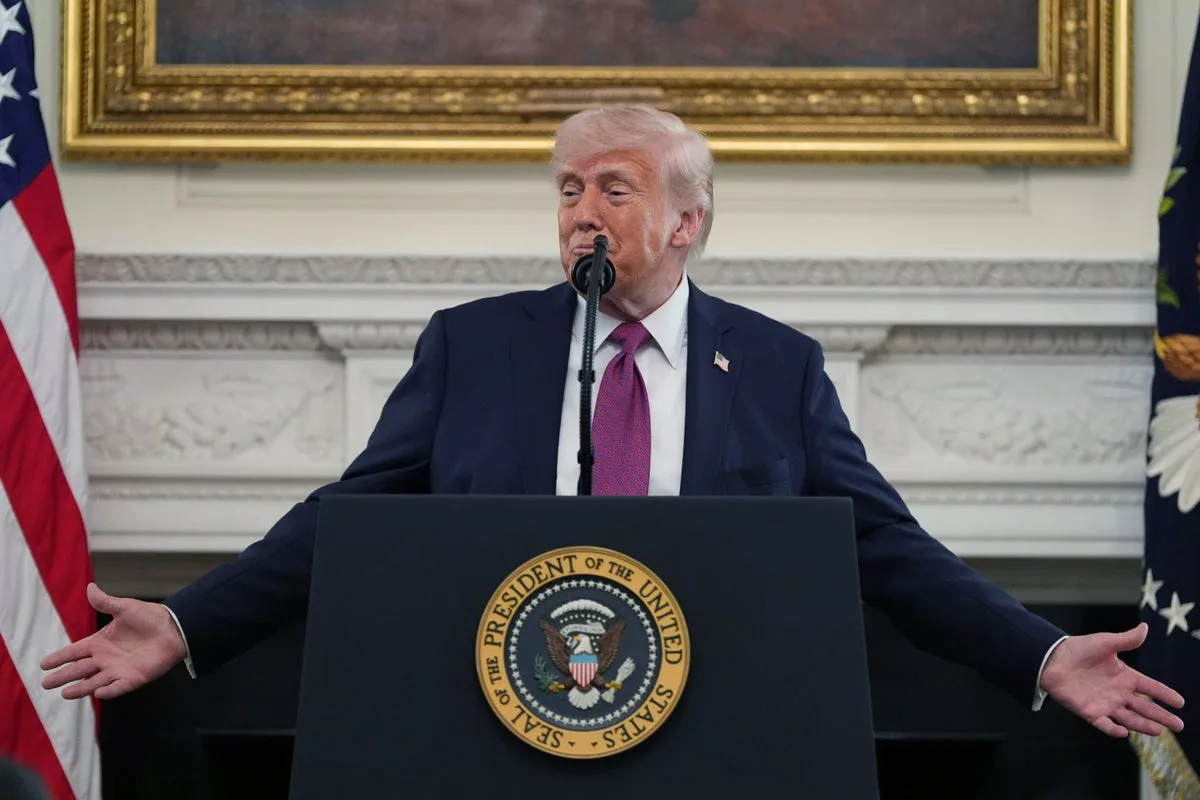
US President Donald Trump extended the fragile truce to allow Tehran time to develop a "unified" proposal, but he has maintained a stringent naval blockade of Iran's ports. This move has prompted Iran to accuse the White House of a "flagrant breach of the ceasefire." In a late social media post, President Trump stated that the Tehran regime is "seriously fractured" and agreed to a request by Pakistani mediators to pause military actions until Iranian leaders can present a cohesive plan.
White House press secretary Karoline Leavitt emphasized the internal strife within Iran, noting, "There's obviously a lot of internal division. This is a battle between the pragmatists and the hardliners in Iran right now and the president wants a unified response." She highlighted that the US blockade is "completely strangling their economy," with Iran losing an estimated $500 million daily and its main oil export terminal at full capacity due to the shipping ban.
Global Economic Impact and Military Planning
The conflict, initially triggered by joint US-Israeli strikes in late February, has already disrupted global trade, and the continued closure of the Strait of Hormuz exacerbates this economic pain. The impasse casts further doubt on the prospect of negotiations aimed at securing a lasting peace. Meanwhile, military planners from a coalition of countries convened in London on Thursday to discuss plans for a UK and France-led defensive mission. This initiative aims to keep the critical waterway open once hostilities with Iran conclude.
Foreign Secretary Yvette Cooper articulated Britain's desire for a "comprehensive settlement" and a "full reopening" of the key shipping route without any restrictions or tolls. In a separate development, reports emerged that a top envoy to President Trump has asked FIFA to replace Iran with Italy in the upcoming World Cup, a move reportedly intended to mend relations with Italian Prime Minister Giorgia Meloni after Trump's criticisms of the Pope regarding the war.
Iran's Defiance and Economic Strangulation
US Central Command confirmed that American forces have directed 31 vessels to turn around or return to port as part of the blockade. Leavitt asserted, "The United States maintains control over this situation, leverage over the Iranian regime. Not only have they been significantly weakened and obliterated militarily, but they are losing economically and financially every single moment that passes with this blockade." She added that President Trump will dictate the timetable, satisfied with the naval blockade and confident in Iran's weakened position.
However, Tehran remains defiant. The speaker of Iran's parliament and chief negotiator, Mohammad Baqer Qalibaf, stated, "You did not achieve your goals through military aggression and you will not achieve them by bullying either. The only way is recognising the Iranian people's rights." In a show of resistance, large crowds gathered for a parade in Tehran, where the regime displayed ballistic missiles and banners proclaiming the strait was "Indefinitely under Iran's Control" and "Trump could not do a damn thing."
With no new end date set for the extended ceasefire, the stand-off persists, leaving the global economy to bear the brunt of this geopolitical tension. The White House's stance underscores a calculated strategy to pressure Iran into submission, while Tehran's demonstrations of strength aim to rally domestic support and challenge international perceptions of its vulnerability.






