In a move presented as a gesture of openness, Venezuela's interim authorities have announced a mass release of political prisoners. However, human rights organisations and local reports suggest this process is slow, opaque, and coincides with ongoing state repression.
A Contested Narrative of Releases
On Tuesday, congressional president Jorge Rodríguez, brother of acting president Delcy Rodríguez, claimed the regime was conducting a "mass process of releases" exceeding 400 individuals. This figure, he stated, included prisoners freed in two rounds before the capture of former leader Nicolás Maduro on Christmas Day and New Year's Day.
Non-governmental organisations monitoring the situation sharply contest these numbers. The group Justicia, Encuentro y Perdón could only verify 157 of the 186 releases announced earlier. Furthermore, they confirmed just 82 of the 116 releases Rodríguez claimed had occurred since last week.

Despite the regime's announcements, NGOs estimate that close to 1,000 political prisoners remain detained in Venezuela. They are demanding the unconditional release of all detainees. Notably, many of those who have been freed still face active charges and are prohibited from making public statements.
Repression Persists Amid Political Chaos
Experts warn that the power vacuum following Maduro's seizure by the United States has created significant administrative disarray. "This kind of power reshuffle produces so much administrative chaos and a lack of a clear chain of command," said Zair Mundaray, a former senior Venezuelan prosecutor.
He added that the regime is attempting to "project a very civic image, releasing some people, while others are being jailed at the same time." This duality is evident on the streets, where residents report that armed militias continue to stop and search mobile phones, and public protest remains a dangerous prospect.
A stark example occurred on 5 January, when local media reported that 15 teenagers were detained in Barcelona, a city 300km from Caracas, for allegedly "celebrating" Maduro's capture. They were released the following Tuesday after a local backlash.
A state of emergency, declared after the unprecedented US ground attack, remains in force. It mandates the "immediate search and capture of anyone involved in the promotion or support of the US armed attack."
Diplomatic Manoeuvres and International Scrutiny
The United States has cautiously welcomed one aspect of the releases. A US State Department spokesperson said, "We welcome the release of detained Americans in Venezuela. This is an important step in the right direction by the interim authorities." While the exact number is unconfirmed, it is believed at least four US citizens were freed.
Diplomatic activity is intensifying. On Thursday, former US President Donald Trump is scheduled to host Venezuela's main opposition leader and Nobel peace prize winner, María Corina Machado, at the White House. In a parallel move, acting president Delcy Rodríguez will send a representative, former foreign minister Félix Plasencia, to Washington to meet senior US officials on the same day.
This comes as Venezuela and the US resumed talks last week on reopening embassies in both capitals. Meanwhile, the US continues economic pressure, with Reuters reporting that the White House has filed for court warrants to seize dozens more tankers linked to Venezuela's oil trade, following recent seizures of five vessels in international waters.
In a symbolic gesture aimed at projecting openness, both Rodríguez and powerful interior minister Diosdado Cabello have returned to the social media platform X, over a year after Maduro censored it. It is unclear if the ban has been lifted for all Venezuelans, who previously relied on VPNs to access it.
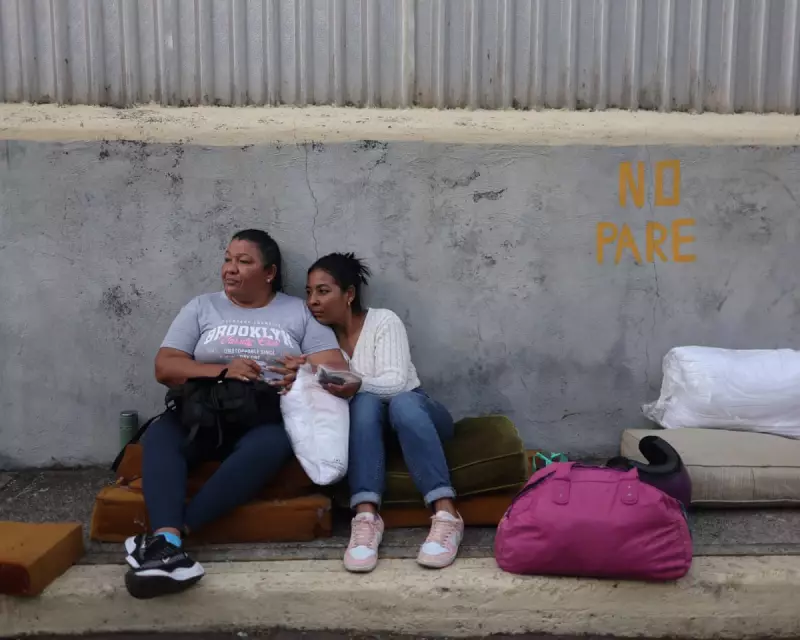
The situation presents a complex picture: a regime attempting to cultivate an image of reform while maintaining the apparatus of control, leaving hundreds of families waiting outside prisons for a true and comprehensive freedom for their loved ones.