Venezuela's Acting President Announces Mass Amnesty and Prison Closure in Reform Push
Venezuela Announces Mass Amnesty for Political Prisoners

Venezuela's Acting President Unveils Sweeping Amnesty and Prison Closure Plan

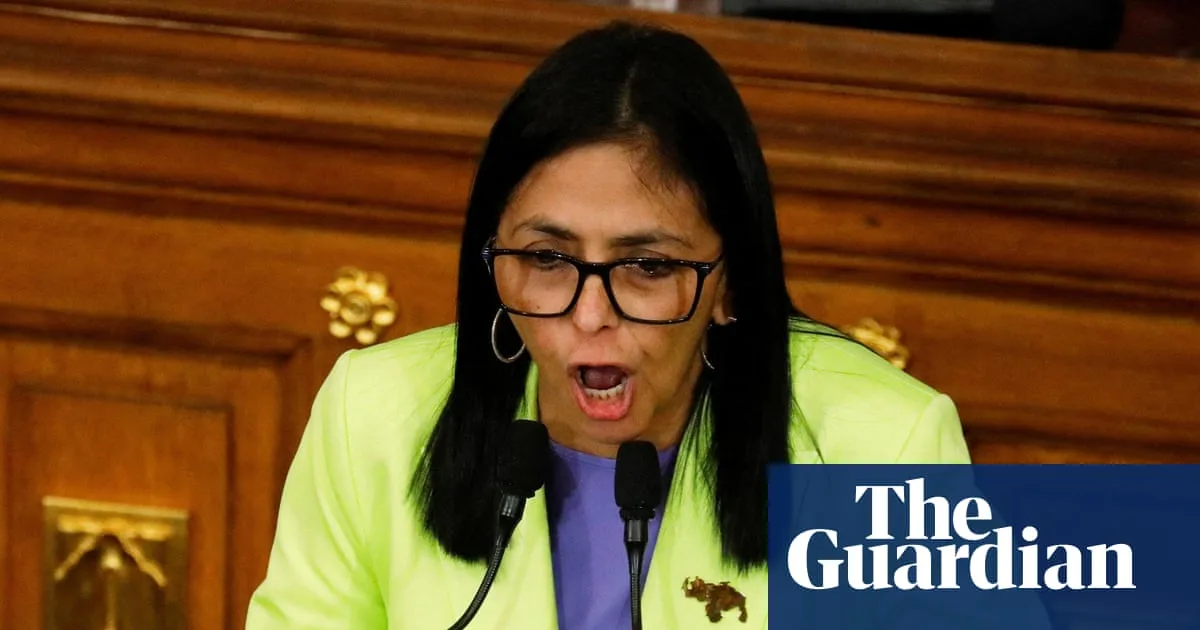
In a significant policy announcement, Venezuela's acting president Delcy Rodríguez has revealed plans for a comprehensive amnesty law covering political prisoners dating back to the beginning of Hugo Chávez's presidency in 1999. The proposal represents one of several major reforms introduced during Rodríguez's brief tenure following the US-led removal of Nicolás Maduro from power.

Amnesty Law to Heal Political Wounds

Addressing the Venezuelan supreme court alongside senior government officials, Rodríguez declared her intention to propose a "general amnesty law covering the entire period of political violence from 1999 to the present." The acting president framed the legislation as essential for national reconciliation, stating it would "serve to heal the wounds left by political confrontation, fuelled by violence and extremism."

Rodríguez emphasized that the amnesty would "allow us to put justice back on track in our country" while announcing parallel plans for a major national consultation aimed at establishing a new judicial system. The proposed law covers the political eras of both Hugo Chávez, who assumed power in 1999, and his successor Nicolás Maduro, whose increasingly authoritarian government and disputed re-elections drew international condemnation.

Closure of Notorious Prison Facility

In a related development, the acting president announced plans to close El Helicoide prison in Caracas, a facility human rights organizations have repeatedly identified as a site where political prisoners suffered torture under Maduro's intelligence services. The massive structure, originally constructed as a shopping mall, will be transformed into a sports, cultural and commercial centre serving police families and neighbouring communities.

For families of detainees, the announcement brought emotional relief. Betsy Orellana, a 63-year-old mother whose son has been imprisoned at El Helicoide for six months without contact, expressed overwhelming joy to AFP reporters: "It's wonderful! I haven't heard from my son in six months, so, damn it, this is a huge joy, it's an amnesty, my God, it's total liberation."

Opposition Response and International Context

Venezuelan opposition figures have responded to Rodríguez's announcements with cautious optimism, tempered by concerns that Maduro's closest allies remain influential within the current administration. Nobel Peace Prize laureate and opposition leader María Corina Machado suggested the amnesty proposal resulted from external pressure rather than voluntary initiative, posting on social media that "this is not a voluntary gesture by the regime, but a response to pressure from the United States government."

Opposition lawmaker Tomás Guanipa, whose two brothers remain imprisoned, expressed hope that the amnesty might signal "the beginning of a path that leads us to freedom and democracy, definitively and forever." Human rights organizations have noted the relatively slow pace of prisoner releases since the government's initial commitment on 8 January, with the Foro Penal group counting fewer than 300 prisoners freed in subsequent weeks.

Broader Reform Agenda and US Relations

Rodríguez's amnesty announcement forms part of a broader reform agenda implemented during her first month in office, with several measures aligning with longstanding US policy objectives. Working alongside her brother Jorge Rodríguez, president of the national assembly, the acting government has passed legislation opening Venezuela's crucial oil sector to private investment—a key demand from the Trump administration that prompted an almost immediate rollback of US sanctions targeting Venezuelan oil.

The warming relationship between Caracas and Washington has manifested in several tangible developments:

  • Release of all known American prisoners held in Venezuela
  • Lifting of the US flight ban to Venezuela
  • Plans to re-establish diplomatic presence in Caracas
  • Appointment of seasoned diplomat Laura Dogu as US charge d'affaires

Diplomatic sources indicate Dogu is scheduled to arrive in Caracas this weekend, marking the highest-level US representation in Venezuela since embassy closures years ago. The developments reflect what appears to be significant satisfaction from the Trump administration with the new Venezuelan leadership's reform direction.

For years, Venezuela routinely detained foreigners and opposition members on charges ranging from espionage to conspiracy—allegations that critics consistently dismissed as politically motivated fabrications. The current amnesty proposal and associated reforms suggest a potential turning point in the country's approach to political dissent and international relations.




