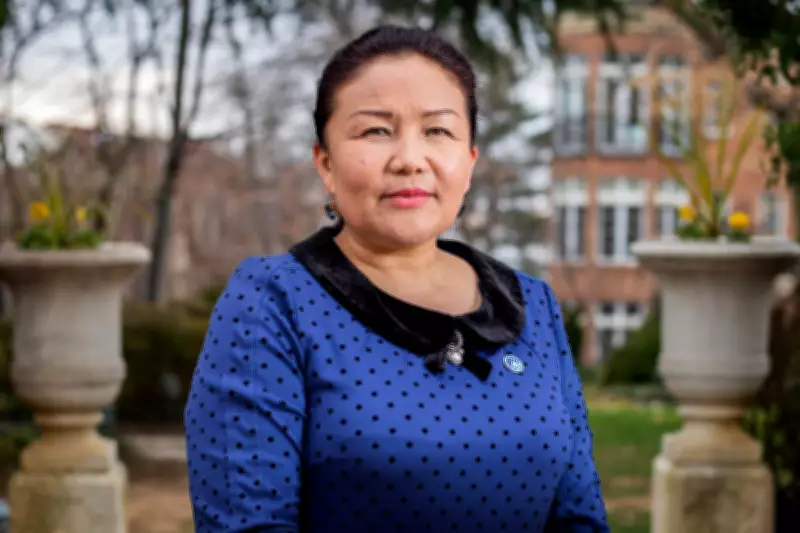
Uyghur Camp Survivor Condemns Starmer Over Chinese Embassy Approval
Sayragul Sauytbay, a former detainee who endured torture in one of China's notorious Uyghur detention camps, has launched a scathing attack on Prime Minister Sir Keir Starmer. She accuses him of "disrespecting human rights" by approving plans for a Chinese mega-embassy in London, claiming the UK is sweeping China's human rights record under the rug.
From Detention Camp to Government-in-Exile
Ms. Sauytbay, an ethnic Kazakh who now serves as vice president of the East Turkestan government-in-exile based in Sweden, detailed her harrowing experiences in an exclusive interview. She was first detained in January 2017 in Xinjiang, an autonomous territory also known as East Turkestan by Turkic minorities like Uyghurs and Kazakhs. Authorities interrogated her because her husband and children had emigrated to Kazakhstan.
After a brief release, she was blindfolded and taken to a detention camp in the Ili Kazakh Autonomous Prefecture in November 2017. There, she was forced to work as a Chinese language instructor in a facility holding around 2,500 people. These camps, established in the 2010s, have detained over a million ethnic Turkic people under Beijing's description as "vocational training centres" to combat terrorism and extremism.

Horrors of the "Black Room" and Systematic Abuse
Ms. Sauytbay witnessed horrific abuses at the camp, describing systematic torture that included both psychological and physical methods. "They routinely rape women. I've witnessed gang rapes as well with my own eyes," she revealed. A "black room" existed—a dark cell without cameras where guards tortured detainees away from view.
Despite her role as an instructor, she faced inhumane treatment: "You can't talk, you can't cry, you can't smile, even as an instructor, you can't speak with the detainees unless it's about teaching them." When an elderly Kazakh woman hugged her and claimed innocence, Ms. Sauytbay was punished with hours in an electric chair and brutal beatings that left her unconscious.
Escape and Continued Fear
After nearly six months, Ms. Sauytbay was dismissed from her role but faced re-detention and threats of three years of "reeducation." Fearing for her life, she fled to Kazakhstan, where she was arrested and convicted for illegal border crossing, receiving a six-month suspended sentence. Denied asylum there, she escaped to Sweden, where she now lives after being granted protection.
However, she remains fearful: "I don't feel that I'm 100 per cent safe. The CCP has a long reach. It has agents in all these countries." She warns that China's growing influence in democratic nations threatens both security and democracy itself.
Accusations of UK Hypocrisy
Ms. Sauytbay's criticism extends to the UK government's recent actions. She notes that Kazakhs and Uyghurs once looked to Britain for "hope and help," but now sees hypocrisy. Prime Minister Starmer's approval of a Chinese mega-embassy in London, followed by a landmark visit to Beijing in January where he advocated for a "more sophisticated" relationship, has drawn her ire.
"Starmer is disrespecting human rights. He's disrespecting international law and obligations, because human rights needs to be prioritized over all things, over economic and political gains," she asserted. She added that the UK has "no right to speak about freedom and democracy" if it prioritizes ties with President Xi Jinping's government over human rights concerns.
International Recognition and Legal Action
In 2020, Ms. Sauytbay was honored as one of the "Women of Courage 2020," receiving an award in Washington, D.C., from then-First Lady Melania Trump and Secretary of State Mike Pompeo for her bravery. That same year, she led a complaint to the International Criminal Court accusing Chinese officials of genocide and crimes against humanity, after fleeing China in 2018.

Her story underscores the ongoing plight of Uyghurs and other minorities in Xinjiang, as rights groups condemn detentions without trial for reasons like practising religion or displaying cultural identity. The UK Foreign Office and China's Ministry of Foreign Affairs have been contacted for comment on these allegations.